
-
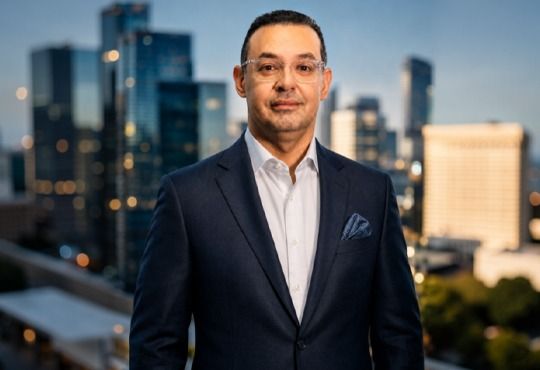
Dr Ahmed Elawadi is a distinguished leader operating across Europe, the Middle East, and Africa, with more than 24 years of experience in medical and pharmaceutical trading. His expertise spans diabetes care, diabetic foot management, wound care, preventive healthcare, precision medicine, and longevity. He serves as an advisory board member and strategic advisor to several international organizations specializing in diabetic foot care, wound management, medical technology, and longevity science. His leadership has earned international recognition, including being named among the Top 30 Leaders in Diabetic Care, while his scientific work has been published in respected international wound care journals.
In an interaction with M R Yuvatha, Senior Correspondent, Asia Education Review, Dr Ahmed Elawadi shared his insights on how artificial intelligence is transforming healthcare from reactive disease management to predictive, preventive, precision, and longevity-focused care.
Medicine has evolved from treating disease to understanding and preventing it. While advances such as antibiotics, medical imaging, and genomics have transformed healthcare, it remains largely reactive, with many patients diagnosed only after symptoms appear. The next revolution is shifting toward prediction, prevention, and personalized care.
Artificial Intelligence (AI), combined with genomics, biotechnology, wearable technologies, and digital biomarkers, is accelerating this transition by identifying health risks earlier and supporting better clinical decisions. Rather than replacing healthcare professionals, AI enhances their expertise, helping deliver more predictive, preventive, precision, and longevity-focused healthcare.
The Age of Clinical Intelligence
Healthcare has entered the era of big data. Every consultation, laboratory investigation, imaging study, prescription, wearable device, genetic analysis, and electronic medical record contributes to an expanding digital ecosystem. Yet no clinician can process millions of interconnected variables simultaneously.
This is where Artificial Intelligence (AI) demonstrates its greatest strength. Unlike conventional computer systems that simply store information, AI learns from data, identifying hidden relationships and subtle patterns that support earlier disease detection, more accurate risk assessment, and better-informed clinical decisions. Rather than replacing healthcare professionals, AI acts as a clinical partner, enhancing medical expertise and enabling more personalized patient care.
Today, AI is no longer a future concept. The U.S. Food and Drug Administration (FDA) has authorized more than 1,000 AI-enabled medical devices across multiple clinical specialties, reflecting its growing integration into routine healthcare. At the same time, the World Health Organization (WHO) emphasizes that AI must be implemented responsibly, with transparency, patient privacy, equity, safety, and human oversight to maintain public trust.
The true value of AI lies not in replacing physicians, nurses, pharmacists, or allied healthcare professionals, but in allowing them to practice medicine at an even higher level by transforming vast amounts of data into meaningful clinical intelligence.
From Prediction to Prevention
Artificial Intelligence (AI) is transforming healthcare by shifting the focus from treating disease to preventing it. By integrating electronic health records, laboratory results, imaging, wearable devices, genetic profiles, family history, lifestyle factors, and digital biomarkers, AI can identify individuals at increased risk long before symptoms develop.
This represents a fundamental change in medicine. Instead of asking what disease a patient has today, clinicians can increasingly predict who is most likely to develop disease and intervene earlier to prevent complications.
Across multiple specialties, AI is improving early detection of cardiovascular disease, cancers, diabetic retinopathy, cognitive decline, and acute kidney injury, enabling more timely and targeted interventions. However, AI should complement not replace clinical judgement. Its performance depends on high-quality, diverse data, while healthcare professionals remain responsible for interpreting AI-generated insights. Together, human expertise and computational intelligence are creating a more predictive, preventive, precise, and patient-centered healthcare system.
A New Perspective in Diabetic Foot and Wound Care
Diabetic foot management provides one of the clearest examples of predictive healthcare in practice. Traditionally, treatment begins after ulcers become visible, when the risks of infection, hospitalization, and amputation have already increased.
Emerging technologies combining infrared thermal imaging, computer vision, and machine learning can detect subtle temperature changes and inflammatory patterns days or even weeks before tissue damage becomes visible. When integrated with vascular assessment, neuropathy evaluation, plantar pressure analysis, glycaemic control, and continuous monitoring, these tools enable clinicians to identify patients at risk much earlier.
This allows timely interventions including footwear modification, pressure redistribution, improved metabolic control, and patient education before ulceration occurs, representing a shift from treating complications to preventing them.
Precision Healthcare: Treating the Individual, Not the Disease
No two patients experience disease in exactly the same way. Differences in genetics, lifestyle, metabolism, environment, and existing health conditions all influence treatment response and outcomes.
Artificial Intelligence enables precision healthcare by integrating information from multiple clinical sources to build a more comprehensive understanding of each patient. Rather than relying solely on standardized treatment pathways, clinicians can personalize prevention and treatment based on an individual's biological profile, predicted response, and risk factors.
By enhancing not replacing clinical guidelines, AI supports earlier intervention, more accurate diagnoses, improved treatment selection, better long-term outcomes, and more efficient use of healthcare resources, placing the individual rather than the disease at the center of care.
Artificial Intelligence and the Rise of Longevity Medicine
Artificial Intelligence is also reshaping the rapidly evolving field of longevity medicine. Longevity is not simply about extending lifespan but about increasing health span the years people live in good physical, cognitive, and emotional health.
By combining wearable technologies, genomics, digital biomarkers, and lifestyle data, AI can continuously monitor health, identify subtle biological changes, and detect emerging risks long before symptoms develop. This enables healthcare professionals to recommend highly personalized prevention strategies based on biological age, metabolic health, genetic predisposition, and individual lifestyle factors.
As a result, healthcare is gradually shifting beyond hospitals and clinics toward continuous health management. Instead of focusing solely on treating illness, medicine is increasingly supporting healthier behaviors, preventing disease, and preserving independence throughout ageing.
The convergence of AI, precision medicine, preventive healthcare, and longevity science represents a new model of care that aims not only to extend life but also to improve the quality of every year lived.
A Vision for the Future
Healthcare is entering a new era where prediction, prevention, precision, and longevity should become fundamental components of everyday medical practice rather than specialist disciplines.
Medical education must evolve accordingly. Alongside traditional clinical training, future healthcare professionals should develop knowledge of Artificial Intelligence, genomics, biotechnology, regenerative medicine, digital health, and data science to better understand disease prediction, early intervention, and healthy ageing.
At the same time, healthcare systems and professional organizations should expand clinical guidelines beyond disease management to include structured approaches for risk prediction, prevention, and long-term health preservation. These strategies should address both patients with established disease and individuals at increased risk because of genetic, metabolic, environmental, or lifestyle factors.
Encouragingly, organizations such as the Geneva College of Longevity Science (GCLS) and Longevity. Technology are already advancing education, research, collaboration, and public awareness in longevity science, demonstrating how academia, healthcare, technology, and industry can work together to accelerate innovation.
Ultimately, transforming healthcare is a shared responsibility. Universities, clinicians, researchers, policymakers, industry leaders, and the public must work together to build a healthcare system that begins long before disease appears one that prioritizes education, early risk identification, responsible use of technology, and a commitment to helping people live longer, healthier, and more productive lives.
Also Read: AI Literacy Gap: Why Asia's Classrooms Race to Catch Up with Tech
The Human Future of Artificial Intelligence
As enthusiasm surrounding Artificial Intelligence continues to grow, one principle must remain clear, technology alone will never transform healthcare.
Patients seek more than accurate diagnoses. They seek reassurance during uncertainty, compassion during difficult moments, ethical guidance when facing complex decisions, and trust in those responsible for their care. These qualities cannot be replaced by algorithms.
Artificial Intelligence should therefore be viewed as an extension of clinical expertise rather than a substitute for it. Its purpose is to strengthen healthcare professionals' ability to make better-informed decisions, identify risks earlier, personalize treatment, reduce unnecessary variation, and spend more meaningful time with patients.
Healthcare systems must ensure robust data governance, patient privacy, transparency, rigorous clinical validation, cybersecurity, equitable access, and ongoing professional education. These principles align with the World Health Organization's vision for trustworthy AI and are fundamental to maintaining public confidence as AI becomes increasingly integrated into clinical practice.
Innovation should never outpace ethics. Trust must remain the foundation upon which every technological advancement is built.
Conclusion: Defining the Next Era of Medicine
Healthcare is shifting from reactive disease management to predictive, preventive, and personalized care. Artificial Intelligence, together with digital health, genomics, precision medicine, and longevity science, is driving this transformation. AI's true value lies not in replacing clinicians but in empowering them to detect disease earlier, personalize treatment, prevent complications, and improve long-term health outcomes.
Success should be measured not only by treating illness but by preserving health before disease develops. Guided by scientific evidence, ethical practice, and patient-centred care, AI can help build a future where people live longer, healthier, and more fulfilling lives.
🍪 Do you like Cookies?
We use cookies to ensure you get the best experience on our website. Read more...