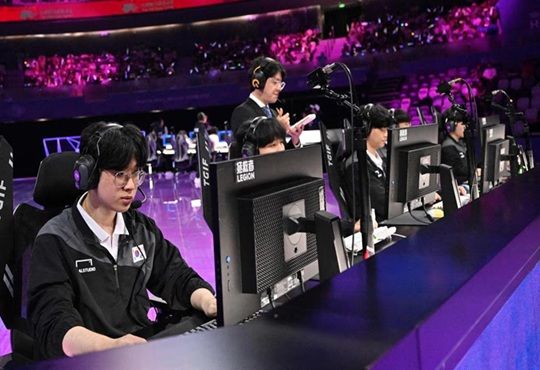
How South Korea Turned Esports into a University Degree

-
In most countries, telling a parent that their child wants to build a career around video games still invites a raised eyebrow. In South Korea, that conversation increasingly happens in a university admissions office instead of a living room argument, because for nearly two decades, the country has been quietly building something no other education system has fully replicated: a formal, credentialed academic pathway into professional gaming.
This did not happen by accident, and it did not happen quickly. It is the product of a specific historical moment, a deliberate policy decision, and a growing recognition that an industry generating hundreds of millions of dollars in annual revenue needs a trained, credentialed workforce just as much as banking, engineering, or medicine does.
The Rise of Esports Academia
 To understand why South Korea's universities embraced esports long before most of the world, it helps to understand where the country's gaming culture began. In the aftermath of the 1997 Asian financial crisis, the South Korean government made a strategic investment in broadband internet infrastructure as part of its economic recovery. That investment coincided with the rapid rise of PC bangs internet cafés that provided millions of young people with affordable access to high-speed internet and multiplayer gaming at a time when home connectivity remained limited.
Titles such as StarCraft, Brood War, and Warcraft III quickly evolved from popular games into national cultural phenomena, producing professional players who competed in televised tournaments and attracted massive audiences. Recognizing esports' growing social and economic significance, the government established the Korea e-Sports Association (KeSPA) under the Ministry of Culture, Sports and Tourism, making South Korea the first country to formally recognize esports as a legitimate competitive discipline alongside traditional sports.
That government-backed legitimacy laid the foundation for something even more significant: the integration of esports into higher education. Rather than treating gaming as an extracurricular activity, South Korean universities began building structured academic programs that combined competitive gaming with technology, business, media, coaching, and event management.
The country's commitment continues to deepen. In June 2026, KeSPA signed a Memorandum of Understanding with Korea University Sejong's Industry-Academic Cooperation Foundation to strengthen esports education and cultivate industry-ready talent. The partnership will establish project-based academic courses, jointly develop industry-academia programs, share infrastructure and expertise, and create stronger pathways between university education and the esports industry.
As Kim Cheol-hak, Secretary-General of KeSPA, noted, "This agreement is a meaningful starting point for fostering esports industry talent and promoting industry growth together with Korea University Sejong. We will actively support the development of convergence talent equipped with job expertise and field experience so that educational achievements translate into industry development”.
The First Esports Department in the Country
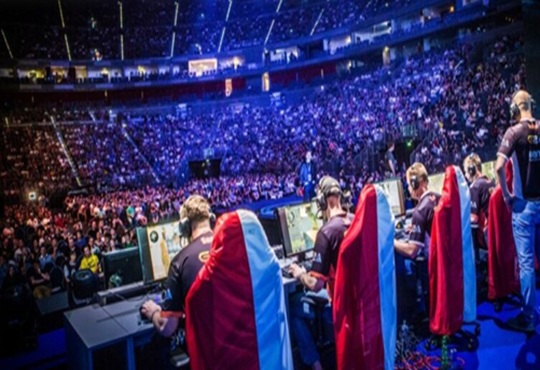 The clearest evidence of how far this institutionalization has gone sits at Jeonnam Provincial College, home to the first esports department established anywhere in South Korea, launched in 2007. Nearly two decades later, the program has produced 158 professional gamers and esports industry specialists, a figure that on its own demonstrates this was never a marginal experiment.
The scale of the program's physical infrastructure reflects that seriousness. The department operates a dedicated facility spanning roughly 992 square meters, complete with a 120-seat spectator gallery and its own arena-style practice lab, resources that would be unusual even for many traditional collegiate athletics programs, let alone a gaming curriculum. Structurally, the department does not train students for a single narrow outcome. Its curriculum is explicitly organized around several distinct career tracks: producing professional players, training specialized broadcast personnel, developing esports coaches and team directors, and preparing students for broader esports industry roles.
That breadth shows up clearly in where graduates actually end up. Beyond the obvious path of professional player, alumni have gone on to work as coaches, professional broadcasters, content producers, PDs and ADs, media editors, team managers, agency representatives, and industry researchers. The department has also built a genuine competitive track record to match its academic ambitions, winning South Korea's KESPA Esports University League, an achievement recognized with an award from the Ministry of Culture, alongside victory in Riot Games' Battle Academia competition, one of the most visible collegiate esports tournaments tied to League of Legends, currently the most-watched esports title globally.
Expanding Into the Capital
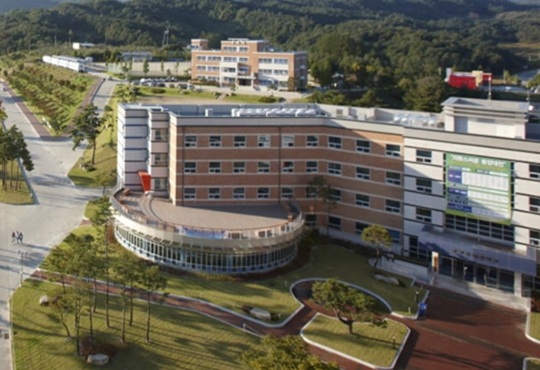 While Jeonnam Provincial College pioneered the concept regionally, the model has since expanded into South Korea's most competitive academic market: the Seoul metropolitan area. Dongyang University now operates the first four-year esports degree program available in that region, a distinction that matters given how central Seoul is to both South Korea's broader higher education landscape and its gaming and entertainment industries.
The program drew enough national attention to be featured on Arirang News, South Korea's English-language international broadcaster, in a segment explicitly framed around the theme that South Korean universities are paving the way for unlimited career opportunities in esports. The coverage highlighted something structurally important about how these programs actually function day to day, students don't simply play games informally.
Their coursework includes access to genuine practice facilities, described in the reporting as game practice rooms not typically found at conventional universities, spaces built specifically to simulate the training environment of a professional esports organization.
Dongyang University has also built a formal industry partnership through the Nongshim Esports Academy, connecting the university's academic program directly to a recognized commercial esports brand, an arrangement that mirrors how traditional sports science programs often partner with professional clubs or sporting goods companies to give students authentic, industry-grade training exposure rather than a purely theoretical curriculum.
The human story behind these statistics is just as telling as the infrastructure. One student featured in the Arirang News coverage described starting to play League of Legends in high school and eventually reaching the 33rd national ranking at the game's highest competitive tier, Challenger rank, a level of skill that had already generated professional offers before the student ever enrolled in a formal esports’ degree program.
That detail captures something important about who these programs are actually built for, not casual gamers exploring a hobby, but genuinely elite competitive players who, in almost any other country, would have had no formal academic pathway that took their existing skill seriously.
Also Read: Turkey recently introduced 'Sports Education' in the Curriculum
Why the Economics Justify the Investment
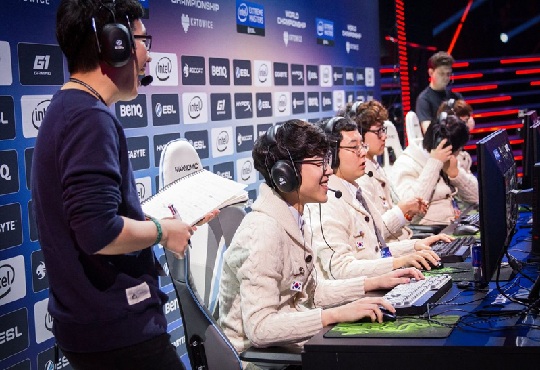 None of this institutional investment would make sense without a genuine industry behind it, and South Korea's esports market has grown substantially enough to justify continued expansion. Market research estimates place South Korea's esports industry revenue at roughly USD 69 million in 2024, with projections reaching approximately USD 237 million by 2030, reflecting an expected compound annual growth rate of around 22.7% over that period. Other market analyses place 2024 revenue somewhat higher, at approximately USD 128.5 million, with longer-term projections reaching over half a billion dollars by the early 2030s, a discrepancy that reflects differing methodologies across research firms but consistently points in the same direction: sustained, aggressive growth.
Even on the more conservative end of these estimates, South Korea's esports sector already represented an estimated 3.2% of total global esports market revenue in 2024, a notable share for a country of just over 50 million people, underscoring how disproportionately influential South Korea remains in an industry with genuinely global reach.
Sponsorship and direct advertising remain the largest revenue segment within the country's esports economy, according to multiple market research firms, which has direct implications for the career pathways these university programs are training students for. A functioning sponsorship-driven industry does not just need players; it needs marketing professionals, broadcast talent, content producers, and team management staff who understand the specific mechanics of esports as a business, precisely the multi-track training model that programs like Jeonnam Provincial Colleges have built their curricula around.
A Broader Pattern Across South Korean Higher Education
By 2023, industry analysis had already noted that esports had become a central part of South Korean youth culture, explicitly supported by universities now offering degrees not just in competitive play, but in the surrounding disciplines of game management and coaching. This represents a meaningful maturation beyond the earlier assumption that a university esports program existed solely to produce professional players.
That broader framing matters because it addresses the most obvious practical question any parent or prospective student would reasonably ask, what happens to the vast majority of students who study esports but never become full-time professional competitors, given how short and physically demanding a competitive gaming career typically is? South Korea's answer, built directly into how these programs are structured, is that the industry surrounding competitive play, coaching, broadcasting, content production, event management, and team operations, is now substantial enough to absorb far more graduates than the relatively narrow pool of professional player roster spots ever could.
What This Model Signals for the Rest of Asia
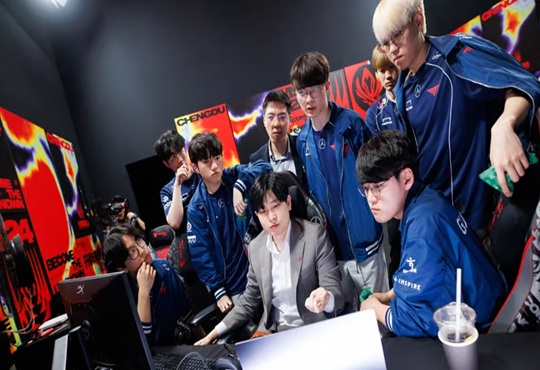 South Korea's approach did not emerge from a general enthusiasm for gaming; it emerged from a specific, sequenced set of conditions: a government-recognized national esports association providing institutional legitimacy, a demonstrably large and growing commercial market, established competitive infrastructure through leagues and tournaments, and a domestic culture already primed to treat competitive gaming as a legitimate pursuit rather than an idle distraction. Universities did not create South Korea's esports industry; they responded to one that already had genuine economic and cultural weight, then built the credentialing infrastructure to formalize training for it.
That sequencing carries an important implication for other Asian countries now watching South Korea's gaming economy with interest. Simply adding esports elective or student club to a university's offerings, without the underlying industry infrastructure, professional league structure, and institutional recognition that took South Korea years to build, is unlikely to replicate these outcomes on its own. The credential only has value because there is a substantial, multi-role industry on the other side of it actually hiring graduates.
Wrapping It Up!
What South Korea has ultimately demonstrated is not simply that esports can be taught in a university setting, but that an industry once dismissed by many parents and policymakers as a waste of a young person's time can, with sufficient institutional investment, government recognition, and genuine market demand, generate a legitimate multi-track career pathway.
Roughly two decades after Jeonnam Provincial College opened the country's first esports department, the results, 158 graduates from a single program alone, dedicated arena facilities rivaling traditional athletics infrastructure, and a national market approaching a quarter-billion dollars in annual revenue, suggest this was never really a gamble at all. It was simply South Korea's education system recognizing an emerging industry earlier than everyone else did, and building the credentialing infrastructure to match it.
🍪 Do you like Cookies?
We use cookies to ensure you get the best experience on our website. Read more...