
-
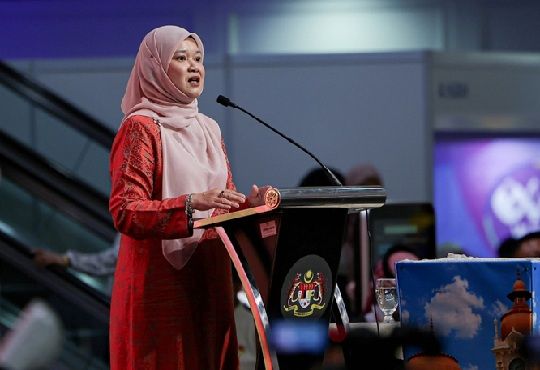
The Education Ministry is examining ways to award merit for co-curricular activities, including sports, undertaken by students at prison institutions so that these achievements can count toward university admission. Education Minister Fadhlina Sidek said the move aims to keep educational pathways open for young people who complete the Sijil Pelajaran Malaysia (SPM) while serving sentences and later rejoin society.
Speaking at the closing of the 17th Hijrah Kasih Programme organised jointly by the ministry and the Malaysian Prison Department, Fadhlina stressed that schooling inside prison walls should not mark the end of a student’s academic journey. “The merit they earn can be taken into consideration for them to continue their studies at the next level,”, she said. The ministry views the recognition of co-curricular involvement as one of several improvements needed to ensure that educational opportunities do not stop once formal secondary schooling ends.
Prison schools have recorded strong academic results. Students at these institutions achieved a 100 per cent SPM pass rate for two consecutive years. Fadhlina highlighted the achievement as evidence that location and circumstance do not determine success. “This is not about a lack of opportunity. It is not about the place or which school they attend, but about their determination,” she said. The consistent performance has strengthened the case for treating co-curricular and skills-based accomplishments with the same seriousness given to examination results.
Beyond sports and clubs, the ministry is discussing with the Technical and Vocational Education and Training (TVET) division the possibility of issuing skills certificates to students who complete training programmes while incarcerated. Many acquire practical competencies in sewing, food preparation and other trades. Officials believe formal recognition of these skills can improve employability and support smoother reintegration once the individuals return to the community.
A parallel effort focuses on the Physical, Sports and Co-curricular Assessment (PAJSK). Deputy director-general of Education (School Operations Sector) Datuk Zainal Abas said the ministry aims to secure recognition of PAJSK scores for prison school students this year. If approved, SPM candidates from 2027 onward would receive a 10 per cent merit allocation based on their co-curricular performance when applying for university places. Zainal described the recognition as important because sporting and co-curricular achievements can meaningfully raise a candidate’s overall standing in competitive admission processes.
Digital learning forms another priority. The ministry is studying controlled access to the DELIMa (Digital Educational Learning Initiative Malaysia) platform for both teachers and students at integrity schools and Henry Gurney schools nationwide. Teachers would gain the same digital resources available to their counterparts in regular schools. Students would be able to participate in online learning and access educational materials under supervised conditions, helping them keep pace with curriculum developments outside the institutions. Officials emphasise that any access must balance educational needs with the security requirements of prison settings.
Parental involvement remains a recurring theme. Fadhlina underscored that family support is especially critical during the most difficult periods of a young person’s life. Continuous presence and encouragement from parents can reinforce the determination already demonstrated by the students’ examination results and motivate them to pursue further studies after release.
The combined measures co-curricular merit, skills certification, PAJSK recognition and digital learning access form a broader strategy to treat education inside prison institutions as continuous rather than terminal. By aligning the assessment framework used for incarcerated students more closely with that applied to mainstream candidates, the ministry seeks to remove structural barriers that could otherwise limit university entry.
Education officials note that the process remains under study and discussion. Formal decisions on the exact weighting of co-curricular merit, the issuance of TVET certificates and the technical arrangements for DELIMa access will require further coordination among the Education Ministry, the Prison Department and relevant higher-education bodies. Nevertheless, the public statements by the minister and senior ministry leaders signal a clear policy direction: students who demonstrate academic and co-curricular excellence while in prison institutions should not be disadvantaged when they seek places in universities or training programmes after completing their sentences.
The Hijrah Kasih Programme itself reflects the same philosophy. By bringing together ministry officers, prison officials and students, the annual event reinforces the message that rehabilitation includes educational advancement. The 100 per cent SPM pass rate achieved over two consecutive years has given concrete weight to arguments that investment in teaching quality, student motivation and structured assessment yields measurable results even under challenging conditions.
Also Read: Why Is Vocational Training Essential for Today's Workforce?
As the ministry continues its review, stakeholders in higher education and vocational training are expected to contribute feedback on how merit from prison-based co-curricular activities and skills programmes can be fairly evaluated alongside results from conventional schools. The goal, according to ministry statements, is a transparent system that recognises genuine achievement without compromising academic standards.
For the students currently enrolled in prison schools, the emerging policy signals that their efforts in classrooms, workshops and sports fields may carry tangible value beyond the prison gates. For parents and teachers, it reinforces the importance of sustained support. And for the broader education system, it represents an attempt to ensure that determination and performance, rather than institutional setting alone, shape opportunities for higher education and future livelihoods.
🍪 Do you like Cookies?
We use cookies to ensure you get the best experience on our website. Read more...