
-
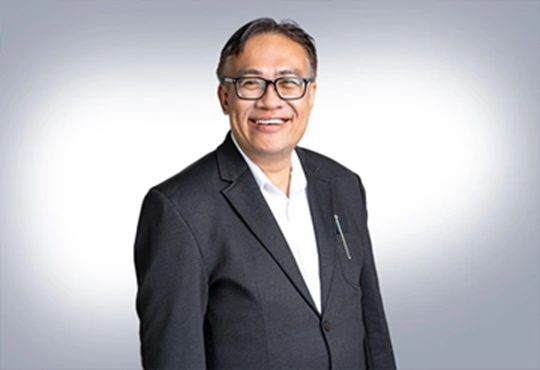
Yohanes Jeffry Johary leads an organization of over 12,000 employees across 771 work locations, within a global company shaped by more than 126 years of heritage. Over 19+ years, he has built his career around translating strategy into consistent execution, aligning customer experience, digitalization, and ESG into operating models that sustain long-term value. He holds an MSc in Business Psychology from the University of East London, graduating with distinction, his dissertation introduced the concepts of ‘flow-by-design’ and ‘flow-compatible functioning’, reframing performance as a function of organizational design. He also completed the Social Enterprise program at Harvard Business School Executive Education.
In an interaction with M R Yuvatha, Editor, Asia Education Review, Jeffry Johary argues that based on the evolving demands of the facility management profession, education must shift from simply teaching technical knowledge to developing future-ready leaders who possess systems thinking, business acumen, change leadership, and a lifelong learning mindset.
Facility Management is no longer viewed as a purely operational discipline, and that shift is forcing a rethink of how the profession's future leaders are educated and developed. As the role expands beyond maintaining buildings into enabling organisational performance, questions about capability, curriculum, and career pathways have moved to the centre of the conversation.
What should students be taught, how should universities and employers work together, and why should young professionals consider Facility Management as a career at all?
Core Capabilities for the Next Generation of Leaders
Success in Facility Management was once measured by whether a building was clean, safe, and operating efficiently. Those fundamentals remain essential, but they are no longer enough to define effective leadership in the field. Tomorrow's FM leaders are expected to understand how workplaces influence productivity, wellbeing, innovation, and organisational resilience, treating the workplace as part of business strategy rather than simply a line item in the operating budget.
This broader remit calls for a broader set of capabilities. Systems thinking is essential, since every decision in a facility affects people, technology, sustainability, finance, and operations at the same time. The ability to lead change matters just as much, because technology only creates value once people know how to adopt it. Business literacy is equally important, FM leaders need to understand what keeps their organisations' stakeholders awake at night, whether that is employee experience, manufacturing uptime, regulatory compliance, or ESG performance, so that Facility Management can contribute directly to those outcomes.
Underpinning all of this is curiosity. As the profession changes faster than ever, those who continue learning throughout their careers hold a clear advantage over those who rely only on technical expertise gained early on. Increasingly, FM leaders will be recognised less for the buildings they manage and more for the organisational performance they help create a shift with direct implications for how the next generation should be trained from the outset.
Where University Education Falls Short and Why
The gap between university education and the realities of modern Facility Management is not, in most assessments, a case of universities teaching the wrong things. Rather, the industry is evolving faster than most academic programmes can adapt. Students often graduate with solid technical knowledge but limited exposure to the complexity of real organisations, where commercial objectives, human behaviour, digital transformation, sustainability, risk management, and customer expectations must all be balanced simultaneously lessons that are difficult to learn entirely inside a classroom.
Closing this gap means shifting education beyond the transfer of knowledge and toward the development of judgement. That means giving students the opportunity to solve real business problems alongside employers, so they can experience how decisions are actually made when budgets are limited, stakeholders disagree, and priorities compete.
Industry carries responsibility for this shift as well. Too often, companies expect universities to produce graduates who are immediately job-ready, an expectation widely seen as unrealistic. Employers are increasingly encouraged to see themselves as co-educators, offering internships, mentoring, live projects, and direct exposure to real workplaces so students can connect theory with practice. Professional associations, meanwhile, provide the common language, ethical standards, and lifelong learning that continue well beyond graduation. When education, employers, and professional bodies each play their part, graduates enter the profession with confidence, not just qualifications.
Rather than asking ‘what should students know?’, the more useful question is ‘who do we want them to become?’, because knowledge changes, but capabilities stay with people throughout their careers.
Building a Pipeline: Universities, Employers, and Professional Bodies Together
A sustainable pipeline of future FM leaders depends on a genuine partnership between universities, employers, and professional associations, rather than each operating in isolation. Universities are best placed to provide strong academic foundations and critical thinking. Employers contribute the realities of the workplace: the challenges organisations face today and the capabilities they will need tomorrow. Professional associations bring an international perspective, connecting education to recognised professional standards, ethics, and continuing development.
Crucially, this partnership should not begin only once students graduate it should start while they are still studying. Ideally, students learn about workplace strategy in class, apply those ideas during industry placements, discuss them with experienced practitioners through professional associations, and return to university with new questions. That creates a continuous learning cycle rather than a one-time handoff from education to employment.
Success in this model should not be measured by how many students complete a programme, but by how many graduates go on to grow into capable professionals who can adapt throughout their careers. Developing future FM leaders, in other words, is not the responsibility of any single institution it is a shared responsibility across the entire profession.
Also Read: Scaling AI Education Tools for Young Learners in Hong Kong
Why a Career in Facility Management Offers More Than Students Expect
Facility Management is often misunderstood by students as a purely operational career path, yet it sits at the intersection of leadership, technology, sustainability, engineering, and human experience. Few professions offer that level of diversity. Every workplace shapes how people collaborate, learn, create, recover, and perform, which means a career in FM can involve working with engineers to improve building performance, with technology teams to introduce digital solutions, with HR to improve employee wellbeing, or in support of sustainability goals and organisational resilience.
It is also a career with a genuine sense of purpose. When a hospital functions safely, when a university provides a better learning environment, or when a manufacturing facility operates without interruption, Facility Management has contributed to that outcome even though, when FM is working well, its contribution often goes unnoticed. For students who enjoy solving complex problems, working with people from different backgrounds, and making a visible contribution to society, Facility Management offers a career that may not always receive the attention it deserves, but whose impact has never been more important.
Looking Ahead!
There is a strong case for redesigning how the next generation of Facility Management professionals is educated from the very start beginning with a different question. Rather than asking ‘what should students know?’, the more useful question is ‘who do we want them to become?’ Knowledge is important, but knowledge changes; capabilities stay with people throughout their careers.
That reimagined approach would expose students to real workplaces from the first day of their studies, rather than waiting until the end of a programme. It would also encourage multidisciplinary learning, since Facility Management does not exist in isolation, students should understand business, psychology, sustainability, technology, engineering, and leadership together, rather than as separate subjects.
Greater emphasis on reflection would also be built in. Technical knowledge helps students solve today's problems; reflection helps them solve tomorrow's problems, the ones nobody has encountered before. Finally, lifelong learning should be treated as part of professional identity from the very beginning, with graduation marked not as the end of education but as the point where continuous learning becomes a professional responsibility.
The workplaces of the future will continue to change. If the profession succeeds in developing people who know how to keep learning, adapting, and leading through that change, Facility Management as a discipline and as a career choice will be ready for whatever comes next.
🍪 Do you like Cookies?
We use cookies to ensure you get the best experience on our website. Read more...