
-
China is expanding its vocational undergraduate education system to strengthen workforce development, improve access to higher education, and align academic training with industry requirements. The country now has 124 vocational undergraduate universities, while another 52 regular higher education institutions offer vocational undergraduate programmes, according to figures released by the Ministry of Education.
The expansion marks a significant development in China's efforts to strengthen vocational education and create alternative pathways to undergraduate qualifications. The system is designed to address the traditional limitations of vocational education, which was largely restricted to junior college-level qualifications, and provide students with opportunities to pursue advanced professional and technical training.
Peng Binbai, director of the Ministry of Education's Department of Vocational and Adult Education, outlined the progress at a news conference on Monday, highlighting the country's efforts to establish a comprehensive modern vocational education framework.
China has developed an extensive vocational education network comprising 9,151 secondary vocational schools and 1,554 higher vocational colleges. The system offers 1,491 majors, spanning all 41 major industrial categories and covering nearly every sector of the national economy.
The breadth of programmes reflects the government's focus on preparing students for diverse employment opportunities, including roles requiring advanced technical knowledge, practical expertise, and industry-specific competencies.
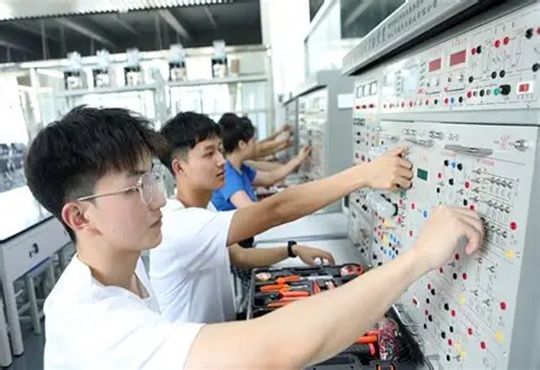
Vocational undergraduate education forms an important part of this strategy by combining higher education with professional training. Unlike conventional academic programmes that primarily emphasise theoretical learning, vocational education seeks to equip students with the practical capabilities required by employers and evolving industries.
The expansion also provides students with additional routes to obtain undergraduate qualifications, potentially improving the status and recognition of vocational education within the broader higher education system.
Strengthening collaboration between educational institutions and industry remains a central priority in China's vocational education reforms. The Ministry of Education has worked with 14 provincial-level regions to pilot changes aimed at developing a modern vocational education system.
These initiatives include the establishment of 34 national municipal industry consortia and seven national industry-education integration communities. The collaborative frameworks bring together educational institutions, enterprises, and industry stakeholders to improve the relationship between training programmes and workplace requirements.
The government has also introduced a talent development initiative focused on building clusters of highly skilled professionals. Under this approach, leading enterprises, high-level educational institutions, and industry organisations guide coordinated reforms involving courses, textbooks, teachers, internships, and practical training.
More than 3,000 industry and enterprise standards have been incorporated into vocational education teaching standards. The initiative aims to shift vocational training beyond conventional knowledge transmission towards the development of comprehensive professional capabilities.
By integrating workplace expectations into curriculum design, China seeks to ensure that students acquire skills relevant to changing industrial processes, technological developments, and employer needs.
Financial investment has played a significant role in expanding vocational education opportunities. During China's 14th Five-Year Plan period, covering 2021 to 2025, national vocational education funding increased by 23.3 percent to 757 billion yuan, equivalent to approximately $113 billion, according to Peng.
Government investment remains the primary source of funding, supported by a broader financing framework intended to sustain institutional development and student participation.
China has also established a financial assistance system covering scholarships, grants, student loans, tuition waivers, work-study opportunities, subsidies, and fee reductions. These measures are intended to reduce financial barriers and ensure that students from economically disadvantaged backgrounds can continue their education.
The funding initiatives complement broader efforts to improve educational equity by expanding access to professional training and higher qualifications across different socioeconomic groups.
Policy and legislative reforms have further strengthened the position of vocational education in China's education system. The revised Vocational Education Law formally establishes vocational education as being as important as regular education, providing a legal foundation for its continued development.
In addition, 27 provincial-level regions have introduced local regulations on vocational education, reflecting efforts to translate national policy objectives into regional implementation.
The scale of student participation highlights the importance of these reforms. Approximately five million students attend secondary vocational schools annually, while higher vocational education provides learning opportunities for nearly six million young people each year.
Peng also noted that nearly three million families see their first-generation college students enter higher education through vocational education each year. This highlights the sector's role in widening access to post-secondary qualifications and creating opportunities for families with limited prior access to higher education.
China's continued investment in vocational undergraduate programmes reflects the growing importance of technical expertise and industry-aligned skills in economic development. By expanding undergraduate-level vocational pathways, strengthening enterprise partnerships, and incorporating professional standards into teaching, the country is seeking to create a more responsive education system.
Also Read: 10 Affordable Study Abroad Options in Asia for Indians
The emphasis on practical training and industry collaboration could help educational institutions adapt to changing employment requirements while providing students with clearer routes from education to professional careers.
As vocational education continues to expand, its effectiveness will depend on the quality of teaching, the relevance of curricula, access to modern training facilities, and the strength of partnerships between institutions and employers.
China's latest measures demonstrate a sustained effort to position vocational education as an integral component of higher education and workforce development. The expanded system is intended to support educational inclusion while preparing a skilled workforce capable of meeting the demands of the country's diverse industrial sectors.
🍪 Do you like Cookies?
We use cookies to ensure you get the best experience on our website. Read more...