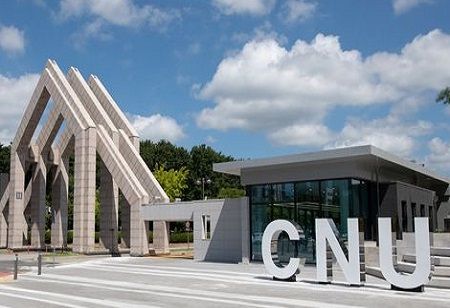
South Korea is taking another major step in expanding its global education presence as the Ministry of Education officially announced the opening of a Korean language education center in Uzbekistan in partnership with Chungnam National University. The initiative is expected to play a critical role in preparing students for the launch of Chungnam National University in Tashkent (CNUT), a new overseas university program that reflects South Korea’s broader strategy to internationalize higher education and cultivate skilled global talent connected to Korea.
The project marks a significant development in Korean higher education expansion, especially in Central Asia, where demand for Korean language learning and Korean university programs has steadily increased in recent years. On April 14, Chungnam National University signed a memorandum of agreement with the Uzbek government and several local institutions, including Tashkent Perfect University and Bukhara Innovation University, to establish and operate the university under CNU’s name in Uzbekistan.
The planned campus, known as CNUT, is expected to officially open during the second half of this year. What makes the project particularly notable is that all academic instruction will be conducted entirely in Korean, creating an immersive educational environment designed to closely mirror the experience students would receive in South Korea. Because of this, the newly launched Korean language centers are viewed as essential to helping future students gain the language proficiency needed to succeed in university-level coursework.
According to the Education Ministry, students enrolled at CNUT will spend their first two academic years in Uzbekistan while following the same curriculum used at Chungnam National University’s main campus in Korea. Students who successfully meet the university’s academic and language requirements, including achieving at least Level 4 on the Test of Proficiency in Korean (TOPIK), will then have the opportunity to continue their third and fourth years in South Korea. Upon graduation, they will receive an official degree from Chungnam National University, giving Uzbek students direct access to a Korean university qualification and international academic experience.
Also Read: MindHYVE.ai, California Northstate Launch AI Learning Platform
Education experts say the initiative reflects a changing approach in South Korea’s international education strategy. Rather than focusing only on attracting students after they arrive in Korea, universities are increasingly trying to build educational pathways overseas so students can prepare academically, linguistically, and culturally before relocating. This model could also help address challenges related to student adaptation, language barriers, and workforce readiness.
The Ministry of Education revealed that it is currently operating a specialized working group composed of university officials and education experts to support Korean universities expanding abroad. The group is examining several operational and regulatory issues institutions commonly face overseas, including accounting standards, staffing policies, faculty dispatch systems, and financial limitations associated with running international campuses.
Government officials emphasized that the success of the Uzbekistan project could serve as a blueprint for additional Korean university branches in other countries. The ministry plans to closely monitor Chungnam National University’s progress while developing long-term support systems that would allow more Korean institutions to confidently pursue overseas expansion projects in the future.
“Chungnam National University’s expansion into Uzbekistan is meaningful because it represents a shift in approach, from simply attracting more international students to cultivating prepared talent overseas who can work and settle in Korea”, says Lee Nan-young, director general for international cooperation at the Education Ministry.
“The ministry will continue to actively support Korean universities so they can confidently pursue overseas expansion, from on-site operational support to legal and institutional improvements”, she added.