- The NSIS project, supported by Erasmus+ and co-funded by the EU, launches a 10-module training program to enhance digital literacy, research skills, and entrepreneurship across India, Sri Lanka, and Nepal.
- The initiative equips students, researchers, and faculty with tools for innovation-led economic growth, covering digital skills, intellectual property, research publication, and business management.
- By fostering university-led research and entrepreneurship ecosystems, NSIS aims to strengthen regional innovation, promote knowledge transfer, and connect academia with industry across South Asia.
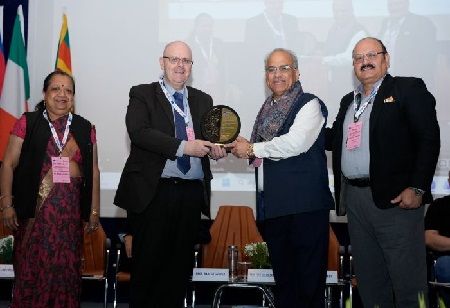
The Erasmus+ Programme-supported NSIS project, co-funded by the European Union, is set to transform research and entrepreneurship education across South Asia by introducing a 10-module training programme designed to strengthen digital literacy, research skills, and innovation capabilities. Launched at a National Awareness Day 2026 event hosted by Manav Rachna International Institute of Research and Studies (MRIIRS) in Faridabad on March 12, the initiative brings together universities from India, Sri Lanka, and Nepal to equip students and researchers with the tools they need to thrive in knowledge-driven economies.
The event, organised in collaboration with MIT World Peace University in Pune and Sathyabama Institute of Science and Technology in Chennai, highlighted the project’s vision and key outcomes, while fostering dialogue among international academic leaders, researchers, and policy stakeholders. The NSIS project, officially titled 'Developing Information, Research, and Digital Skills for Business, Innovation and Entrepreneurship', focuses on enabling universities to play a central role in nurturing innovation-led economic growth.
By promoting technology transfer, research commercialisation, and entrepreneurship, the programme aims to build stronger research ecosystems within higher education institutions. It emphasizes the critical role of libraries and research support services in advancing business and entrepreneurial capabilities, ensuring that researchers have access to the information and digital tools necessary to translate ideas into tangible outcomes.
Dr Padraig Kirby, Project Lead and Erasmus+ Coordinator for NSIS, explained that the 10-module curriculum would cover a wide range of essential areas, including digital literacy, data skills, intellectual property rights, online research publication, academic writing, and business management. The modules will be accessible through an online platform, providing universities across India, Sri Lanka, and Nepal with flexible training opportunities for students, researchers, and academic staff alike.
Also Read: How Global Research Publications Are Benefiting Researchers and Students
Dr Sarita Sachdeva, Erasmus Project Lead and Dean of Research at MRIIRS, highlighted the timely relevance of the initiative. She noted that the rapid pace of technological change and the rise of knowledge-based economies have made digital competencies, research skills, and access to information vital drivers of innovation and entrepreneurship. Through NSIS, partner institutions can collaborate more closely, share best practices, and enhance their capacity to foster research-driven entrepreneurship, supporting the development of sustainable, innovation-led regional economies.
The event featured expert discussions on the intersection of digital transformation and university-led innovation ecosystems in South Asia. Panels explored the potential of AI and digital tools to strengthen research capabilities and the role of higher education institutions in nurturing entrepreneurial mindsets. Moderated by leaders from Manav Rachna Educational Institutions, these conversations emphasized interdisciplinary collaboration, capacity-building for faculty and library staff, and strategies to integrate digital skills into academic and research environments.
By providing structured training, facilitating international knowledge exchange, and supporting entrepreneurship development initiatives, the NSIS project aims to cultivate a generation of researchers and innovators capable of translating ideas into real-world solutions. Over time, the initiative is expected to strengthen regional innovation ecosystems, encourage a startup culture within universities, and create sustainable frameworks that connect academia with industry, fostering lasting economic and technological growth across South Asia.