
-
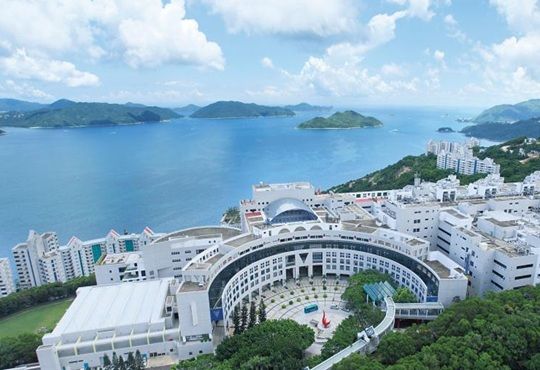
The Hong Kong University of Science and Technology (HKUST) brought together nearly 50 outstanding early-career women engineering scholars, researchers and professionals from 14 universities spanning four continents for the Asian Deans’ Forum 2026 - The Rising Stars Women in Engineering Workshop. Held at the Clear Water Bay campus from 13 to 15 September, the three-day event focused on the transformative impact of artificial intelligence on engineering education and research while fostering academic leadership skills and talent development.
The programme opened with a welcome dinner on 13 September, followed by an official opening ceremony the next day. Designed specifically for talented women pursuing or beginning academic careers in engineering, the workshop featured keynote lectures, panel discussions and interactive mentoring sessions. These activities aimed to encourage research collaboration, share career development experiences and strengthen cross-institutional networks, helping to nurture the next generation of women academic leaders and advance the engineering profession across Asia and beyond.
This year’s gathering carried special significance. HKUST hosted the workshop again to mark its 35th anniversary. Since its inaugural edition at the university in 2018, the Rising Stars programme has grown into a prominent platform for supporting female scholars, promoting inter-institutional collaboration and deepening exchanges within the engineering education community in Asia. The event is jointly organised by seven leading engineering schools in the Asia-Pacific region: HKUST, the University of New South Wales, Seoul National University, the National University of Singapore, National Taiwan University, the University of Tokyo and Tsinghua University.
The opening session included welcome addresses from Professor Nancy Ip, President of HKUST, and Professor Hong K. Lo, Dean of Engineering. Ms Mable Chan, Secretary for Transport and Logistics of the Hong Kong Special Administrative Region Government, attended as Guest of Honour and delivered opening remarks. Representatives from the seven organising institutions also took part in the ceremony.
In her remarks, President Ip reflected on her own path from neuroscientist to becoming the first woman to lead a publicly funded university in Hong Kong. “My own journey from neuroscientist to becoming the first woman president of a publicly funded university in Hong Kong has reinforced my belief that passion, perseverance, and the support of mentors and colleagues can empower individuals to overcome barriers and achieve their aspirations,” she said. “Diversity is not only a matter of fairness, but a catalyst for excellence and innovation. At HKUST, we are committed to fostering an inclusive environment where everyone can realise their full potential and contribute their unique perspectives. As we celebrate our 35th anniversary and embark on exciting new initiatives, including the establishment of HKUST School of Medicine and the launch of the new Department of Materials, we welcome talented women from around the world to join us in advancing discovery, driving innovation, and creating lasting impact for society.”
Ms Chan highlighted Hong Kong’s ongoing transport and logistics initiatives in smart and green mass transit systems, the low-altitude economy, and AI-driven public licensing and traffic management. She stressed the important role of engineers, particularly women leaders, and the need for responsible, human-centric innovation. “As we embrace these new technologies, our focus must go beyond capability to ethics, governance, and trust,” she noted. “While technology can enhance our work, accountability cannot be delegated to machines. Trust must be earned through robust governance, rigorous validation, strong cybersecurity, and human oversight of critical decisions.”
Professor Lo described the participants as some of the most promising and accomplished emerging talents in engineering. “HKUST remains deeply committed to driving innovation in engineering and creating a meaningful global impact,” he said. “We deeply value the opportunity to exchange ideas, share best practices, and further strengthen our partnerships with leading institutions worldwide.”
A central theme of the 2026 workshop was the role of artificial intelligence in higher education and research. Professor Guo Yike, Provost of HKUST and Director of the Hong Kong Generative AI Research and Development Center, delivered a plenary session titled “AI Empowers the Future Development of Higher Education.” Participants also heard a presentation on “Human-AI Co-Intelligence Education” by Professor Wang Yu-Hsing, Director of the HKUST Center for Engineering Education Innovation.
Also Read: HKUST Launches First Training Course Under Jockey Club Medical Fellowship for Mainland Talent
In the institutional presentation session “Next Frontier in Engineering Education,” engineering deans, AI experts and senior leaders from the co-organising universities shared innovations, emerging trends and practical experiences in integrating AI into teaching and research. Discussions extended to academic leadership, social engagement and institutional impact, giving participants insight into how leading universities are preparing future engineers for a rapidly changing technological landscape.
Over seven previous editions, the Rising Stars workshop has built a global network of more than 300 scholars and professionals. It continues to serve as a key platform for early-career women engineering academics to expand professional networks, develop research collaborations and advance their careers.
The event underscored HKUST’s ongoing commitment to diversity, inclusion and excellence in engineering education as the university marks 35 years of advancing science, technology and innovation.
🍪 Do you like Cookies?
We use cookies to ensure you get the best experience on our website. Read more...