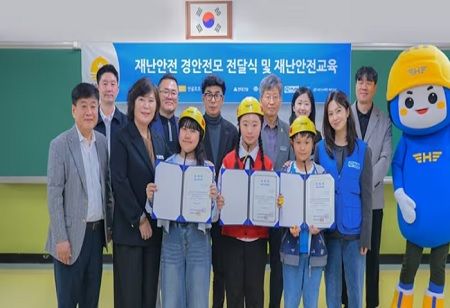
- Hyundai E&C has launched and expanded a disaster safety training program across elementary schools, focusing on students in areas near major construction sites
- As part of the initiative, students are provided with lightweight safety helmets and participate in hands-on activities such as evacuation drills and emergency response practice
- The program is designed to help children develop practical, real-life safety skills, improve awareness, and build confidence in handling disaster situations
Hyundai Engineering & Construction (Hyundai E&C) has expanded its disaster safety education program for elementary school students in South Korea, aiming to build practical safety skills from an early age.
The initiative was recently launched at Angolpo Elementary School in Jinhae, Changwon, in partnership with the Construction Industry Social Contribution Foundation and Plan Korea. It targets schools located near major construction sites, including the Busan New Port Jinhae New Port project.
As part of the program, Hyundai E&C plans to distribute around 3,600 lightweight safety helmets to students across eight elementary schools in the region. The helmets are designed to be durable, easy to wear, and effective in emergency situations.
The training focuses on hands-on learning. Students take part in activities such as practicing how to wear safety helmets, learning earthquake response through interactive methods, and participating in mock evacuation drills. These exercises aim to help children understand and apply real-world disaster response skills.
Schools have also introduced student leaders called 'Safe Captains', who assist teachers during emergencies by guiding evacuation and maintaining order. This approach encourages responsibility and leadership among students.
Also Read: Malaysia Expands AI Skilling Push with Microsoft Elevate
Hyundai E&C has been running similar programs since 2019 in disaster-prone regions such as Gyeongju, Busan, and Ulsan. By the end of 2025, the company had supported 48 schools, providing safety equipment to over 23,000 students and conducting training for nearly 19,000 participants.
The company plans to continue expanding these programs, linking safety education with areas near its project sites. The focus remains on combining equipment support with practical training to better prepare students for emergencies.