Synopsis
Seventy Saudi students graduating from top US universities were recognized at Harvard University, reflecting Saudi Arabia’s continued investment in global education, future-ready skills, and talent development aligned with Vision 2030.
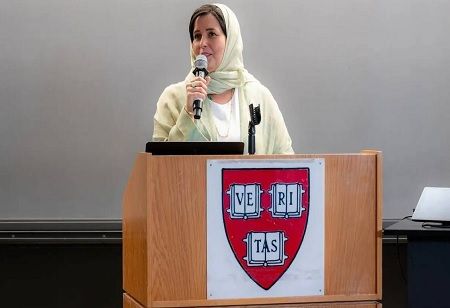
Saudi Arabia celebrated the achievements of 70 students graduating from some of the United States’ most prestigious universities during a special ceremony held at Harvard University. The event highlighted the Kingdom’s long-term commitment to developing skilled talent and preparing future leaders through international education.
The ceremony was organized under the Custodian of the Two Holy Mosques Scholarship Program and brought together graduates, their families, academic leaders, and representatives from the Saudi education community.
Speaking at the event, Saudi Cultural Attaché Tahany Aleisa said the ceremony honored 70 male and female graduates from universities across the Boston region. The graduates completed degrees in fields that are critical to Saudi Arabia’s economic transformation and workforce development goals.
Among the institutions represented, Harvard University accounted for 29 graduates. Massachusetts Institute of Technology contributed nine graduates, while Boston University had 19 graduates and Tufts University had 10. Additional students graduated from University of Massachusetts Boston and Johnson & Wales University.
The students earned qualifications in high-demand disciplines such as medicine, public health, dentistry, engineering, computer science, artificial intelligence, business administration, public policy, law, finance, and supply chain management. These areas have been identified as strategic priorities under Saudi Arabia’s Vision 2030 development agenda.
Education officials said the graduates represent a new generation of professionals equipped with globally recognized skills and international experience. Their expertise is expected to support the Kingdom’s efforts to diversify its economy, accelerate innovation, and build a competitive knowledge-based workforce.
Aleisa noted that the success of Saudi students at world-renowned institutions demonstrates the country’s continued investment in human capital development. She emphasized that education remains a key driver of national progress and economic growth.
The scholarship initiative has played a major role in expanding educational opportunities for Saudi students over the past two decades. The program was first launched in 2005 by the late King Abdullah bin Abdulaziz to enable students to pursue higher education at leading international universities, particularly in the United States.
In recent years, the initiative has evolved to align more closely with labor market requirements and emerging industries. Under Saudi Vision 2030, the program was restructured and expanded to focus on developing specialized skills that can contribute directly to the Kingdom’s future economy.
A major update came in 2022 when Mohammed bin Salman introduced a new strategy aimed at increasing placements in top global universities. The plan seeks to send 70,000 Saudi students to leading international institutions by 2030.
Also Read: KAIST Launches AI College Initiative For Future Global Leaders
The United States remains the largest destination for scholarship recipients. Current estimates suggest that between 16,000 and 18,000 Saudi scholarship students and sponsored dependents are studying at accredited American universities. Many are enrolled in advanced programs related to science, technology, engineering, medicine, business, and emerging digital fields.
Education experts view the program as a critical tool for addressing future workforce needs. By linking academic training with evolving industry demands, Saudi Arabia aims to equip students with the skills needed for leadership roles in sectors such as technology, healthcare, finance, research, and innovation.
The Harvard ceremony not only celebrated academic achievement but also underscored Saudi Arabia’s broader strategy of investing in education, employability, and global talent development to support long-term economic growth.