- Korea will move its Korean language test fully online by 2029, allowing students worldwide to take the exam remotely with computer-based testing and AI-supported evaluation.
- AI students may get easier permanent residency options, linking advanced technology education with long-term job opportunities in Korea.
- Overseas Korean language education will expand to support jobs and skills, with more teachers, digital learning materials, and training programs to prepare students for study and work in Korea.
South Korea has announced a new set of education policies aimed at attracting more international students and supporting learners from multicultural backgrounds. The focus is on language skills, digital testing, and smoother links between education and employment.
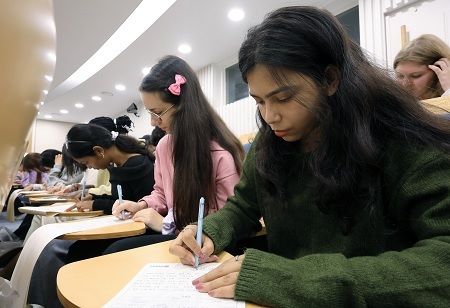
A key highlight is the reform of the Test of Proficiency in Korean (TOPIK). The Ministry of Education said the exam will become fully digital by 2029. Under the new system, students can take the test online from home through a computer-based format. The government also plans to use artificial intelligence to help with grading, making the process faster and more efficient.
TOPIK plays an important role for foreign students and workers, as it is required for university admissions, scholarships, and many jobs in Korea. Officials said demand for the test has grown sharply due to the global popularity of Korean culture and the rising number of overseas students choosing Korean universities.
The language test upgrade is part of a broader plan to strengthen Korean education abroad and improve support systems inside the country. The government will increase the number of Korean language teachers sent overseas from 77 to around 100 by 2026. It will also appoint 20 teaching assistants to help with spoken Korean and cultural learning.
Also Read: The Untold Role of K-Pop in Malaysian Education
At present, Korean language programs run in nearly 2,800 schools across 47 countries. To expand access, Korea will distribute 260,000 printed textbooks to 10 countries by 2026 and develop more online learning materials. Teachers from 18 countries will also be invited to Korea for training.
In a move linked to jobs and skills, the government said it will ease permanent residency requirements for international students studying artificial intelligence at selected universities. Officials hope these steps will help students study, work, and build long-term careers in Korea.