
-
Synopsis
United Arab Emirates and China have partnered to advance AI education through joint programs, research collaboration, and technology-driven learning initiatives. The alliance aims to equip students with future-ready digital skills, foster innovation, and strengthen academic and technological ties between the two nations.A senior delegation from the United Arab Emirates recently traveled to China to participate in the World Digital Education Conference 2026, highlighting the growing international focus on integrating Artificial Intelligence into modern education systems. Led by Dr. Abdulrahman Al Awar, the UAE’s Minister of Human Resources and Emiratisation and Acting Minister of Higher Education and Scientific Research, the visit reflected the country’s strong commitment to advancing digital education, strengthening academic partnerships, and preparing future generations for an increasingly technology-driven global economy.
Held in Hangzhou under the theme 'AI + Education: Transformation, Development, Governance', the international conference brought together policymakers, educators, researchers, and technology leaders from around the world to discuss how smart technologies are reshaping the future of learning. The event focused heavily on the role of AI in education, particularly how countries can use intelligent systems to improve teaching quality, enhance student learning outcomes, support scientific research, and develop highly skilled workforces capable of meeting future economic demands.
During the visit, the UAE delegation explored how China is successfully using advanced technologies to transform higher education institutions and create stronger connections between universities and industry sectors. Chinese universities and research centers demonstrated how Artificial Intelligence is being applied in classrooms, research laboratories, and administrative systems to personalize learning experiences, improve academic performance, and identify future workforce needs. UAE officials viewed these strategies as highly relevant as the country continues accelerating its own digital transformation agenda and investing heavily in innovation-based education reforms.
The delegation included representatives from both the Ministry of Human Resources and Emiratisation and the Ministry of Higher Education and Scientific Research, alongside senior academic leaders from some of the UAE’s top universities, including United Arab Emirates University, Higher Colleges of Technology, Zayed University, Khalifa University, and Hamdan Bin Mohammed Smart University. Their participation reflected the UAE’s broader national strategy to modernize higher learning institutions and align educational programs with future labor market requirements.
Also Read: UAE Startup Push Targets 10,000 Entrepreneurs In 5 Years
Conference discussions examined global trends in higher education, emerging technologies in scientific research, and international best practices for implementing smart learning systems. Experts at the event emphasized that the future of education will increasingly rely on data-driven technologies, adaptive learning platforms, and AI-powered research tools that can help students develop critical thinking, creativity, and digital problem-solving skills. Educational leaders also stressed the importance of balancing technological innovation with ethical governance to ensure that Artificial Intelligence is used responsibly and inclusively within academic environments.
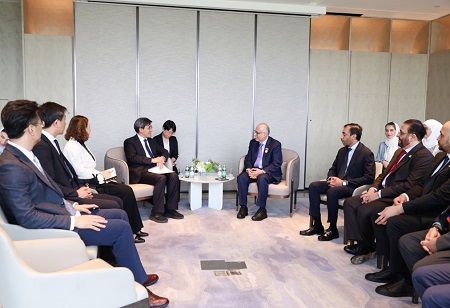
On the sidelines of the conference, Dr. Al Awar and the UAE delegation met with officials from two of China’s most prestigious institutions, Tsinghua University and Shanghai Jiao Tong University, to discuss opportunities for deeper academic collaboration between the two countries. Conversations focused on student exchange programs, collaborative scientific research, faculty cooperation, and the development of future-ready education systems capable of supporting rapid technological advancement.
The discussions also explored cooperation in key sectors such as engineering, medicine, energy, advanced technologies, and Artificial Intelligence research. These fields are considered strategic priorities for both nations as they work toward strengthening innovation ecosystems and building knowledge-based economies. Educational experts believe that international academic partnerships are becoming increasingly important because they allow universities to share expertise, accelerate scientific discovery, and provide students with global learning opportunities that prepare them for competitive international careers.
According to the UAE Ministry of Higher Education and Scientific Research, participation in the conference formed part of the country’s broader efforts to strengthen its global presence in scientific research and advanced education. The ministry stated that international cooperation remains essential for developing a modern educational ecosystem that supports sustainable economic growth, technological innovation, and workforce readiness in the digital era.
As countries worldwide continue adapting to rapid technological change, events like the World Digital Education Conference demonstrate how global collaboration, innovation, and AI-driven learning solutions are shaping the future of education and redefining how students prepare for tomorrow’s careers.
🍪 Do you like Cookies?
We use cookies to ensure you get the best experience on our website. Read more...