
-
Synopsis
Sri Lanka has launched its first national AI policy framework for higher education in collaboration with the University Grants Commission and the United States Embassy in Sri Lanka. The framework aims to guide responsible AI integration in universities, support digital learning, strengthen research, and prepare students for an AI-driven global economy.Sri Lanka has taken a significant step toward modernizing its higher education system with the launch of the country’s first national AI policy framework for higher education, developed in collaboration with the US Embassy in Sri Lanka and the University Grants Commission (UGC). The initiative reflects the growing importance of artificial intelligence in shaping future academic systems, digital learning environments, and research ecosystems across developing economies.
Education leaders and policymakers believe the framework will help universities integrate emerging AI technologies responsibly while preparing students and educators for a rapidly evolving global digital economy.
The policy framework was developed following a formal request from the University Grants Commission, which sought international collaboration and technical expertise to guide Sri Lanka’s approach to artificial intelligence in higher education. In response, the US Embassy worked closely with Sri Lankan educational authorities and local stakeholders to create a framework informed by American standards, innovation practices, and global AI governance principles.
Officials involved in the process emphasized that the initiative is intended to provide universities with structured guidance on the ethical, academic, and technological integration of artificial intelligence tools within teaching and research environments.
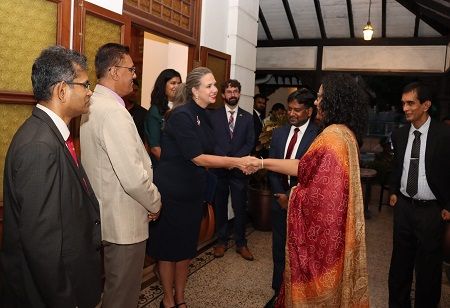
The framework drafting process culminated in a soft launch ceremony held at the UGC headquarters, attended by senior government officials, academic leaders, diplomats, and education policymakers. US Embassy Charge d’Affaires a.i. Jayne Howell participated in the launch event alongside Prime Minister and Education Minister Dr. Harini Amarasuriya, who attended as the chief guest. The event highlighted the strengthening educational and technological cooperation between Sri Lanka and the United States, particularly in areas related to digital transformation, innovation, and advanced learning systems.
The newly introduced AI policy framework is expected to provide universities and higher education institutions with strategic direction on how artificial intelligence can be responsibly adopted in classrooms, research projects, administration, and student services. Experts say AI technologies are increasingly transforming global education systems by enabling personalized learning, intelligent research tools, automated administrative support, and advanced data-driven academic planning.
Also Read: UGC Introduces 15-Day Foreign Degree Recognition Process
Sri Lankan authorities hope the framework will encourage universities to embrace innovation while also maintaining academic integrity, data privacy, transparency, and ethical accountability. Education analysts view the launch as a timely initiative as countries worldwide race to prepare students for careers influenced by automation, machine learning, and digital technologies.
Universities are facing increasing pressure to modernize curricula and equip graduates with skills related to artificial intelligence, data science, digital literacy, and emerging technologies that are reshaping labor markets globally. By establishing a national policy framework early, Sri Lanka aims to position its higher education sector to remain competitive and aligned with international academic and technological standards.
Officials involved in the initiative noted that collaboration with American experts provided valuable insights into international AI governance models, educational best practices, and responsible innovation strategies. The framework is expected to serve as a foundation for future policy development, institutional reforms, and digital education initiatives across Sri Lanka’s university system. It may also support the creation of AI-focused research programs, faculty training initiatives, and partnerships between universities, technology companies, and international academic institutions.
The launch of Sri Lanka’s first higher education AI framework also reflects a broader global trend in which governments and universities are increasingly recognizing artificial intelligence as a transformative force in education and workforce development. Policymakers believe the responsible integration of AI into universities can improve teaching quality, expand access to educational resources, and strengthen national innovation ecosystems.
As countries continue to invest in digital transformation and future-ready education systems, Sri Lanka’s collaboration with the United States signals a strategic effort to ensure that its students and institutions are prepared for the next era of global technological change.
🍪 Do you like Cookies?
We use cookies to ensure you get the best experience on our website. Read more...