
-
WhalesBot is strengthening its position in global STEM and AI education by linking hands-on robotics, coding, structured AI learning, and international competition into one continuous pathway for students. The company, headquartered in Shanghai, recently highlighted the success of Romanian student teams who trained with its robotics kits and then competed at a major regional event in Vietnam.
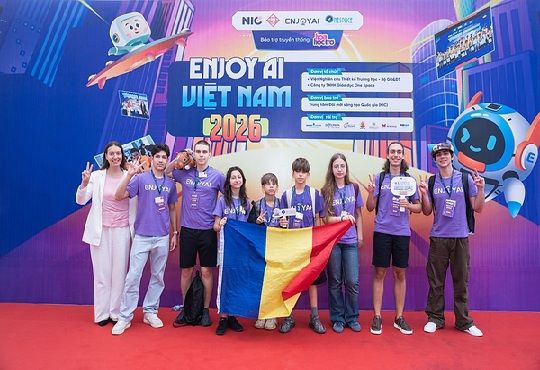
In August 2026, student teams from WhalesBot’s Romanian partner Atelierele Tamarei took part in the ENJOY AI Asian Open held in Hanoi. After preparing during a summer robotics bootcamp where they built, coded, and tested projects using WhalesBot hardware, the teams earned second place in both the Mining Expedition and Skyline Adventure categories. The results illustrate how regular classroom and after-school training can translate into competitive performance on an international stage.
WhalesBot designs its offerings for learners between the ages of 3 and 22. The company combines physical robotics kits with software tools and a project-based curriculum called AI Foundations. Hardware and software work together so that students move from physical construction and basic coding into more advanced AI concepts and real-world applications. ENJOY AI, the competition platform supported by WhalesBot, gives participants the chance to apply those skills under timed, challenge-based conditions.
According to company figures, WhalesBot products and programs now reach more than 81 countries and regions. The organization works with over 30,000 schools and 20,000 educational institutions. ENJOY AI itself runs more than 800 events each year and engages over one million participants. These numbers reflect a deliberate strategy of building a complete ecosystem rather than selling isolated kits or courses.
Also Read: Nurturing Tomorrow's Innovators: STEM Education in Myanmar
Xufeng Fei, Founder and CEO of WhalesBot, described the company’s approach in clear terms. “As AI and technological literacy become increasingly important, the real challenge is how to help young people keep learning and applying their skills over time,” he said. “Hardware and software alone are far from enough. What we want to build is a complete STEM and AI learning environment where young people can play, learn, compete, and innovate, with each stage building on the last to support continued growth.”
The World Economic Forum’s Future of Jobs Report 2025 provides external context for this focus. The report estimates that 39 percent of workers’ core skills will change by 2030, with AI, big data, and technological literacy ranked among the fastest-growing skill areas. Early exposure in schools and extracurricular programs is therefore viewed as an important starting point, but sustained progression across years of learning is considered essential.
WhalesBot positions its ecosystem as a response to that longer-term need. Students begin with age-appropriate robotics kits that encourage exploration and basic programming. They then move into the AI Foundations platform, which structures projects around practical problems. Competition through ENJOY AI adds motivation, teamwork experience, and the pressure of real deadlines. The company works with schools and STEM organizations in multiple countries to adapt the pathway to local curricula and learning cultures.
Looking ahead, the next major milestone is the ENJOY AI 2026 Global Final. The event is scheduled for December 4–6 in Hengdian, China, and is expected to bring together more than 35,000 young participants from around the world. Organizers present the global final as both a high-level competition and a showcase for the skills developed through the broader WhalesBot system.
Founded in 2018, WhalesBot Technology has sold more than one million units of its educational products. The company continues to emphasize integration across hardware, software, curriculum, and competition rather than treating any single element as sufficient on its own. Its partnership model includes local organizations such as Atelierele Tamarei in Romania, which deliver training and prepare teams for regional and international events.
The Romanian teams’ second-place finishes in Hanoi serve as a concrete example of the pathway in action. Students moved from regular training sessions to intensive summer preparation and then to competition abroad. Their results demonstrate both technical competence and the ability to adapt strategies under competitive conditions. Similar stories are emerging from other partner organizations as ENJOY AI expands its calendar of events.
For educators and parents, the appeal of an integrated ecosystem lies in continuity. Instead of switching between unrelated kits, apps, and contests, students encounter a consistent set of tools and expectations that grow with them. Coding concepts introduced with simple robots can reappear later in AI projects. Competition challenges reinforce classroom lessons while adding elements of creativity and problem-solving under constraints.
WhalesBot’s global footprint continues to grow through school partnerships and local STEM organizations. The company maintains an active presence on professional and social platforms, sharing updates on curriculum developments, competition results, and new product releases. As demand for AI and technological literacy rises, the organization presents its connected model as one practical way to help young people develop relevant skills over multiple years of learning.
The December global final in Hengdian will offer another opportunity to observe the ecosystem at scale. Thousands of students will arrive with experience gained from local training programs and regional contests. Their performance will provide further data on how effectively the combination of hardware, software, curriculum, and competition supports skill development across different age groups and national education systems.
In summary, WhalesBot is advancing a model that treats STEM and AI education as a continuous journey rather than a series of isolated activities. Recent competitive success by Romanian teams, expanding reach across more than 80 countries, and an upcoming global final all form part of that larger effort to keep young learners engaged from early exploration through advanced application.
🍪 Do you like Cookies?
We use cookies to ensure you get the best experience on our website. Read more...