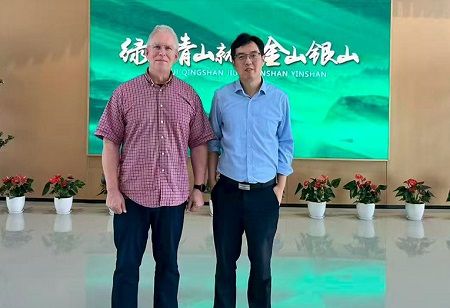
- Chris Zirkle’s two decades of global engagement began with simply saying 'yes' to international opportunities.
- His long-term work in China has shaped vocational teacher education and informed policy discussions.
- He believes international exposure broadens perspectives, strengthens teaching, and opens new academic pathways.
According to Associate Professor Chris Zirkle, the best thing any academic can do is say 'yes' to international opportunities. His Ohio State University global journey started over twenty years ago and helped shape both his personal growth and professional path. Now, Zirkle leads three teacher licensure programs within the College of Education and Human Ecology, specialising in vocational teacher education - educators who teach hands-on, occupation-specific skills. He says his work continues to benefit from the relationships and experiences he's built abroad.
Zirkle remembers his international trajectory as beginning in 2003, when he accepted an invitation to visit East Asia. What began as one opportunity has snowballed into a lifetime of travel around the world, to present research, conduct comparative research, and develop enduring partnerships with institutions. He's received multiple Fulbright awards and regularly welcomes visiting scholars to Columbus, so academic traffic goes both ways. Looking back on what got him headed this way, he says it's his mom, who encouraged him from a young age always to travel, if given the opportunity - advice he's followed through thanks to the institutional encouragement he found at Ohio State.
China has been a particularly significant location in Zirkle’s international career. Over the years, he has collaborated with institutions such as East China Normal University, Nantong University, and Tongji University to help strengthen vocational teacher education. His comparative research has highlighted a key challenge in China’s system: many vocational teachers enter the profession directly from university without industry experience. This contrasts sharply with the U.S. model in which individuals with practical, real-world experience are often trained to become educators an approach Zirkle oversees through one of his licensure programs at Ohio State.
Also Read: The Impact of Teacher Training Programs on Educational Quality
“Many of these educators have only read things out of a book”, he said, using that reality to stress the need for industry exposure to properly teach vocational subjects. His recommendations, shared via conferences, seminars and advisory meetings, have helped shape changes in teacher qualification policy in China something he believes demonstrates an impact from his work. When Ohio State’s China Gateway helped him land a 10-year visa, Wright was able to extend this engagement even deeper.
Zirkle cites as his single most valuable professional benefit the privilege of observing how various educational systems work. These insights have expanded his perspectives on global problems, have allowed him to spread solutions, and have enriched his own teaching and research at home. He advises other faculty members to seize the same opportunities, stating that international engagement promotes cultural competency, widens circles of academic peers, and creates new pathways for scholarly influence.
With international comparative vocational education projects planned in both China and Norway next year, his global work is set to continue. For Zirkle, the guiding principle remains simple: stay open, be willing, and say yes when opportunities arise. As he puts it, “Whenever someone from China, or anywhere really, has reached out, I’ve always said yes. More faculty should be open to international opportunities it all begins with being welcoming”.