Best Models for Building Research Skills in PhD Programs

-
- PhD programs focus on prototypes and patents
- Candidates gain AI and industry-ready skills
- Labs offer hands-on Industry 4.0 experience
Asia is rewriting the rules of doctoral education. While the West clings to 20th-century theses, China, ASEAN nations, and South Asia are launching PhD models that treat research skills as launchpads for real factories, patents, and startups. These fresh frameworks powered by 2025-2026 breakthroughs equip scholars to co-create with AI, build working prototypes, and master transversal skills that deliver 30-50 percent faster industry impact.
For PhD candidates, universities, and businesses across Asia, they mean higher employability, quicker patents, and direct contributions to smart manufacturing.
Let’s explore five never-before-combined models that are already transforming programs in China, Singapore, India, Thailand, Laos, Cambodia, and beyond.
Each one is designed for immediate reader action, gain skills, file patents, and land roles at Foxconn, Tata, or ASEAN giants.
Top 5 PhD Models Driving Asia’s Industry 4.0 Leadership
Product PhD Pathway: China’s groundbreaking 2025 reform lets engineering PhDs replace 70 percent of thesis writing with working prototypes or commercial products. Scholars partner with factories from day one to solve real Industry 4.0 problems AI-driven robotics or IoT supply chains then file patents during studies.
Research skills explode through iterative testing, user validation, and market scaling. Early adopters at leading Chinese universities report 80 percent of graduates launching spin-offs or joining R&D teams immediately.
Reader tip: Target City University of Hong Kong or Tsinghua pilots, prepare one prototype idea in your application.
HIRES-PhD Transversal Skills Mastery: Launched globally in January 2025 and rapidly adopted across Indian IITs and Singapore universities, the HIRES-PhD framework distills 16 employability skills into four themes, research agility, digital leadership, adaptive collaboration, and ethical innovation.
No more isolated theory scholars run industry sprints while building AI ethics dashboards or data-optimization tools. Unlike old models, it guarantees transversal mastery that employers crave. Graduates publish joint papers and secure grants 40 percent faster.
Reader action: Ask your supervisor to embed HIRES modules, track your 16-skill scorecard quarterly.
AI Co-Researcher PhD Model: Using OpenAI o-series, Gemini 2.0, and Claude Agentic tools, PhD candidates now treat advanced AI as daily co-pilots for hypothesis generation, cross-disciplinary synthesis, and rapid experimentation. Pioneered in Singapore and expanding to South Korea and India, scholars co-author papers with AI while solving cyber-physical system challenges.
Skills in prompt engineering, ethical oversight, and pattern discovery skyrocket. One 2025 pilot cut research timelines by 50 percent while producing novel Industry 4.0 methodologies. Reader tip: Start with free AI research agents in your proposal; document every human-AI decision for your portfolio.
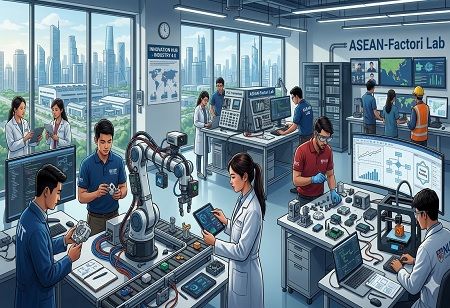
ASEAN Factori Platform Labs: The 2023-2025 ASEAN-Factori project (Thailand, Laos, Cambodia + European partners) created shared cyber-security and automation platforms now embedded in PhD curricula. Scholars remotely control real PLC labs across borders, running Industry 4.0 experiments on live data from partner factories.
Research skills focus on interoperability, real-time cybersecurity, and multi-country deployment. Graduates train company staff during studies.
Reader benefit: Apply via Mae Fah Luang University or National University of Laos gain three-country network and vocational training credentials.
Industry 4.0 SEI Fusion Labs: South Asia’s 2024-2025 SEI Framework (Success factors, Efficiency, Inclusion) merges technical skills, digital literacy, and cognitive adaptability inside dedicated labs. PhD candidates design zero-waste smart systems using IoT + blockchain while addressing workforce inclusion. Adopted in India, Bangladesh, and Malaysia, these labs produce graduates who simultaneously cut emissions and boost factory ROI.
Unique edge: Built-in soft-skills certification.
Reader step: Join ERIA-linked programs, pitch your SEI project to local manufacturers for co-funding.
Also Read: 10 Parenting Strategies for Gen Alpha in Asia's Over-Stimulated Era
Voices from Industry Leaders
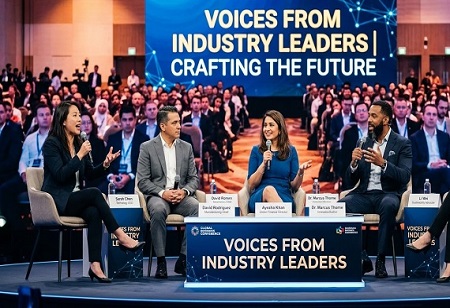
Geoff Thomas, Senior Vice President Asia Pacific at Qlik, highlights the power of data-focused approaches, “Data literacy is the answer to thriving in Industry 4.0. Organizations in ASEAN must equip talent with the tools to turn data into decisions and programs that build these skills through real simulations and collaboration are delivering the edge companies crave”.
A senior manufacturing executive in Singapore (2025 industry survey) shares, “Product PhDs and AI co-researchers give us talent who arrive with working prototypes implementation time drops by half”.
An ASEAN factory leader adds, “HIRES-PhD and Factori platforms create researchers who speak both code and factory language. They don’t just study Industry 4.0, they deploy it on day one”.
A South Asian quality director notes, “SEI Fusion Labs close our biggest gap researchers who deliver sustainable, inclusive solutions that actually scale”.
Your Immediate Action Plan to Join the Revolution
- Scan 2026 intake calls for 'Product PhD', 'HIRES-PhD', or 'AI Co-Researcher' tracks.
- Build one mini-prototype or AI-assisted literature map this month.
- Approach industry via university MoUs for co-supervision.
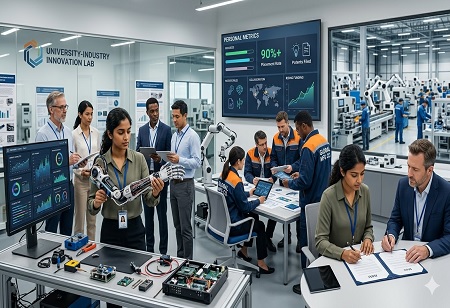
- Track personal metrics, patents filed, sprints completed, cross-border collaborations.
Universities piloting these report 90%+ placement rates and rising corporate funding. PhD candidates who choose them become the talent Asia’s factories fight to hire.
Closing It Up!
Asia’s 2026 PhD programs aren’t just evolving they’re leapfrogging the world. By mastering these five unique models, gain research skills that create patents, launch products, and drive real Industry 4.0 transformation. Universities, pick one pilot this semester. Candidates, apply today. Businesses, partner now.
The smartest researchers in Asia aren’t waiting for the future. They’re building it prototype by prototype, skill by skill. Join them and lead the charge.
🍪 Do you like Cookies?
We use cookies to ensure you get the best experience on our website. Read more...