- Government launches Tk 211.90 crore project to modernize medical, nursing, and population education services nationwide.
- Initiative includes simulation labs, digital platforms, faculty training, and upgraded e-library and hospital management systems.
- NIPORT and DGNM to conduct thousands of training sessions, update curricula, and carry out national health surveys to strengthen service delivery.
The Government has undertaken a massive scheme to modernize and strengthen the management of medical, nursing and population education services throughout the country. The project titled 'Integrated Improvement in the Management of Activities of the Directorate General of Medical Education (DGME), NIPORT and the Directorate General of Nursing and Midwifery (DGNM)' is being executed by the Health Education and Family Welfare Division under the Ministry of Health and Family Welfare with an estimated cost of Tk 211.90 crore.
The project, scheduled for July 2025 to June 2026, has been designed to continue the essential activities relating to the management of medical, nursing and population education services that were earlier covered under the Health, Population and Nutrition Sector Programme, which came to an end in June 2024 after its fourth phase.
While the HPNSP had significantly contributed to improvement in healthcare delivery since 1998, the Ministry identified structural inefficiencies with overlapping responsibilities and duplication in various operational plans. The new project will gradually integrate key activities of the HPNSP framework into the regular institutional framework to ensure continuity through a more stable and recurring budget, while enhancing efficiency and oversight.
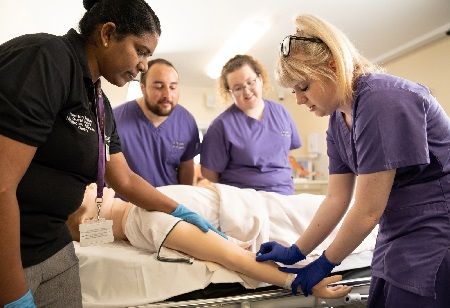
A major thrust of the initiative is upgrading medical, nursing, and midwifery education. The project will establish state-of-the-art simulation laboratories in five government medical colleges, develop and customize ten software modules, and conduct hands-on training programs for faculty members in medical and dental colleges. Digital record management for students will be intensified, online e-library services upgraded, and the PMIS further extended. The DGME will bring academic and administrative data onto one digital platform, and the hospital management training modules are likely to lead to better operational efficiency and service delivery.
Also Read: Singaporean Students Embrace Public Service through Internship Program
The project also focuses on the enhancement of human resource and facility management. Digital registries will be implemented by DGME, DGNM, and NIPORT; automation of hostel seat allocation and fee management will be carried out; and utilities and administrative systems will be upgraded at all education and training institutions. Shortfalls in the availability of the following essential resources will be met: 3,030 units of medical and surgical equipment, 145 computers, 2,397 educational tools, 2,696 pieces of furniture, 600 bedding sets, and 96 office equipment items.
NIPORT is expected to deliver 600 training batches involving 15,000 participants across its 35 institutions, while DGNM will conduct 320 batches for 9,600 nurses and midwives. Finally, NIPORT will update three training curricula, complete twelve unfinished studies under the previous sector programme, and carry out two major national surveys: the Bangladesh Demographic and Health Survey (BDHS) and the Bangladesh Health Facility Survey (BHFS), providing essential data for evidence-based health and family planning policies.
Project activities have been mapped according to the operational jurisdictions of the three implementing agencies and span medical and dental colleges, training institutes, nursing institutions, and government hospitals across the country. After a pre-appraisal assessment and recommendations for approval from the Project Evaluation Committee, the ministry reshaped the Development Project Proposal in line with technical guidance. As officials related, the project is in tune with Sustainable Development Goal 3, the Bangladesh Population Policy 2025, and greater health education goals, guaranteeing modernized clinical education, institutional transparency, digital transformation, and strengthened health service delivery across the country.