
-
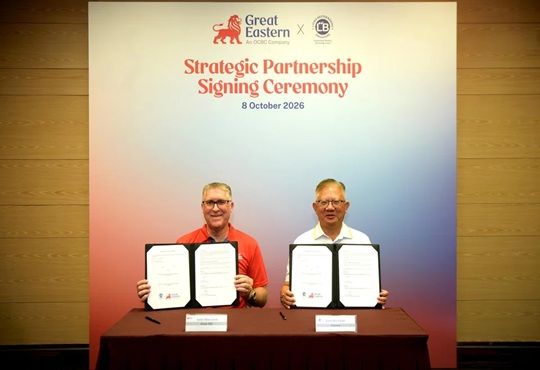
In a significant step to support Singapore’s growing elderly population, insurer Great Eastern and charity Lions Befrienders have formalised a partnership aimed at reaching 2,000 seniors through targeted programmes focused on social connection, active ageing and health literacy. The memorandum of understanding (MOU) was signed on 8 October 2026, marking a deeper collaboration between the two organisations that first connected in 2024 through Project V, a corporate volunteering platform that pairs companies with charities.
Singapore officially became a super-aged society this year, with more than 20 per cent of its population aged 65 and above. This demographic shift has heightened concerns around social isolation, loneliness and the need for sustained community support to help seniors age well. The new partnership directly addresses these challenges by combining Great Eastern’s extensive volunteer network with Lions Befrienders’ expertise in befriending and community-based senior care.
The collaboration centres on three main pillars: tele-befriending, the adoption of three active ageing centres (AACs), and structured health education initiatives. Together, these efforts seek to move seniors from isolation toward meaningful community engagement while equipping them with practical knowledge on physical and mental well-being.
Great Eastern aims to mobilise more than 1,000 volunteers many of them sales representatives already skilled in listening, building rapport and approaching people for the tele-befriending programme. These volunteers will provide regular emotional support, companionship and a listening ear to vulnerable seniors. “Singapore’s efforts to help people age well require sustained human effort on the ground,” said Kwek-Perroy Li Choo, Great Eastern’s managing director and chair of its community and culture task force. “Keeping seniors socially engaged and healthy takes people who show up, listen and build relationships over time.”
Karen Wee, executive director of Lions Befrienders, noted that Great Eastern’s staff are particularly well-suited for this role. Most have already been trained to interact with seniors through their work as insurance agents. Kwek-Perroy added that the insurer’s representatives are “very good at listening, approaching strangers and are very persistent… These are attributes that will make them very good for tele-befriending.”
Once trust is established through consistent phone or video contact, the partners will encourage seniors to step outside their homes and participate in activities at active ageing centres or other community spaces. The goal, according to Wee, is to help seniors progress “from a state of social isolation and loneliness to now moving out into the community.”
As part of this transition, Great Eastern will formally adopt three active ageing centres two located in Queenstown and one in Tampines. The insurer will work alongside community partners to reconnect isolated seniors with activities, peer networks and neighbourhood support systems. Staff and representatives will contribute time and resources to centre programmes, including large-scale community events that celebrate festive occasions. “We will be fully committed to whatever activities are needed at those centres. This will give time to our employees and representatives to volunteer,” Kwek-Perroy explained.
The third pillar focuses on health education. Great Eastern plans to train existing senior volunteers at Lions Befrienders to become health ambassadors. These ambassadors will attend workshops and help curate accessible content on topics such as chronic conditions, physical health and mental well-being. The aim is to translate expert knowledge into practical, easy-to-understand information that seniors can share with friends and peers.
“A lot of content out there is written by psychologists and clinical experts,” Wee observed. The partnership seeks to make such material “palatable and easily absorbed by the receiver.” By empowering senior ambassadors, the initiative creates a peer-to-peer model of knowledge sharing that is expected to resonate more strongly within the community.
This latest partnership builds on the initial connection forged through Project V in 2024. That earlier collaboration introduced structured corporate volunteering opportunities, and the new MOU elevates the relationship into a more regular and sustained engagement. Both organisations emphasise that addressing the needs of a super-aged society requires long-term commitment rather than one-off events.
The timing is particularly relevant. As Singapore’s elderly population continues to grow, the demand for community-based support systems that reduce isolation and promote healthy ageing is expected to rise. Tele-befriending offers a scalable way to reach seniors who may be housebound or hesitant to leave their homes, while the adoption of AACs provides physical spaces for social interaction and activity. Health education rounds out the approach by equipping seniors with the knowledge to manage their well-being proactively.
Great Eastern’s involvement also reflects a broader trend of corporate social responsibility programmes that leverage employees’ professional skills for community benefit. Insurance agents’ natural strengths in communication and relationship-building translate effectively into befriending roles. At the same time, the charity gains access to a large pool of trained volunteers and the resources needed to expand its reach.
The three adopted AACs in Queenstown and Tampines will serve as focal points for on-the-ground activities. Volunteers are expected to support festive celebrations, regular programmes and efforts to integrate previously isolated seniors into existing networks. Over time, the partners hope these centres will become hubs where seniors not only receive support but also contribute as ambassadors and peer mentors.
Health education workshops will cover practical subjects relevant to older adults, including the management of chronic conditions, maintaining physical mobility and supporting mental health. Senior ambassadors will play a key role in adapting this content so it feels relevant and approachable. This peer-led model is designed to overcome the common barrier of technical or clinical language that can make health information difficult for some seniors to absorb.
Also Read: ILD Summit in Dubai Focuses on Advancements in Respiratory Diseases
Looking ahead, the partnership is structured to deliver measurable impact: 2,000 seniors engaged, more than 1,000 volunteers mobilised, three AACs supported, and a growing network of trained senior health ambassadors. Success will be measured not only by numbers but by the quality of relationships formed and the extent to which seniors move from isolation into active community participation.
In a country where the proportion of older adults continues to climb, initiatives that combine corporate resources, volunteer energy and community expertise are increasingly vital. The Great Eastern–Lions Befrienders collaboration offers a practical model for how sustained partnerships can help seniors remain socially connected, physically active and better informed about their health.
As Kwek-Perroy underscored, the work of helping people age well ultimately depends on people who consistently show up. Through tele-befriending, centre adoption and peer-led health education, this partnership aims to ensure that more seniors in Singapore have access to exactly that kind of support.
🍪 Do you like Cookies?
We use cookies to ensure you get the best experience on our website. Read more...