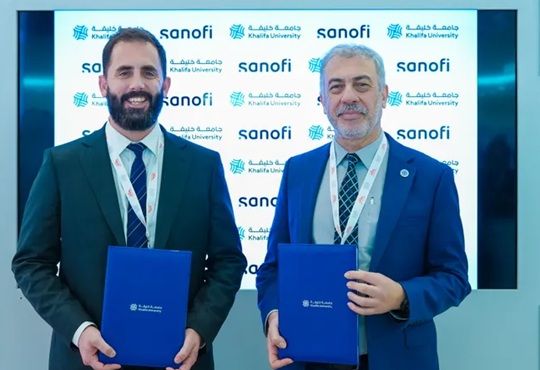
Khalifa University of Science and Technology and Sanofi have signed a strategic research agreement to advance genomic studies into asthma and chronic obstructive pulmonary disease in the United Arab Emirates. The collaboration, announced on 4 November 2026, will conduct a genome-wide association study that combines the university’s genomic research expertise with Sanofi’s biopharmaceutical research and development capabilities.
The joint project aims to examine genetic variations linked to asthma and COPD within the local study population. Researchers will generate scientific evidence relevant to the region, deepen understanding of disease biology, and identify biological pathways that may support future therapeutic discovery. A key goal is to address the historical underrepresentation of Middle Eastern and regional populations in large-scale genomic research while strengthening the UAE’s capacity in genomic and precision medicine.
Prof. Habiba Al Safar, Dean of the College of Medicine and Health Sciences at Khalifa University, said advancing precision medicine requires evidence that reflects the genetic diversity of the populations being served. “Through this collaboration with Sanofi, Khalifa University is bringing its genomic research capabilities to the study of asthma and COPD, helping address gaps in regional genomic knowledge while strengthening the UAE’s capacity for advanced biomedical research.
By connecting population genomics with international research expertise, we aim to generate insights that can inform future scientific discovery and contribute to more targeted approaches to understanding chronic respiratory diseases.”
Baptiste de Clarens, General Manager, Vaccines, Greater Gulf at Sanofi, emphasized the role of population genomics in uncovering the root drivers of chronic disease. “Breakthrough medicines begin with a deep understanding of human biology, and population genomics is one of the most powerful tools we have to uncover the root drivers of chronic disease.
This agreement with Khalifa University underscores our commitment to bringing our global R&D expertise to Abu Dhabi’s life sciences ecosystem and advancing early research alongside the country’s leading academic institutions.”
Mohamed Abdulkader, Medical Head, Specialty Care, Greater Gulf at Sanofi, described the agreement as an important milestone for respiratory research in the UAE. He noted that asthma and COPD are complex diseases and that genome-wide association research can help identify genetic signals linked to disease and biological pathways that warrant further study.
“Examining these questions using governed data from the UAE can strengthen an evidence base that has historically underrepresented regional populations. For patients, the value begins with better knowledge and a clearer understanding of disease biology which can help shape the questions and directions of future research.”
The study has received Institutional Review Board approval and regulatory authorization from the Department of Health – Abu Dhabi. Once the research team completes onboarding to the Department of Health’s secure Trusted Research Environment, it will analyze governed datasets from the Emirati Genome Program and Malaffi, Abu Dhabi’s health information exchange platform. All analysis will comply fully with applicable privacy, security, and research-governance requirements.
Findings will undergo rigorous scientific evaluation and will be shared through appropriate peer-reviewed channels. The partnership positions Khalifa University, the UAE’s top-ranked research-intensive institution focused on science, engineering, and health sciences, as a catalyst for the growth of Abu Dhabi’s knowledge economy and a contributor to global biomedical research.
Sanofi, an R&D-driven biopharma company, brings its experience in immune-system research and therapeutic development to the collaboration.
Also Read: Khalifa University Unveils TouchRipe At GITEX Global 2025
By linking local genomic and clinical data with international expertise, the project seeks to expand the evidence base for populations that have been underrepresented in global genomic studies. This approach supports more relevant biomedical research in the region and lays groundwork for future precision-medicine investigations into chronic respiratory conditions.
The agreement reflects ongoing efforts to build advanced research capacity within the UAE’s life-sciences ecosystem and to generate insights that can ultimately inform more targeted scientific questions about asthma and COPD.