
-
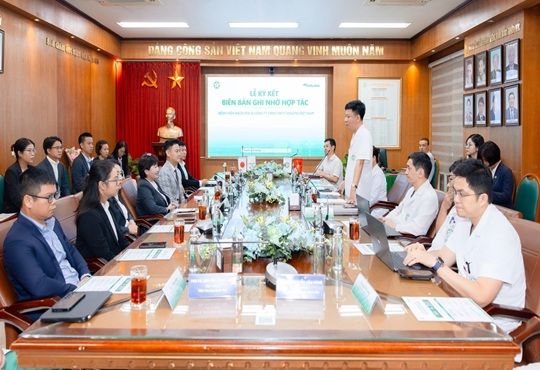
Terumo Vietnam and Bach Mai Hospital formalized a strategic partnership on September 16 with the signing of a memorandum of understanding aimed at elevating medical training and clinical practice in key specialties. The agreement focuses on cardiology, emergency and critical care, and interventional radiology, reflecting a shared commitment to advancing physician expertise and improving patient outcomes across Vietnam.
The signing ceremony took place at Bach Mai Hospital in Hanoi. Nguyen Do Bao Chau, General Director of Terumo Vietnam, and Associate Professor Nguyen Tuan Tung, Vice Director of Bach Mai Hospital, represented their respective organizations. Under the MOU, the two parties will jointly organize scientific workshops, continuing medical education programs and hands-on training sessions designed for practicing physicians.
The collaboration will directly involve several of Bach Mai’s leading units, including the Vietnam National Heart Institute, the Intensive Care Center, and the Diagnostic Imaging and Interventional Radiology Center. Activities will concentrate on modern diagnostic and treatment techniques within these specialties, enabling doctors to stay current with rapidly evolving medical technologies and protocols.
Bach Mai Hospital holds a unique position in Vietnam’s healthcare system. With more than a century of history, it is classified as a special-class general hospital and serves as a tertiary referral center for severe and complex cases from provinces nationwide. The hospital routinely manages the most challenging medical conditions, placing continuous demands on its clinical teams to maintain the highest standards of care.
The partnership seeks to address these demands by strengthening physicians’ technical skills and supporting the adoption of advanced medical techniques. By enhancing local capacity, the collaboration aims to help hospitals manage complex cases more effectively at the regional level and reduce the volume of referrals to higher-tier facilities. This approach aligns with broader national efforts to improve healthcare quality and accessibility beyond major urban centers.
Terumo, the Japanese parent company of Terumo Vietnam, brings more than a century of experience in healthcare innovation. Founded in Japan, the company now supplies medical products and solutions in more than 160 countries and regions under its guiding mission of “Contributing to Society through Healthcare.” The Vietnam partnership forms part of Terumo’s ongoing medical education and professional development activities in the country.
Concrete activities planned for 2026 and 2027 illustrate the practical scope of the agreement. These include support for the Vietnam National Heart Institute’s annual international scientific conference, the provision of AI-powered quantitative flow ratio software for coronary functional assessment, an extracorporeal membrane oxygenation simulation training course, and specialized workshops on coronary and visceral vascular interventions.
Quantitative flow ratio technology represents a significant advancement in cardiology. The AI-powered software allows physicians to assess coronary blood flow non-invasively, helping guide treatment decisions with greater precision. Meanwhile, ECMO simulation training will prepare critical care teams to manage patients requiring advanced life-support systems, a capability that is increasingly important in tertiary hospitals.
Hands-on workshops focusing on coronary and visceral vascular interventions will further equip interventional radiologists and cardiologists with refined techniques for complex procedures. Combined with structured continuing medical education programs, these initiatives are expected to create a sustained pathway for professional development among Vietnamese physicians.
Officials from both organizations emphasized the importance of practical, skills-based learning. Master of Science Vu Van Nhan, Deputy Director of the Institute for Training and Research in Medicine and Pharmacy, highlighted the value of collaborative training models that bridge theoretical knowledge and clinical application. Associate Professor Nguyen Tuan Tung underscored Bach Mai’s commitment to continuous improvement in medical education and patient care standards.
The partnership arrives at a time when Vietnam’s healthcare system faces rising demand for specialized services. Cardiovascular disease remains a leading cause of mortality, while the need for advanced critical care and interventional procedures continues to grow. By investing in physician training and technology transfer, Terumo Vietnam and Bach Mai Hospital aim to strengthen the clinical workforce’s ability to meet these challenges.
Beyond immediate training outcomes, the collaboration is expected to foster longer-term knowledge exchange between Japanese medical expertise and Vietnam’s clinical practice. Terumo’s global experience in medical device innovation and education, paired with Bach Mai’s deep clinical caseload and teaching tradition, creates a complementary foundation for meaningful capacity building.
Also Read: Guangdong Launches AI-Powered Medical School Initiative
As the agreement moves into implementation, both parties will monitor the effectiveness of workshops, CME sessions and simulation courses. Feedback from participating physicians will help refine future programs and ensure that training remains relevant to real-world clinical needs. The ultimate measure of success will be improved diagnostic accuracy, more effective treatment of complex cases, and enhanced confidence among medical teams across the specialties covered by the MOU.
This partnership between Terumo Vietnam and Bach Mai Hospital demonstrates how international medical technology companies and leading national hospitals can work together to elevate standards of care. Through structured training, technology support and sustained professional development, the collaboration contributes to a stronger, more resilient healthcare system capable of serving patients with increasingly sophisticated medical needs.
🍪 Do you like Cookies?
We use cookies to ensure you get the best experience on our website. Read more...