- The University of New Mexico (UNM) is re-designated as a WHO Collaborating Center for Innovative Health Workers Education, Service, and Research Models.
- UNM will focus on interprofessional health education, preparing professionals for rural and underserved communities, leveraging programs like HEROs and Social Determinants 101.
- The designation highlights 30+ years of UNM-WHO collaboration, emphasizing global knowledge exchange and community-driven healthcare innovations.
The University of New Mexico (UNM) has been re-designated as a Collaborating Center for Innovative Health Workers Education, Service and Research Models by the World Health Organization (WHO), marking a significant recognition of the University’s longstanding contributions to global health education. The designation also involves collaboration with the Pan American Health Organization (PAHO), WHO’s branch in the Americas, highlighting UNM’s role as a leader in shaping community-oriented health programs.
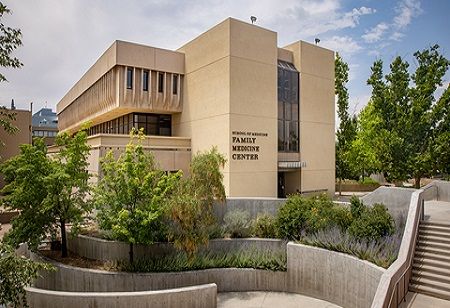
Three faculty members from the UNM School of Medicine’s Family and Community Medicine department Art Kaufman, MD, Erin Bouquin, MD, and Amy Clithero-Eridon, PhD, MBA co-direct the WHO/PAHO/UNM Collaborating Center for Medical Education. UNM has partnered with WHO for more than 30 years and is one of only three academic medical centers in North America selected for this prestigious health-education designation.
The University will focus on interprofessional education of health care workers over the next four years, continuing to lead innovative efforts in preparing health professionals to meet the needs of rural and underserved communities. WHO’s interest in UNM stems from the University’s successful models for educating students who can serve populations with limited resources, a mission particularly relevant to New Mexico’s diverse communities.
Also Read: Digital Education Week 2025 Launched in Hong Kong to Champion EdTech
UNM’s partnership with WHO is knowledge-based rather than financial, emphasizing a bi-directional exchange of expertise. Through this collaboration, UNM shares innovations such as the HEROs program, a community-based system of 'health-extension agents' that address social drivers of health, including housing, food, income, education, and transportation, while adapting lessons from international programs in Africa, Asia, and Latin America to local contexts.
As part of its global leadership, UNM also offers Social Determinants 101, a free, six-module online curriculum that equips health students, residents, and professionals with practical skills to address community health challenges. The program is being translated into Navajo and Spanish, reflecting UNM’s commitment to accessibility and cultural relevance.
By combining innovation, community focus, and international collaboration, UNM’s re-designation as a WHO Collaborating Center underscores the University’s expertise in health education, community health, and social determinants of health, while serving as a model for resourceful, community-driven approaches to healthcare worldwide.