
-
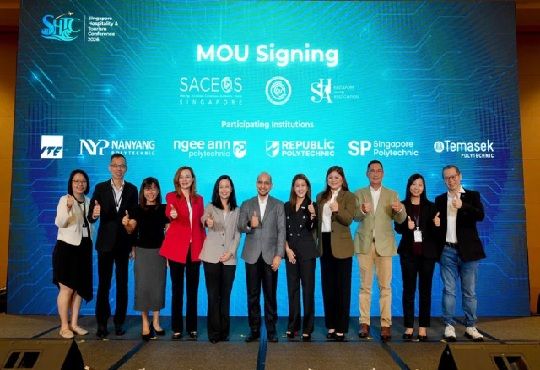
Singapore’s hospitality and tourism sector took a significant step toward closing the gap between classroom learning and workplace readiness on 23 October 2026 with the formal launch of its first joint Institute of Technical Education (ITE) and polytechnic Hospitality and Tourism Student Chapter. The initiative was unveiled at Marina Bay Sands during the second edition of the Singapore Hospitality and Tourism Conference (SHTC), an event that drew approximately 480 students, educators and industry partners.
The student chapter was established through a memorandum of understanding signed by six institutes of higher learning ITE, Nanyang Polytechnic, Ngee Ann Polytechnic, Republic Polytechnic, Singapore Polytechnic and Temasek Polytechnic together with the Singapore Association of Convention & Exhibition Organisers & Suppliers (SACEOS) and the Singapore Hotel Association (SHA). Operating under the Tourism, Hospitality & Operations Management Sector Coordination Team framework, co-chaired by Temasek Polytechnic and Republic Polytechnic, the chapter is designed to create structured pathways that connect academic programmes more closely with the evolving needs of the tourism and hospitality industry.
Ong Huey Hong, assistant chief executive of the industry development group at the Singapore Tourism Board (STB), highlighted the practical value of the new platform. She noted that the chapter would support students as they move from education into full-time careers through networking opportunities, learning journeys and mentorship provided by industry partners such as SACEOS and SHA. “The challenge today is about learning and applying skills in real life, and I feel this chapter really helps close that gap because it encourages more industries to engage students for internships,” Ong said.
Supporting data shared at the conference underscored both growth and opportunity in the sector. Singapore’s tourism workforce expanded by eight per cent between 2023 and 2025, rising from 69,000 to 75,000 workers. At the same time, first-choice applications for tourism-related courses across the polytechnics increased by 20 per cent between 2022 and 2026.
Ong pointed out that while student interest in tourism education is rising, converting that interest into sustained industry careers remains a priority. “While students are interested in undertaking a course in tourism, we also want them to join the industry eventually. That is the reason why we want to strengthen the connections between educators, industry, and platforms like SHTC,” she added.
The conference itself served as a practical demonstration of those connections. Alongside the MoU signing, SHTC 2026 featured a career fair that linked students with more than 20 employers. First-time exhibitors included Banyan Tree, the Museum of Ice Cream Singapore and The Lo & Behold Group. In total, the fair offered around 1,400 job and internship opportunities. Participating organisations ranged from established names such as Singapore Airlines and Capella Hotel Group to smaller local events and tourism enterprises including Woopa Group, UPGroup Asia and The MasterPlan.
Jasmine Ho, founder and managing partner of event agency The MasterPlan, welcomed the platform’s ability to showcase the breadth of the industry. “It is great exposure for students to understand what the industry comprises, especially from an agency perspective. We are not as well-known as Marina Bay Sands or Informa, so SHTC is a valuable platform for smaller SMEs to gain visibility and show students the wider range of opportunities available in the tourism industry,” she said.
Also Read: 10 Career Fairs: Singapore Creates Powerful Pathways to Success
Technology and the human element of hospitality also featured prominently. Marina Bay Sands sponsored a student hackathon in which 40 students explored ways to integrate artificial intelligence with human-centred hospitality. The exercise reflected a broader conference theme: using technology to enhance rather than replace the personal service that defines the sector. “Hospitality is still a people business at the end of the day. It’s still very human-centric,” Ong observed. She acknowledged that AI can automate certain processes but emphasised that empathy and the ability to deliver exceptional guest experiences remain essential skills.
Looking ahead, the STB announced the upcoming launch of the Age for Productivity grant on 1 November 2026. The grant will provide tourism companies with access to pre-approved digital concierge and robotics solutions, supporting the adoption of technology that can improve productivity while preserving service quality.
The joint student chapter represents a coordinated response to the twin challenges of rising student interest and the need for industry-ready talent. By formalising collaboration between six major institutes of higher learning and two key industry associations, the initiative creates a sustained mechanism for dialogue, practical exposure and mentorship. For students, it offers clearer routes into internships and careers. For educators, it provides feedback loops that can keep curricula relevant. For industry partners, it expands the pool of candidates who already understand the sector’s expectations and opportunities.
As Singapore continues to position itself as a leading tourism destination and events hub, the ability to attract, prepare and retain skilled people will remain central to competitiveness. The launch of the joint Hospitality and Tourism Student Chapter at SHTC 2026 signals a practical commitment to that goal, bringing education and industry closer together at a time when both student demand and workforce needs are rising. The coming years will show how effectively the chapter translates structured engagement into lasting careers and a stronger talent pipeline for the sector.
🍪 Do you like Cookies?
We use cookies to ensure you get the best experience on our website. Read more...