Japan's Rising Global Student Mobility and Career Pathways in 2025

-
- Japan’s student mobility surges in 2025.
- Bilingual, experiential learning drives global skills.
- New career paths emerge in tech, healthcare, and sustainability.
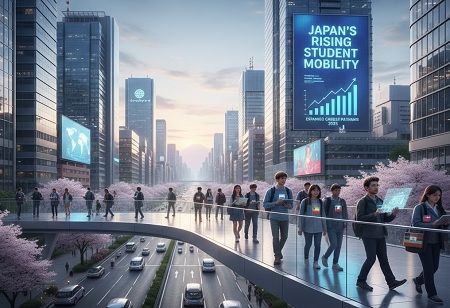
In 2025, Japan stands at the forefront of a transformative era in education and employment, driven by strategic policies to boost global integration. With a national goal to host 400,000 international students by 2033, the country has seen a 21% year-over-year increase in foreign enrollments, positioning it as a rising hub in Asia amid shifting global dynamics. This surge reflects not just numbers but a deeper commitment to fostering cross-cultural competencies, where bilingualism and hands-on learning play pivotal roles in preparing youth for diverse careers.
As traditional Western destinations face policy restrictions, Japan's pro-international stance bolstered by expanded visa pathways and skill-development programs offers expanded opportunities for both inbound and outbound mobility.
This evolution is reshaping how Japanese students engage globally, while attracting talent to fuel economic resilience against demographic challenges like an aging population.
The Rise of Japan in Global Student Mobility
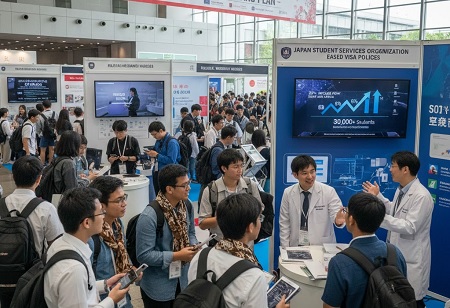
Japan has seen a dramatic increase in student mobility in 2025, decisively reversing the stagnation period preceding the pandemic, thanks to targeted policies. The upgraded 300,000 International Students plan now focuses on mutual exchange, promoting Japanese students to study abroad and attract a wide range of students internationally.
The short-term programs, including collaboration with the University of Indonesia's Faculty of Mathematics and Natural Sciences, are increasing exposure to research mobility in STEM fields in the Southeast Asia region. This is mutually beneficial and enhances directly Japan's workforce globalization because students bring back their experience with adapting to new cultures and innovation-mindedness to their home industries.
Eased visa policies and collaboration with growing markets have added to the drive. With the U.S. and Canada clamping down on rules, the stability of the Japanese system has sparked a significant 20%+ increase, especially from the South Asian and African markets.
Events such as the Fall 2025 International Education Expo in Tokyo and Osaka are also bringing students closer to bilingual options. Although financial exchange may prove to be an enrollment obstacle, flexible mobility models are developing resilient students and national agility.
Japan’s Bilingual Shift Redefining Global Learning

The Japanese transformation in the education system revolves around bilingualism and characteristics associated within the context of learning and experiences and not mugging or learning in style to acquire real-world skills. The immersion Japanese and English curriculum within the culturally responsive framework dominated in both private and international schools up to 2025.
Almost all learning institutions like Aoba-Japan International School are extending their global partnerships, which provide the students with opportunities to take part in practical learning projects such as linguistic landscape studies that help them acquire increased intercultural skills. The adaptability, emotional intelligence, as well as work readiness, of these students is further improved by making use of individual learning of English language facilitated by AI, as well as short study-abroad experiences. In enabling learning by experience, reflection, as learning tools, experience, Japan is producing ready leaders ready to operate in a world that is increasingly intertwined, talent-driven, as well as very competitive.
Also Read: The Rise of International K-12 Schools Across Asia in 2025
Emerging Career Opportunities and Top Pathways

As student mobility expands, so do career avenues, with Japan's 2025 labor market evolving through inclusive policies and tech-driven trends. The introduction of a new residency system for foreign workers allows unskilled entrants to train over three years toward permanent status, opening sectors like manufacturing, hospitality, and now automotive, construction, and food services under the Specified Skilled Worker program.
This, coupled with rising wages and flexible arrangements like four-day workweeks in Tokyo, challenges stereotypes of rigid employment, fostering diversity and innovation.
Talent trends highlight a race for skills in data centers, ESG investments, sustainable building, and office transformations, reflecting Japan's push toward green and digital economies. For globally mobile graduates, bilingual and experiential backgrounds unlock premium roles.
Here are the top five careers projected to dominate through 2035, based on labor shortages and growth sectors:
- AI and Software Engineers: With demand soaring in tech hubs, these professionals command high salaries, leveraging experiential learning in coding and AI ethics for innovations like personalized education tools.
- Healthcare Professionals (Doctors and Nurses): An aging society drives needs in elder care and biotech, where international mobility equips bilingual practitioners for cross-border collaborations.
- Sustainable Energy Engineers: Green initiatives fuel roles in renewables, with global exchanges providing hands-on expertise in solar and wind projects amid doubling global capacity.
- Financial Risk Managers and Analysts: Banking's evolution demands experts in ESG and investment, where study abroad hones analytical skills for navigating volatile markets.
- Bilingual Educators and Translators: Education reforms amplify demand for those bridging languages, turning experiential intercultural projects into careers in international schools and corporate training.
These pathways underscore how mobility translates to economic vitality, with remote work and gig opportunities further broadening access.
Closing It Up!
Japan's 2025 landscape exemplifies how integrated education and career strategies can drive national renewal. By championing mobility, bilingualism, and experiential depth, the nation not only attracts global talent but empowers its youth to thrive amid change creating a ripple effect of innovation and inclusivity that resonates far beyond its shores.
🍪 Do you like Cookies?
We use cookies to ensure you get the best experience on our website. Read more...