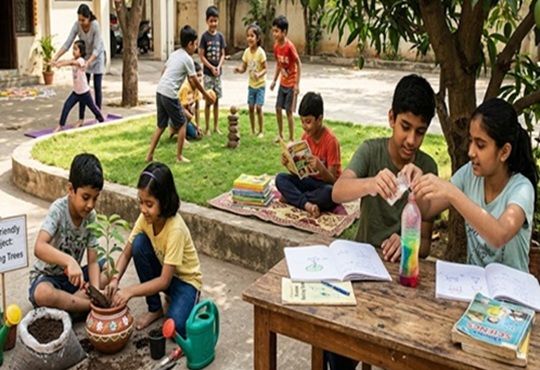
10 Educational, Sports & Life Skills Activities for Dussehra Holidays

-
Every year, as Navratri ends and Dussehra (Vijayadashami) arrives, schools across India close for a short break. The exact number of holidays differs by state, board and school, but the pattern is familiar: a few days off, relatives visiting, festival food, and children with more free time than usual.
That free time is valuable, and it can go in two directions. It can slide into hours of passive screen time, or it can become a chance to read, move, build, cook, create and learn something that a regular school day rarely allows.
This guide offers 10 activities grouped into three areas: educational, sports and fitness, and life skills. None of them needs expensive equipment. Most can be done at home, in a society compound, a nearby park or a community hall. Each one explains what to do, which age group it suits, what you need, and what to watch out for.
A note on how to use this article: you do not need to do all ten. Choose three or four that suit your child's age, interests and your family's schedule. A short break works best with a simple plan, not a packed timetable.
Why holiday activities matter
Children learn in many ways beyond textbooks. A short break is a good time for:
- Rest and recovery. Children need downtime too, especially after exams or a busy term. Not every hour has to be structured.
- Curiosity-led learning. When there is no pressure of marks, children often explore topics more freely.
- Physical activity. Many children sit for long hours at school and during study time. Holidays allow longer periods of play and exercise.
- Practical skills. Cooking, budgeting, organising and helping others are rarely part of a daily timetable but matter throughout life.
- Family time. Shared activities build conversation and trust between children and adults.
A good rule of thumb is to balance three things during the break: something for the mind, something for the body and something for character and daily life. The ten activities below follow exactly this balance.
Part 1: Educational Activities
1. Start a Dussehra reading challenge
 Best for: ages 6 to 17
 Time needed: 30 to 45 minutes a day
What you need: books, a notebook, a library card or a nearby library
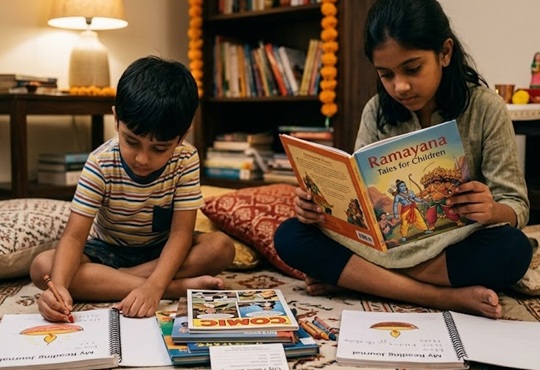
Reading is the simplest and most reliable holiday habit. The aim is not to finish a set number of pages but to make reading enjoyable.
How to do it:
- Let the child choose. Offer a mix: a story book, a biography, a comic or graphic novel, a book on science or nature, and one book connected to the festival.
- Set a small daily target. For younger children, 15 to 20 minutes is enough. Older children can read longer.
- Keep a reading journal. After each session, the child writes or draws three things: what happened, a new word learnt, and one question.
- Read aloud together. Younger children enjoy being read to. Older siblings can read to younger ones, which also builds confidence.
- Hold a family book talk. On the last day, each person talks for two minutes about the best book they read.
Festival connection: Dussehra is closely linked with the story of Rama and Ravana in the Ramayana, and with the story of Goddess Durga in many parts of India. Children's retellings of these stories are widely available in many languages. Reading them in your home language is a good way to strengthen it.
Where to find free reading material: Public libraries, school libraries and community libraries are the first place to look. NCERT textbooks and supplementary reading are available free online on the official NCERT website, and the Government of India's DIKSHA platform hosts learning content. Availability and languages differ, so check the sites directly.
Tip for parents: Do not turn reading into a punishment or an assignment to be checked. If children see adults reading, they are more likely to read themselves.
Also Read: The Future of Learning: Building Human-Centered Skills in an AI-Driven
2. Do simple science experiments at home
 Best for: ages 7 to 15
Time needed: 30 to 60 minutes per experiment
What you need: common household items, a notebook, adult supervision
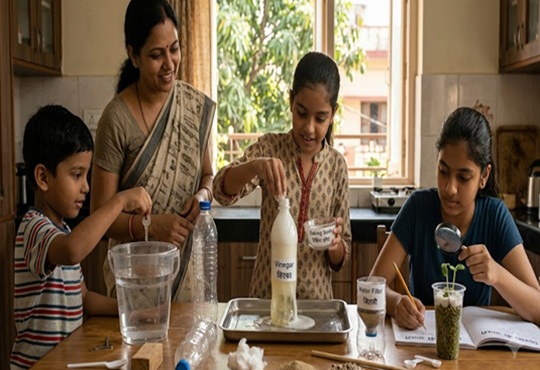
Science becomes memorable when children see it happen. Home experiments teach observation, prediction and recording results, which are the basics of the scientific method.
Five easy ideas:
- Does it sink or float? Collect ten small objects. Ask the child to predict, test in a bucket of water and record results. Then ask why a heavy steel ship floats while a small coin sinks.
- Baking soda and vinegar reaction. Mix the two in a bottle or tray to observe fizzing. Ask what gas is produced and how it might be tested.
- Grow a seed. Place a bean or green gram seed in damp cotton or soil. Record growth with a daily drawing or measurement for the whole break.
- Shadow study. Mark the length of a stick's shadow at different times of the day. Discuss why it changes.
- Water filter model. Build a basic filter with a cut plastic bottle, cotton, sand and small stones. Note that this is a demonstration only; the filtered water is not safe to drink.
How to do it well:
- Ask the child to predict before the experiment.
- Observe and record what actually happens.
- Ask why the result matched or differed from the prediction.
- Encourage repeating the experiment with one change.
Safety: Keep experiments to safe household materials. Avoid anything involving fire, strong chemicals or electricity unless it is closely supervised by an adult. Do not let children taste or drink anything used in experiments. Wear old clothes and wash hands afterwards.
3. Explore the heritage behind Dussehra
 Best for: ages 8 to 17
Time needed: several short sessions across the break
What you need: books, grandparents or elders to talk to, a notebook or phone for notes
Dussehra is celebrated in many different ways across India. Understanding these traditions makes for an engaging social science, language and history project.
What children can explore:
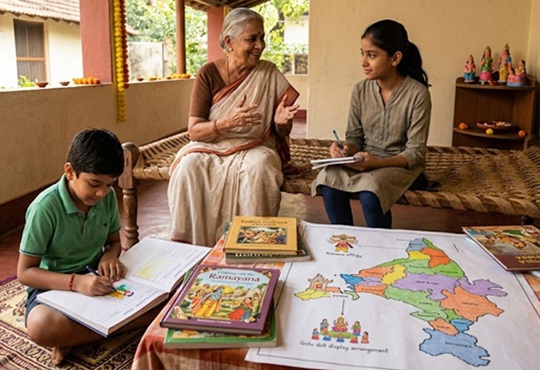
- Regional differences. In many northern and central parts of India, Dussehra is marked by Ramlila performances and the burning of effigies of Ravana. In West Bengal and several eastern regions, the same period is Durga Puja, with elaborate pandals and the immersion of idols. In Mysuru, Karnataka, Dasara is a major public festival. In many southern homes, Navratri is marked with arrangements of dolls (known by different names such as Golu or Bommala Koluvu). In some places, tools, books and vehicles are worshipped around this time (Ayudha Puja or Saraswati Puja). Children can find out what is done in their own family or neighbourhood.
- The common message. Many traditions associate the festival with the victory of good over evil. Ask children what that means in everyday life: honesty, courage, fairness, kindness.
- Oral history. Interview a grandparent or elder. Questions might include: How did you celebrate when you were young? What foods were made? What songs or stories do you remember?
Output ideas:
- A short illustrated booklet or scrapbook
- A map of India marking different festival traditions
- A two-minute talk or video interview with an elder (with their permission)
- A comparison chart of how the festival is celebrated in two different regions
Important: Stick to what you can verify. If children are unsure about a custom, they can ask an elder or check a reliable book or website instead of guessing. This is itself a useful research habit.
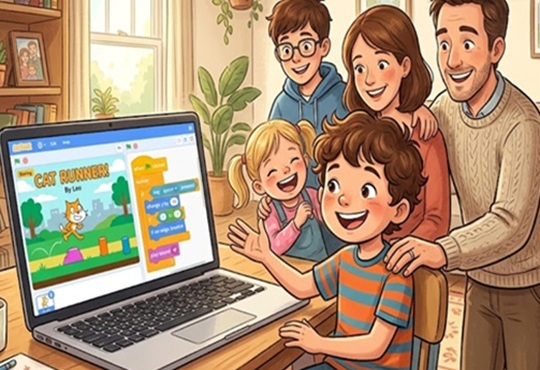
4. Learn a new digital or language skill
 Best for: ages 9 to 17
Time needed: 30 to 45 minutes a day
What you need: a computer, tablet or phone, internet access, adult supervision
A short break is enough to start something new, even if it is not completed. The aim is to taste a skill and see whether the child wants to continue.
Options to consider:
- Beginner coding. Scratch, a free visual programming tool from the MIT Media Lab, lets children build simple animations and games by snapping blocks together. It is widely used for first-time learners.
- Typing practice. Free typing tutors help children build speed and accuracy, which is useful in school and later.
- A new language. Learn ten words a day in a language spoken by relatives or neighbours, or a language the child is curious about. Use flashcards or simple conversation practice at home.
- Basic digital literacy. Teach older children how to create a simple presentation, organise files, search effectively and spot unreliable information online.
Set clear rules: Agree on screen time before starting. Learning on a device should have a clear goal, such as finishing one small project. Keep devices in common areas of the home, use child-safe settings, and talk about online safety, including not sharing personal details with strangers.
Suggested small goal: By the end of the break, the child shows the family one finished mini project, such as a simple Scratch animation or a short story typed and formatted on a computer.
Part 2: Sports and Fitness Activities
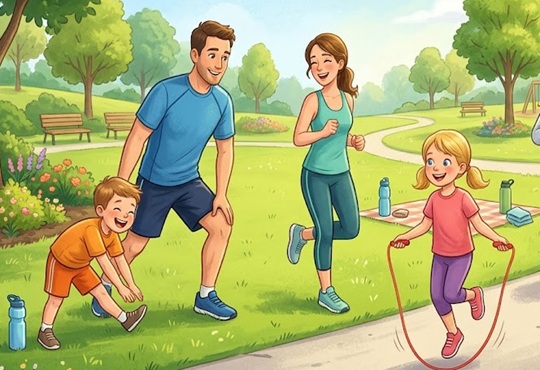
5. Build a daily family fitness routine
 Best for: all ages
Time needed: 30 to 60 minutes a day
What you need: open space, comfortable clothes, water, appropriate footwear
Holidays are a good time to build a movement habit. The key is regular, enjoyable activity rather than hard training.
Ideas:
- Morning walk or jog. Go as a family. Younger children can walk or play tag; older ones can try short jogging intervals.
- Cycling. Ride in a safe area, away from heavy traffic. Always wear a helmet.
- Skipping rope. Cheap, portable and effective. Try counting how many jumps in one minute and see if the number improves over the break.
- Bodyweight exercises. For older children, simple movements like squats, lunges, push-ups on knees or toes, and planks, done with correct form and in moderation.
- Swimming. If a safe pool with a trained lifeguard is available, swimming is excellent all-round exercise and a life-saving skill.
How to keep it fun:
- Make a simple chart and tick off each day's activity.
- Set personal goals, not comparisons with others. For example, "I will skip 10 more times than yesterday."
- Let children choose the activity on alternate days.
- Mix in music or friendly family challenges.
Safety: Warm up for a few minutes before exercise and cool down after. Drink water regularly. Avoid exercising in the hottest part of the day. If a child has a health condition, check with a doctor before starting a new exercise programme. Do not push children to exhaustion.
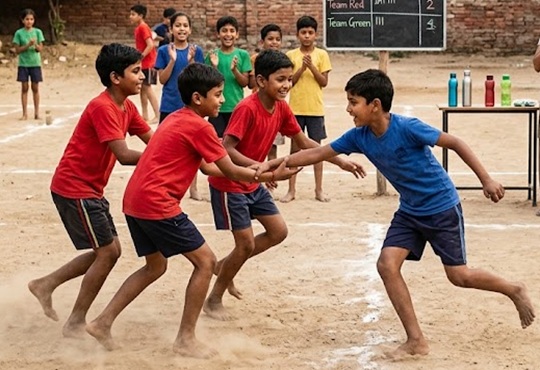
6. Organise a traditional games mini-league
 Best for: ages 6 to 16, in groups Time needed: 1 to 2 hours What you need: an open ground or courtyard, a few friends or cousins, basic markers
India has a rich variety of traditional games that need very little equipment. Many children today have never played them. The holiday break, when cousins and neighbours are together, is the right time to revive them.
Games to try:
- Kho-kho: a chasing team game that builds speed, agility and teamwork.
- Kabaddi: a contact team sport; for younger children, play a gentle, no-tackle version.
- Lagori (also called Seven Stones): stacking and knocking down stones, then rebuilding while avoiding the ball.
- Hopscotch, dodgeball, statue and relay races: easy to set up for mixed ages.
- Tug of war and sack races: classic fun for family gatherings.
How to run it:
- Split children into mixed-age teams so older children help younger ones.
- Keep a simple scoreboard.
- Appoint an older child as referee to practise fairness and decision-making.
- End with a small, shared celebration, such as a snack or certificates for "best team spirit" or "most improved", not only for winners.
What children learn: teamwork, following rules, handling wins and losses, and communicating clearly.
Safety: Choose flat ground free of stones, glass or holes. Make sure players are of similar size in contact games. Keep a first-aid kit and drinking water nearby, and have an adult present.
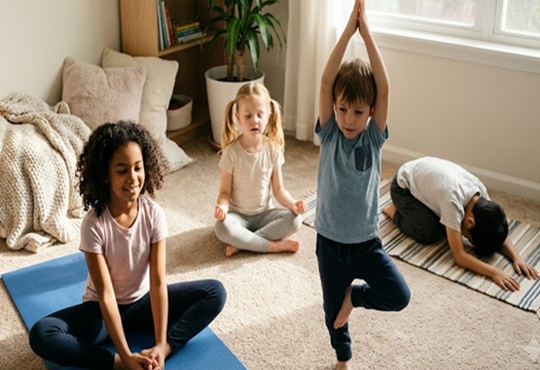
7. Try yoga, stretching and mindful breathing
 Best for: ages 6 and above
Time needed: 15 to 30 minutes a day
What you need: a mat or a clean carpet, a quiet corner
Festival weeks can be busy and noisy. A short daily calm-down session can help children relax and improve flexibility and focus.
Simple practices:
- Basic stretches: forward bends, side stretches and gentle twists to loosen muscles after play.
- Easy yoga poses: mountain pose, tree pose, cat-cow, child's pose and butterfly pose are commonly taught to beginners.
- Surya Namaskar (sun salutation): many schools teach it; learn the sequence slowly and correctly, ideally from a trained teacher or a reliable instructional source.
- Mindful breathing: sit comfortably, breathe in slowly through the nose for a count of four, breathe out gently for a count of four, and repeat for a few minutes.
- Gratitude minute: at the end, each child says one thing they are thankful for that day.
Tips:
- Treat it as practice, not performance. No child should feel judged for stiffness or wobbling.
- Never force a stretch or pose. Stop if there is pain.
- Keep sessions short and cheerful for younger children, with stories or animal-themed poses.
- Practise on an empty or light stomach.
If you are unsure about technique, learn from a qualified yoga teacher or a school PT instructor rather than guessing from social media videos.
Part 3: Life Skills Activities
8. Learn to cook simple, healthy dishes
 Best for: ages 8 to 17 (with age-appropriate supervision)
Time needed: 45 to 90 minutes
What you need: basic ingredients, a clean kitchen, an adult nearby
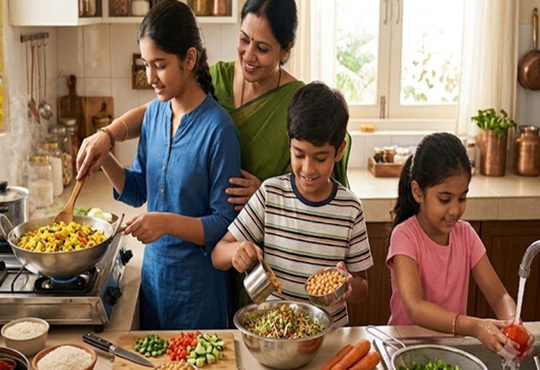
Cooking teaches reading instructions, measuring, patience and independence. During festivals, kitchens are full of activity, which makes it easy to involve children.
Age-appropriate tasks:
- Ages 6 to 9: washing vegetables, tearing salad leaves, stirring cold mixtures, setting the table.
- Ages 10 to 13: measuring ingredients, mixing batter, making sandwiches, using a peeler, preparing a simple salad with supervision.
- Ages 14 and above: following a full recipe, using the stove with an adult nearby, and learning knife skills with guidance.
Starter recipes:
- Fruit chaat or vegetable salad
- Sandwiches or vegetable wraps
- Sundal or a simple sprout salad
- Poha, upma or vegetable khichdi
- A traditional festival sweet made with the family, such as kheer or laddoos
Skills built along the way:
- Reading and following a recipe step by step
- Basic maths through measuring and scaling
- Hygiene: washing hands, cleaning surfaces, storing food correctly
- Nutrition awareness: talking about what makes a balanced meal
- Cleaning up: the cook also helps wash up
Safety: Keep children away from hot oil and open flames unless an adult is closely supervising. Teach knife handling slowly. Be careful about food allergies in the household and among guests.
9. Practise money skills with festival budgeting
 Best for: ages 9 to 17
Time needed: two or three short sessions
What you need: a notebook or simple spreadsheet, a small real or imaginary budget
Festival season is full of shopping, gifts and sweets. It is a natural moment to introduce children to money management in a practical way.
Activities:
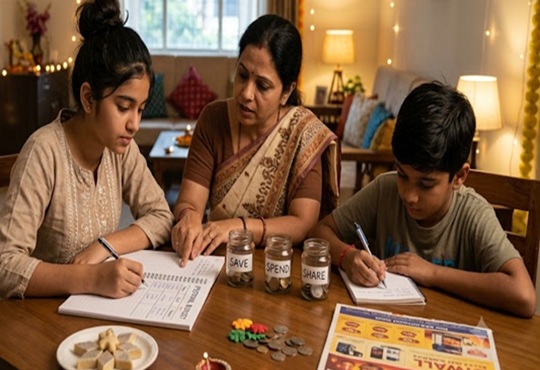
- Plan a small purchase. Give the child an amount, real or imaginary, to plan a family snack table, a set of festival decorations or a small gift. They list what is needed, compare prices, and stay within the budget.
- Needs versus wants. Make two columns and sort items. Discuss why some items matter more than others.
- Save, spend, share. Divide any pocket money or gift money into three parts: something to save, something to spend and something to give to others.
- Compare prices. Visit a local market or look at product listings together to see how the same item varies in price and quality.
- Spot the tricks. Talk about how advertisements and offers are designed to encourage buying, and how to pause before deciding.
For older teens: Introduce simple ideas such as keeping a record of income and expenses, how interest works in a savings account, and the importance of being careful with online payments and sharing bank or card details.
Why it matters: Understanding money early helps children make careful decisions later. Keep the conversation positive and avoid creating anxiety about family finances.
10. Do a community service and eco-friendly project
 Best for: all ages, with adult guidance
Time needed: half a day or spread across the break
What you need: friends or family, gloves, bags, craft material, permission from your housing society or local authority where needed
Dussehra is associated with ideas of righteousness and doing good. Community service puts those ideas into practice and builds empathy.
Ideas:
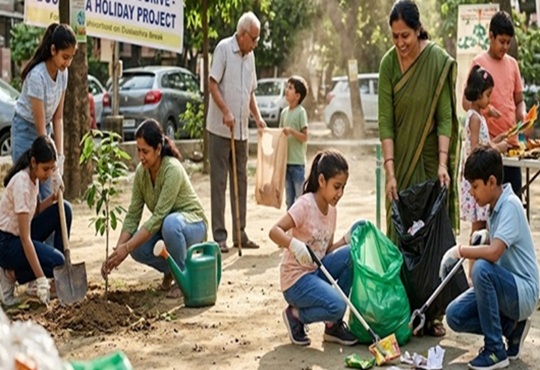
- Neighbourhood clean-up. With adult supervision, gloves and bags, collect litter from a park or street. Never handle broken glass, medical waste or hazardous items; leave those to adults or the local authority.
- Sort waste at home. Learn to separate wet, dry and recyclable waste. Check your city's rules on segregation.
- Plant a sapling. Choose a suitable local species, plant it in an approved place, and take care of it afterwards.
- Collect and donate. Gather books, clothes, toys or stationery in good condition and give them to a registered charity or a school that needs them. Check what an organisation can accept before collecting.
- Make eco-friendly decorations. Use natural flowers, leaves, clay diyas, or recycled paper for rangoli, toran or small effigies, instead of plastic or non-biodegradable materials.
- Help someone nearby. Spend time with an elderly neighbour, read to them, help with small tasks or simply chat.
Reflect together: After the activity, ask: What did we do? How did it feel? What difference did it make? What else could we do?
Safety: Do not let children work near traffic or on their own. Keep sessions short, carry water, and wash hands afterwards. If you plan a bigger drive, inform the right authority or society office first.
A Sample Plan for a 5-Day Break
Here is a flexible example. Adjust it to your family, school holiday length and the weather.
Day
Morning
Afternoon
Evening
1
Fitness routine (activity 5)
Reading challenge begins (activity 1)
Family chat on Dussehra traditions (activity 3)
2
Yoga and breathing (activity 7)
Home science experiment (activity 2)
Free play
3
Traditional games mini-league (activity 6)
Cooking together (activity 8)
Reading time
4
Community clean-up or sapling (activity 10)
Money and budget task (activity 9)
Digital skill session (activity 4)
5
Fitness routine and stretching
Finish and show projects
Family showcase and reading journal sharing
This plan leaves free time on purpose. Children also need space to play, rest, meet friends and attend festival events with the family.
Practical Tips for Parents
- Involve children in planning. Let them pick activities. Children stick with what they have chosen.
- Keep it light. Two or three planned activities a day is plenty. Do not turn the holiday into a second school timetable.
- Balance screens. Decide together how much recreational screen time is acceptable and stick to it consistently.
- Match the age. What works for a ten-year-old may be too easy or too hard for a fifteen-year-old. Let teens take the lead and help younger ones.
- Plan for safety. At crowded Ramlilas, pandals and fairs, hold younger children's hands, agree on a meeting point, and carry a contact number. Keep water and basic first aid at hand.
- Celebrate effort. Praise trying, practising and finishing, not only results.
- Respect different needs. Some children prefer quiet activities and others prefer physical ones. Children with disabilities or health conditions should be included with suitable adjustments.
- Be a role model. Join in. Children copy what adults do more than what they say.
Also Read: 10 Affordable Study Abroad Options in Asia for Indians
A Note for Teachers and Schools
If you are a teacher or school coordinator, a holiday activity list can be more effective than heavy homework. Consider these ideas:
- Offer choices. Give students a menu of tasks, such as reading, a small project, a fitness log and one act of service, instead of a single required assignment.
- Ask for evidence, not volume. A short reflection, photo or drawing is enough. Avoid long written assignments over a festival break.
- Be inclusive. Not every family celebrates Dussehra, and not every family has devices, internet or large spaces. Make sure activities work for everyone and do not depend on spending money.
- Share after the break. Invite students to present what they did in class. This builds speaking skills and encourages others.
Frequently Asked Questions
How many activities should my child do during the break?
There is no fixed number. Pick three to four that suit the child's age and interests, and leave plenty of free time.
What if my child says they are bored?
Boredom is not harmful by itself and can lead to creative play. Offer a few choices from this list rather than scheduling every hour.
Can these activities be done in a small apartment?
Yes. Reading, home science experiments, cooking, budgeting, yoga, language learning and craft projects need little space. Use a nearby park or society ground for outdoor activities.
Are these activities suitable for teenagers?
Yes. Teens can take on more responsibility: leading a games league, cooking a full meal, planning a budget, mentoring younger children or organising a clean-up with adult support.
How do I keep children safe at festival events?
Stay close to younger children, avoid very crowded spots, know the exits, keep emergency contacts, and follow local guidance on fireworks and crowd management. Keep children at a safe distance from effigy burning and any fireworks.
Do I need to spend money?
No. Most of these activities use things you already have at home or in your neighbourhood.
Conclusion!
The Dussehra break is short, but it is enough to build good habits and create memories. A few pages read each day, an experiment in the kitchen, a game of kho-kho with cousins, a conversation with a grandparent, a simple recipe cooked together and one small act of service can do more than hours of passive screen time.
You do not need a perfect plan or special equipment. Start small, choose activities your child enjoys, stay safe and keep the spirit of the festival, which is about courage, goodness and togetherness, at the centre of how you spend the days.
Wishing all families and students a joyful, safe and productive Dussehra break.
🍪 Do you like Cookies?
We use cookies to ensure you get the best experience on our website. Read more...