- Global participation continues to expand rapidly
- Chinese language adoption rises across education systems
- AI-driven platforms reshape language learning
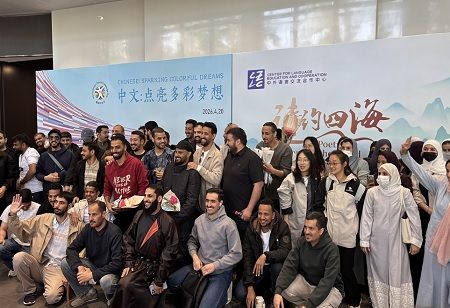
The 2026 edition of International Chinese Language Day was officially launched at Beijing University of Posts and Telecommunications under the theme 'Chinese: Sparking Colorful Dreams', marking a vibrant celebration of language, culture, and global connection. The event also introduced the inaugural 'Poetry Connects the World', a global initiative dedicated to classical Chinese poetry.
Since its establishment in 2020, International Chinese Language Day has evolved into a major international cultural platform. According to the Center for Language Education and Cooperation, the initiative has witnessed over 6,000 activities organized by more than 1,000 institutions across 160 countries, reaching over 400 million participants. This year alone, more than 1,000 events are planned across 100 countries, reflecting the growing global interest in Chinese language and culture.
Chinese has now been integrated into national education systems in 90 countries, with nearly 210 million learners and users worldwide. Diplomats, educators, and students at the launch highlighted the cultural depth and global relevance of the language. Koula Sophianou emphasized the timeless nature of language, drawing comparisons between Chinese and Greek as enduring carriers of civilization and memory.
Voices from international learners added a personal dimension to the celebration. JongMay Urbonya shared her journey from watching Chinese martial arts dramas to mastering Mandarin and discovering the emotional richness of classical poetry. Students from Costa Rica and Gibraltar also reflected on how learning Chinese has shaped their academic and cultural aspirations.
Also Read: Juno Academy Expands K-Beauty Education in Chengdu China
Amid these cultural exchanges, technology emerged as a key theme. Xu Kun highlighted how artificial intelligence and digital innovation are transforming language education. The university is developing immersive, scenario-based learning platforms and digital Confucius Institutes to make Chinese learning more accessible worldwide.
The launch event underscored not only the expanding global footprint of the Chinese language but also its role in fostering cultural dialogue, educational collaboration, and deeper mutual understanding in an increasingly interconnected world.