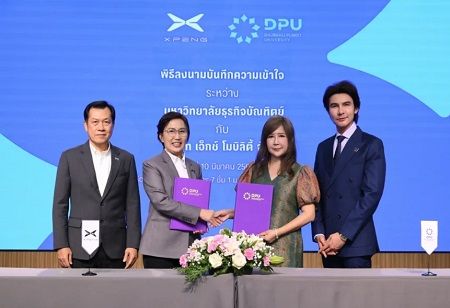
- XPENG Thailand signed a Memorandum of Understanding (MoU) with Dhurakij Pundit University to collaborate on electric vehicle education, research, and workforce development.
- The partnership will introduce specialized EV-focused academic programs, internships, and hands-on training, helping students gain practical experience aligned with the evolving automotive industry.
- The collaboration will also support joint research in EV systems, battery technology, intelligent driver-assistance, software integration, and charging infrastructure, strengthening Thailand’s ambitions to become a regional electric vehicle innovation hub.
XPENG Thailand has signed a memorandum of understanding with Dhurakij Pundit University to strengthen education, research, and workforce development in electric vehicle technology, marking a step toward preparing skilled professionals for the rapidly evolving automotive industry.
The partnership reflects the growing shift of the global automobile sector toward electric mobility and intelligent driving systems. As demand for electric vehicles rises worldwide, the collaboration aims to bridge the gap between academic learning and the practical requirements of the industry. Through this initiative, both organizations plan to equip students and researchers with the knowledge and technical skills needed to support the expansion of electric vehicle technology in the region.
Under the agreement, the two sides will work together on developing academic programs and specialized training related to electric vehicles. Students will benefit from updated curricula, hands-on learning opportunities, and industry exposure through internships and cooperative education programs. These initiatives are expected to provide students with practical experience while helping them better understand the real-world demands of the automotive sector.
The collaboration will also focus heavily on research and innovation. Joint research projects are planned in several key areas, including electric vehicle systems, intelligent driver-assistance technologies, battery development, software integration, and charging infrastructure. By sharing data, technical expertise, and industry insights, the partnership aims to create new knowledge and promote research that can be applied in both industrial and commercial settings.
Also Read: Mapua, Arizona State Launch Global Partnership for PH Education
In addition, the initiative will encourage the publication of research findings and support the development of technologies that could contribute to the broader growth of the electric vehicle ecosystem. The collaboration is expected to help strengthen Thailand’s ambitions of becoming a regional hub for electric vehicle production and innovation.
To further enhance learning, the project will also involve cooperation with the Master Automotive Training Institute under MGC-ASIA. Together, they plan to develop modern teaching methods and training programs aligned with industry trends. Experts from the automotive sector will be invited to share their experience with students, while institutions will provide access to advanced equipment and technology.
By linking academic knowledge with real industry practices, the partnership aims to prepare a new generation of professionals capable of supporting the growth of the electric vehicle sector both within Thailand and internationally.