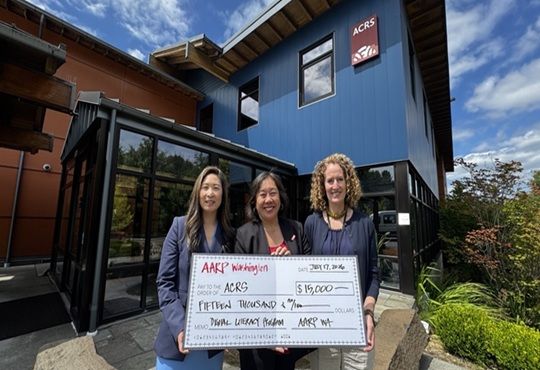
The Asian Counseling and Referral Service (ACRS) has secured a $15,000 grant from AARP’s 2026 Community Challenge to expand its digital literacy education programs for older adults in immigrant and refugee communities.
This funding will enable ACRS to increase on-site digital literacy classes specifically designed for adults aged 50 and above, with a strong focus on immigrants, refugees, and English language learners. The grant comes as part of AARP’s nationwide initiative celebrating its 10-year anniversary of supporting local projects that promote community engagement and improvement.
ACRS has served Asian American, Native Hawaiian, and Pacific Islander (AAPI) immigrants, refugees, and other communities in the Greater Seattle area for more than 50 years. Language access, cultural understanding, and trust form the foundation of its work. The new grant allows the organization to respond directly to a growing educational need among older adults who are navigating an increasingly digital society.
Kendee Yamaguchi, CEO of ACRS, expressed gratitude in a statement: “ACRS is deeply grateful to AARP for this generous investment in our community. This grant will help strengthen culturally responsive support for older adults and families so they can remain connected, cared for, and rooted in the community".
Alexandra Olins, ACRS Employment and Citizenship Director, emphasized the importance of digital literacy in today’s world. “Digital literacy is no longer optional,” she said. “It affects how people access health care, benefits, transportation, housing information, emergency alerts, and connection with loved ones".
The expanded classes will cover practical skills including the effective use of smartphones, tablets, email, messaging apps, online resources, virtual meetings, transportation tools, and health-related applications. Participants will also receive training on recognizing and protecting themselves from online scams, which often target seniors.
A key strength of the program is its culturally responsive and supportive approach. “Many older adults feel embarrassed when they do not understand technology”, Olins explained. “These classes are designed to be patient, welcoming, and culturally responsive. They also create connection. Participants learn together, support one another, and build confidence as a community".
The classes will serve as safe learning environments where seniors can ask questions without judgment and develop real-world digital competencies. This educational initiative aims to transform technology from a barrier into a bridge toward greater independence and inclusion.
Heidi Wong, Associate State Director of Outreach and Engagement for AARP Washington, described the broader impact of the Community Challenge grant program. “This is a way for AARP to do some quick action-type projects that could make a huge impact”, she said. This year, Washington state had 11 projects selected for funding.
The grant arrives at a critical time for ACRS. Community needs continue to grow amid economic hardship, health challenges, and uncertainty in public funding. For example, the organization’s food bank saw a 16% increase in clients in 2025 compared to the previous year. Digital literacy education forms one important component of ACRS’s holistic support system, helping individuals connect with multiple services through a single trusted entry point.
Also Read: 10 Parenting Strategies for Gen Alpha in Asia's Over-Stimulated Era
Olins noted that people rarely face just one challenge. “Our goal is to make it easier for people to enter through any part of ACRS and connect with the full range of support they need", she said.
The AARP Community Challenge grant process begins in winter, with applications reviewed by state offices before national selection. Projects must primarily benefit older adults. Wong expressed hope that more organizations will apply in future years to widen the program’s reach.
This investment highlights the growing recognition of digital literacy as a vital form of adult education. Older adults who did not grow up with technology often face significant barriers when required to use digital tools for essential services. Through patient, community-centered instruction, ACRS is helping bridge this digital divide and promote lifelong learning.
The expanded digital literacy education program is expected to launch in the coming months. By providing older immigrants and refugees with essential technology skills, ACRS aims to deliver greater independence, stronger social connections, enhanced safety, and peace of mind.
This partnership between ACRS and AARP demonstrates how targeted educational funding can create meaningful impact in immigrant communities, supporting inclusion and empowerment in an increasingly digital society.