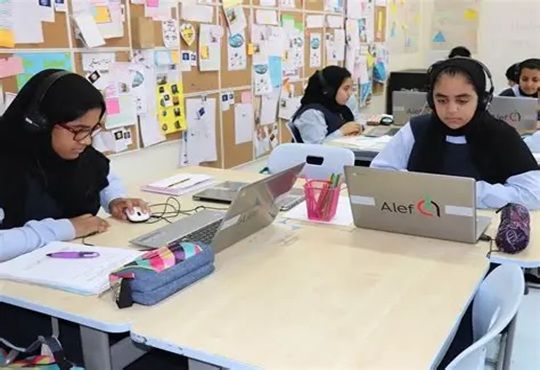
The development of Arabic literacy is entering a new phase with the introduction of a unified measurement framework designed to assess reading proficiency and text complexity. Alef Education, an education technology company specialising in AI-powered learning solutions, has partnered with MetaMetrics®, the developer of the Lexile® Framework for Reading, to develop Arabic Scale – Miqyas Al Dhad, a measurement scale intended to support personalised Arabic language development.
Announced in Abu Dhabi on November 17, 2026, the initiative aims to provide a consistent approach to understanding Arabic reading abilities and matching learning materials to students' proficiency levels. The scale is designed to help educators, governments, assessment providers, publishers, and content developers make more informed decisions across Arabic language teaching, learning, assessment, and content development.
Miqyas Al Dhad was developed through a multi-level research methodology combining Arabic linguistic analysis, expert judgement, and empirical student performance data. Artificial Intelligence also supports the framework, enabling it to operate at scale while bringing together human expertise, educational research, and data-driven measurement.
The research behind the scale draws on contributions from more than 450 Arabic language specialists and performance data from approximately 110,000 students across nine Arab countries. Its linguistic foundation includes a corpus of more than 70 million words and linguistic structures drawn from over 8,000 Arabic texts. These research inputs form the basis for measuring reading proficiency and text complexity through a consistent framework.
The initiative addresses an important requirement in Arabic education: the ability to understand students' reading development through measurable indicators and align learning resources with their actual capabilities. By providing a common measurement approach, Miqyas Al Dhad seeks to support more personalised learning journeys while helping stakeholders evaluate progress over time.
The framework incorporates an integrated ecosystem of tools designed to support different aspects of Arabic literacy development. One of its central components is the Dhad Reading Proficiency Test, which measures students' Arabic reading capabilities and provides an objective understanding of their current proficiency levels. It also enables educators and other stakeholders to monitor reading development over time.
Another component is the AI-powered Text Analyser, which evaluates the complexity of Arabic texts and aligns them with the Miqyas Al Dhad scale. This tool is intended to help users understand the difficulty level of reading materials and determine their suitability for learners with different proficiency levels.
The ecosystem also includes the Find-a-Book hub, which helps users identify books and reading materials aligned with different Miqyas Al Dhad levels. This offers a way to connect reading resources with students' developing abilities. Additionally, Dhad Academy supports Arabic language development as part of the broader ecosystem.
The framework has applications across several areas of the education and publishing landscape. Governments and education systems can use it to develop a more unified understanding of reading proficiency and inform national literacy strategies. Educators and assessment providers can monitor student progress and better align learning activities and assessments with individual needs.
For publishers, content creators, and education technology companies, the scale provides a framework for evaluating text complexity and developing learning materials suited to different reading proficiency levels. This can support the creation and selection of resources that are more closely aligned with learners' abilities.
Eyad Darawsheh, General Manager of Miqyas Al Dhad, highlighted the importance of providing educators, governments, publishers, and other stakeholders with an objective approach to understanding Arabic reading proficiency. He said the framework would help measure student development and ensure that educational content is appropriately matched to learners' needs.
He also expressed the ambition for Miqyas Al Dhad to become a trusted reference for Arabic reading, supporting stronger literacy outcomes across education systems in the UAE and the wider Arab world.
The collaboration between Alef Education and MetaMetrics brings together AI-powered educational technology, linguistic research, and established expertise in reading measurement. By combining large-scale student data, specialist contributions, and Arabic text analysis, the initiative aims to provide a structured foundation for understanding reading development.
As Arabic education systems continue to explore more data-driven approaches to teaching and assessment, Miqyas Al Dhad introduces a framework that connects student proficiency with the complexity of learning materials. Its ecosystem of assessment, text analysis, book discovery, and language development tools is designed to support stakeholders across the education and publishing sectors.
The initiative's broader ambition is to strengthen Arabic literacy measurement and support more personalised reading development. By providing a common reference for evaluating proficiency and text complexity, Alef Education and MetaMetrics aim to help education systems, educators, and content developers make informed decisions that support Arabic language learning across the region.