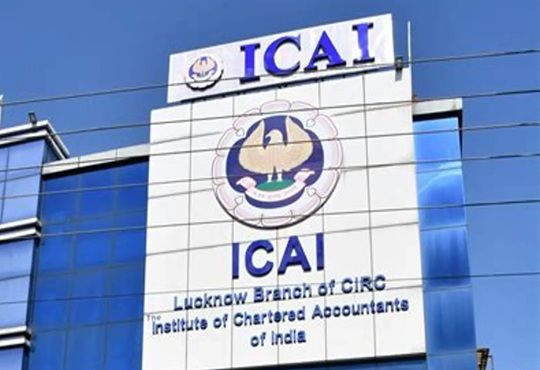
The Institute of Chartered Accountants of India (ICAI) is reviewing its Chartered Accountancy education and training framework to better align it with rapid technological changes in the accounting and finance sector. The proposed updates are expected to strengthen students’ exposure to artificial intelligence, data analytics, sustainability, environmental, social and governance (ESG) factors, and forensic auditing.
ICAI is also developing an international version of its CA programme. This will allow students in other countries to pursue the ICAI qualification, with taxation and law papers adapted to local regulations while the rest of the curriculum remains largely common.
ICAI President Prasanna D Kumar said the institute has already introduced several technology-focused training programmes and is now examining formal changes to the CA education structure. The Committee for Review of Education and Training (CRET) has been set up to examine the existing framework. Its mandate covers the CA syllabus, practical training, soft skills, communication training and examination methods.
The committee is expected to complete its work by December. After that, its recommendations will be placed in the public domain for feedback and wider discussion. The review follows the introduction of the New Scheme of Education and Training in 2023. While AI, data analytics, ESG, sustainability and forensic auditing are not yet standalone components of the core CA curriculum, ICAI has already launched separate programmes in several of these areas.
On the technology front, ICAI has introduced the Artificial Intelligence Understanding for Rising Achievers (AURA) programme for CA students. It is preparing to launch AURA 2.0 for those who have completed the first level. The advanced programme will focus on practical applications of AI in finance, audit and taxation, including technology, automation and data tools.
For practising members, ICAI has rolled out the AI Certificate Course for Chartered Accountants (AICA). The first level has already trained more than 45,000 members across over 850 batches. Level 2 has trained more than 1,500 members through over 80 batches. The institute is also upgrading its Digital Information Systems Assurance (DISA) programme from version 3.0 to DISA 4.0, with the new version expected to be launched in October.
Alongside the domestic curriculum review, ICAI is expanding the global reach of its qualification. Under the proposed international framework, the programme will largely follow the Indian CA curriculum. Taxation and law papers will be modified according to the legal and regulatory requirements of the host country. The remaining subjects will follow a common curriculum covering globally relevant standards and topics.
ICAI is currently working with the Mauritius Institute of Professional Accountants (MIPA) to adapt the curriculum for Mauritius. Similar collaborations are being explored with Nepal and several countries in Africa. The institute already has an agreement with the Institute of Singapore Chartered Accountants. Students who complete the programme under the international framework will receive the ICAI Chartered Accountancy qualification.
Also Read: Top High-Paying Jobs Without a Degree Can Buy You in 2026
The dual focus on curriculum modernisation and international expansion reflects ICAI’s effort to keep the CA qualification relevant in a profession increasingly shaped by technology, data and cross-border practice. By integrating emerging skills into the core education pathway and offering a flexible international route, the institute aims to equip both Indian and overseas students with competencies demanded by contemporary accounting and finance roles.
The upcoming recommendations from CRET, expected by the end of the year, will determine the precise shape of the revised syllabus, training structure and examination reforms. Once published for public feedback, the proposals are likely to generate detailed discussion among students, members, educators and employers on how best to prepare the next generation of chartered accountants for a technology-driven professional landscape.