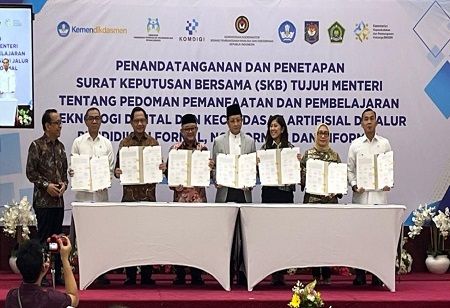
- Indonesia issues a joint ministerial decree to regulate the use of digital technology and AI in schools, covering early childhood to higher education.
- The policy sets age-appropriate guidelines for screen time, content, and AI tools, restricting instant-answer applications while encouraging educational technology.
- Signed by seven ministers, the decree aims to balance digital innovation with child safety, fostering responsible technology use and preparing students for a digital future.
Indonesia has taken a major step toward shaping the future of education by issuing a joint ministerial decree to regulate the use of digital technology and artificial intelligence (AI) in schools, from early childhood programs to higher education. The move reflects the government’s determination to harness the benefits of rapidly advancing technologies while minimizing potential risks for students. The decree, signed by seven cabinet ministers in Jakarta, provides a comprehensive framework to guide schools, teachers, and families in responsible technology use across the country.
Coordinating Minister for Human Development and Culture Pratikno explained that his office played a central role in facilitating and coordinating the policy. The decree emphasizes the importance of careful, age-appropriate engagement with digital tools and AI, particularly for younger learners whose developmental readiness must be taken into account. It sets clear guidelines on the minimum age for using technology, the types of applications permitted, and the recommended duration of screen time, tailored to each education level.
For the youngest learners in early childhood and primary school, the policy enforces stricter controls. Screen time is limited, and the type of content accessible in learning environments is carefully regulated to ensure it supports educational objectives without exposing children to inappropriate material. “The lower the educational level, the more controlled it becomes. It is not just about duration but also about the content”, Pratikno explained. This approach reflects a growing recognition that early exposure to unfiltered AI tools can have unintended consequences if not carefully managed.
As students progress to secondary and higher education, the policy allows for more flexibility. Older students are deemed better able to understand, navigate, and manage digital technologies responsibly. While the decree prohibits the use of instant AI applications that simply generate answers to academic questions, it does encourage tools designed specifically for structured educational purposes. For instance, AI-enabled robotics simulations or other interactive learning platforms may be incorporated into classrooms if they enhance learning outcomes and align with curriculum goals.
Also Read: The Rise of Educational Startups in Asia
The decree was signed by ministers across multiple portfolios, including Home Affairs, Religious Affairs, Primary and Secondary Education, Higher Education, Communication and Digital Affairs, Population and Family Development, and Women’s Empowerment and Child Protection. This broad participation underscores the government’s holistic approach, recognizing that the integration of AI and digital tools in education touches not only academic learning but also child development, safety, and social well-being.
Pratikno highlighted the importance of preparing students for a future where digital literacy and responsible technology use are essential skills. By providing clear rules and guidance, the government aims to ensure that children benefit from educational technologies without being exposed to unnecessary risks. The policy also signals Indonesia’s awareness of the growing role AI plays in classrooms worldwide and its potential to transform learning experiences when used thoughtfully.
Ultimately, the decree seeks to strike a careful balance: embracing the advantages of AI and digital tools while protecting students, particularly the youngest learners, from overexposure and misuse. As technology becomes increasingly accessible across Indonesia, this new framework offers a roadmap for schools, teachers, and parents to integrate digital innovation safely, fostering responsible habits that can shape the next generation of learners in an increasingly digital world.