
-
Sharjah Maritime Academy (SMA) has officially launched SMA LearnAI, an agentic artificial intelligence platform designed to reshape teaching and learning across its maritime programmes. Fully integrated with the Academy’s Learning Management System and available across all courses, the new tool marks a major step in SMA’s digital transformation strategy. It aims to deliver personalised educational experiences, intelligent academic support and faculty-led innovation while ensuring educators retain full oversight of content quality and delivery.
The platform was introduced as the maritime industry itself undergoes rapid technological change. SMA, based in the port city of Khorfakkan and recognised as the UAE’s leading higher education institution for maritime studies, training and research, sees artificial intelligence as both a challenge and an opportunity for education.
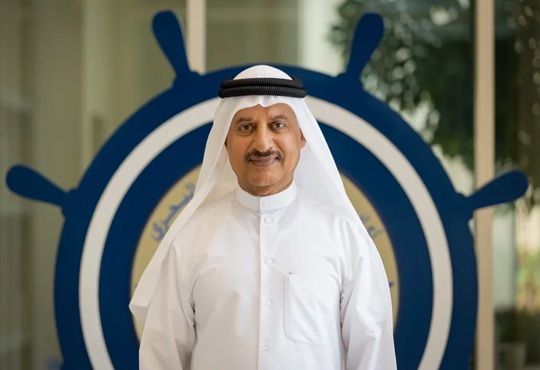
“Artificial intelligence is reshaping the maritime industry, and maritime education must evolve alongside it,” said Dr. Hashim Alzaabi, Chancellor of Sharjah Maritime Academy. “At Sharjah Maritime Academy, we see AI not simply as a technological advancement, but as an opportunity to rethink how knowledge is delivered, experienced and applied. Through SMA LearnAI, we are integrating intelligent learning technologies into our academic ecosystem while keeping educators at the centre of the learning process. Our ambition is to prepare maritime professionals who are not only equipped to adapt to technological change, but also capable of leading it.”
Unlike conventional digital learning tools, SMA LearnAI employs agentic AI capabilities to convert existing course materials into interactive, multimodal learning experiences. Students can engage with an AI-powered virtual professor, explore visual presentations, listen to educational podcasts and use mind maps to connect complex maritime concepts. The platform also generates flashcards and quizzes that support independent study, knowledge retention and examination preparation. These features are intended to help students master technical and theoretical content at their own pace while reinforcing key ideas through multiple formats.
For faculty members, SMA LearnAI introduces an AI Copilot that provides course-specific workspaces and practical tools. Educators can use it to develop structured learning pathways, design lesson plans, create educational content and generate automatically graded assessments that feed directly into the Learning Management System. The system also delivers course-level insights, helping instructors identify topics that students find particularly challenging and flag learners who may need additional academic support. This data-driven feedback allows teachers to intervene more effectively and tailor their guidance.
A defining characteristic of the platform is its human-in-the-loop governance model. All AI-generated educational content must undergo reviewer approval before it is released to students or published through the Learning Management System. This safeguard ensures that academic judgement, quality assurance and faculty accountability remain central to the learning process. SMA positions artificial intelligence as a powerful assistant rather than a replacement for educators, emphasising that technology should amplify human expertise rather than diminish it.
The launch of SMA LearnAI reflects the Academy’s wider commitment to keeping maritime education aligned with global industry developments. As shipping, logistics and port operations become increasingly digital and automated, future maritime professionals will need strong digital competencies alongside traditional seamanship and technical knowledge. By embedding AI into everyday teaching and learning, SMA aims to strengthen students’ ability to work with intelligent systems, encourage independent learning habits and build the adaptability required in a technology-driven sector.
Also Read: Sharjah Maritime Academy Teams Up with Educhain to Provide Digital Credentials to Students
Students benefit from personalised pathways that respond to their individual progress, while faculty gain tools that reduce administrative burden and free time for higher-value teaching and mentoring. The combination of interactive student resources and faculty support tools is designed to improve both engagement and academic outcomes. Mind maps help learners visualise relationships between concepts such as navigation, marine engineering and maritime law, while podcasts and visual presentations cater to different learning preferences. Flashcards and quizzes provide low-stakes practice opportunities that build confidence ahead of formal assessments.
SMA’s approach also addresses a common concern surrounding AI in education: the risk of reduced human oversight. By requiring faculty review of all generated materials, the Academy maintains clear lines of academic responsibility. Educators remain the final arbiters of what enters the curriculum, ensuring that content stays accurate, relevant and pedagogically sound. This balanced model allows the institution to harness the speed and scale of AI while preserving the professional standards expected of a CAA-accredited higher education provider.
As the maritime industry continues to adopt advanced technologies, institutions that equip graduates with both domain expertise and digital fluency will hold a competitive advantage. SMA LearnAI is intended to close that gap by making sophisticated AI tools part of everyday academic life rather than an optional add-on. The platform supports the Academy’s mission of advancing excellence, innovation and global standards in the maritime sector.
Through this initiative, Sharjah Maritime Academy demonstrates that artificial intelligence can enhance rather than replace the educator’s role. By placing faculty at the centre of content creation and quality control, and by giving students richer, more adaptive ways to learn, SMA LearnAI positions the institution at the forefront of AI-enabled maritime education in the region. The Academy’s goal is clear: to graduate professionals ready not only to navigate a changing industry, but to help shape its future.
🍪 Do you like Cookies?
We use cookies to ensure you get the best experience on our website. Read more...