
-
Synopsis
The University of Bristol is strengthening its AI and innovation focus, giving Malaysian postgraduates access to advanced research, engineering excellence and industry-linked learning.The University of Bristol is strengthening its position in artificial intelligence and advanced innovation, and that move is opening fresh opportunities for Malaysian postgraduate students who want to build careers in fast-growing digital and engineering fields.
With universities under pressure to prepare graduates for an economy increasingly shaped by AI, automation and data-driven technologies, Bristol is positioning itself as a destination where academic learning and industry-relevant training meet in a practical way.
For Malaysian students, the appeal is clear. The university’s expanding focus on AI, engineering and digital technologies creates access to postgraduate study that is not limited to theory alone. Instead, it is built around interdisciplinary learning, research exposure and real-world application.
That combination matters because the global job market is moving quickly toward skills that can be used across sectors, from technology and robotics to communications, manufacturing and advanced computing. In that environment, a postgraduate degree is no longer just a qualification. It is a gateway to specialised knowledge, industry readiness and international exposure.
Bristol’s growing reputation in AI has been reinforced by recent recognition at the National AI Awards 2024, where it was named AI University of the Year and also received the AI Award in High Tech and Telecommunications for its role in the REASON project.
The project is developing the United Kingdom’s first fully integrated 6G communications platform, which reflects the university’s ability to move beyond classroom teaching and contribute to next-generation technology development. For students, this matters because it means learning in an environment where research is closely connected to innovation and where academic work has direct relevance to future industries.
The university’s infrastructure also gives it an edge. Isambard-AI, the high-performance supercomputer supported by a £225 million UK government investment, places Bristol among the institutions with serious computing power for advanced research.
That kind of resource is especially important in AI-related study, where access to large-scale computing can shape the quality of experimentation, modelling and technical discovery. For postgraduate students interested in machine learning, digital systems or data-intensive research, this kind of environment can significantly improve the depth of their academic experience.
Another major strength is the Bristol Robotics Laboratory, widely described as the largest of its kind in the UK. Its research covers intelligent aerial systems, swarm robotics, bio-inspired machines and smart manufacturing, offering a strong link between theoretical study and practical experimentation.
For Malaysian postgraduates, this could be especially valuable because it opens the door to hands-on learning in fields that are becoming central to industry transformation. Robotics, smart manufacturing and autonomous systems are no longer niche subjects. They are increasingly important to sectors that want to improve efficiency, reduce costs and build more advanced production systems.
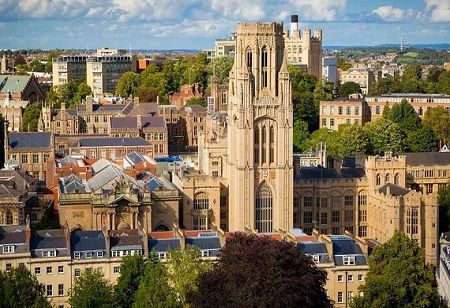
The broader academic profile of the university makes the opportunity even more compelling. Founded in 1876 and known as one of the original red brick universities, Bristol is a Russell Group institution with a strong research tradition and a global academic reputation.
Its position in the QS World University Rankings 2026, where it is placed 51st globally and 8th in the UK, adds to its credibility as a destination for postgraduate education. For students from Malaysia, studying at a university with that standing can carry weight in both academic and professional circles, especially when paired with a degree from a research-intensive institution.
Engineering remains one of Bristol’s most distinctive strengths. Its programmes are highly ranked in the UK across aerospace, general engineering, civil engineering and mechanical engineering, and they are accredited by the Royal Academy of Engineering.
That matters because it suggests a curriculum that is designed not only to produce strong academic outcomes but also to support employability and research progression. For students looking to move into industry, consultancy, innovation or further research, that type of accreditation can make a meaningful difference.
Beyond engineering and AI, the university’s research profile extends across business, law and medicine, reinforcing its wider academic depth. In REF 2021, a large share of its business and management research and medical research was rated world-leading or internationally excellent, while its legal research ranked highly at the national level. This matters because postgraduate students often look for universities that can support interdisciplinary growth.
AI today is not isolated from business strategy, healthcare systems or regulation. It interacts with all of them. A university with strength across several disciplines is therefore better placed to prepare students for complex careers in a multi-sector economy.
Bristol’s location adds another layer of opportunity. Situated in central Bristol and connected to the wider Temple Quarter regeneration area, the university is part of a district being reshaped into an innovation and enterprise hub. Its Temple Quarter Enterprise Campus, scheduled to open in September, is designed to bring teaching, research and industry engagement together under one roof.
For postgraduate students, that creates a setting where labs, collaborative learning spaces and entrepreneurial facilities can support both academic progress and career development.
The significance of this development for Malaysian students should not be understated. Malaysia is steadily building demand for advanced digital and engineering skills as it pushes deeper into technology-driven economic transformation.
Students who pursue postgraduate studies abroad increasingly want more than a prestigious degree. They want exposure to ecosystems that can help them return home with practical expertise, global networks and a strong understanding of emerging technologies. Bristol appears to be offering exactly that combination.
The university’s emphasis on AI, robotics, 6G innovation and applied research means Malaysian postgraduates can gain access to learning environments that reflect the pace of change in the global economy. Whether the goal is to enter industry, contribute to research, launch a startup or move into policy and strategy, the value lies in studying at an institution where future-facing technology is not an add-on but a central priority.
Also Read: Malaysia to Send 100 More MARA Students to New Zealand Amid US Placement Hurdles
For prospective students, the message is simple. The University of Bristol is not just expanding its AI profile. It is building a research-led, industry-connected environment that could be especially attractive to Malaysian postgraduates seeking advanced study in a world where technology skills are becoming essential.
As AI, engineering and digital transformation continue to shape global opportunity, institutions like Bristol are emerging as important destinations for students who want to study in a place where innovation is not just discussed, but actively developed.
🍪 Do you like Cookies?
We use cookies to ensure you get the best experience on our website. Read more...