.png)

By Editorial Team
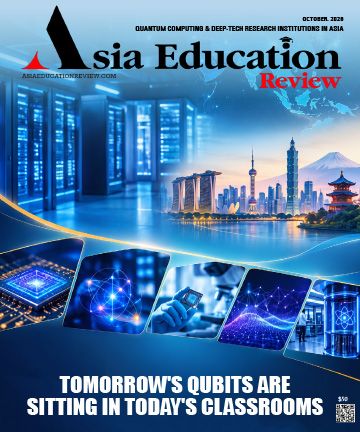
Quantum technology has long been described as the future of computing. In Asia, that future is increasingly a present-day research priority. The University of Science and Technology of China has demonstrated photonic and superconducting quantum systems. India's National Quantum Mission has brought attention to IISc Bengaluru, IIT Bombay, IIT Madras and TIFR. Japan's RIKEN and the University of Tokyo, Singapore's National University of Singapore and South Korea's KAIST continue to strengthen the region's research base.
Yet breakthroughs alone do not build an industry. Quantum computing needs physicists, engineers, software developers, materials scientists and entrepreneurs working together, and that depends on universities willing to invest in laboratories, interdisciplinary programmes and industry partnerships.
For Asian students, this creates a new career frontier. For governments and companies, it raises questions of talent, funding and global competitiveness. In this issue, 'Top Quantum Computing & Deep-Tech Research Institutions In Asia - 2026', Asia Education Review spotlights the universities, research labs and deep-tech programmes shaping the region's quantum future.
Current Magazine
Editor's Column

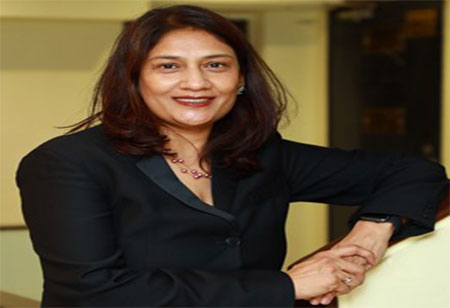
How can Online Course Bridge the...
Gaurav Raina, Assistant Professor, IIT Madras
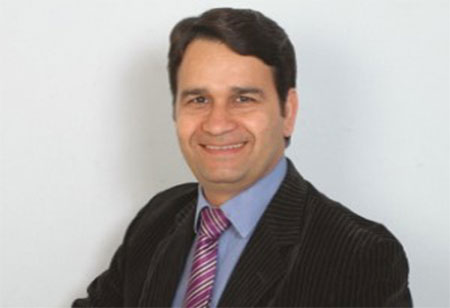
Bridging Gaps between Academia and...
Manoj Kumar Chhikara, Director - R&D, Hilleman Laboratories
Editor's Guest Post
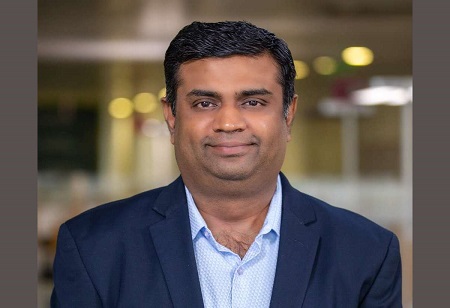
The Evolution of Studying Abroad
Team Asia Education Review
Medical Device Industry Transitioning...
Team Asia Education Review
🍪 Do you like Cookies?
We use cookies to ensure you get the best experience on our website. Read more...