By Tharani Sambu, Content Writer
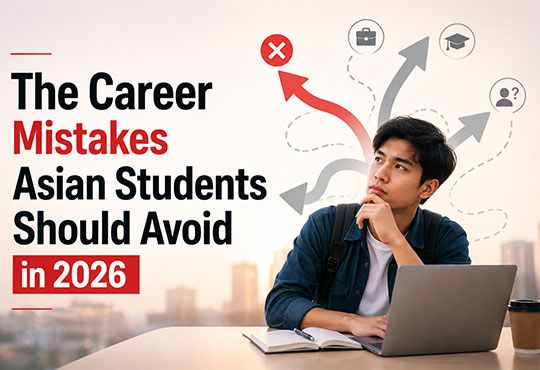
The Career Mistakes Asian Students Should Avoid in 2026

-
Career planning has become more important than ever for Asian students entering the workforce in 2026. A degree can provide the academic foundation for a profession, but building a successful career now requires much more than completing a course and securing a qualification.The graduate job market is changing rapidly. Artificial intelligence, automation, digital transformation and evolving employer expectations are reshaping the skills companies look for when hiring young professionals. Practical experience, communication, problem-solving, digital capabilities and adaptability are increasingly becoming part of career readiness.For students across Asia, career decisions can also be influenced by family expectations, academic pressure and the search for stable and financially rewarding professions. While these factors can provide direction, they can sometimes lead students to overlook the importance of exploring their own strengths and gaining workplace experience.As a result, some students enter the job market with strong academic records but limited practical exposure, professional networks or understanding of workplace expectations. Others may follow every emerging career trend without developing a strong foundation of transferable skills. In 2026, building a career is less about following a fixed path and more about developing the skills, experience and adaptability needed to move with a changing workplace.Here are the key career mistakes Asian students should avoid as they prepare for the world of work.
Mistake 1: Choosing a Career Only Because Others Expect It
 A student can spend years preparing for a career because it is considered prestigious, stable or financially secure, only to discover after graduation that the work does not match their interests.Family expectations can have a strong influence on career decisions across Asia. Students may choose engineering, medicine, finance, technology or another popular field because parents or relatives believe it offers a secure future.The problem is not listening to advice. The problem is choosing a career without considering personal interests, abilities and long-term goals.A career that looks attractive from the outside may not be the right fit for every student.What to do instead: Talk to professionals, attend career events, explore different subjects and gain practical exposure before making a major career decision.When Career Advice Becomes Career Pressure :Parents often want their children to choose careers that appear stable and financially secure. That advice usually comes from good intentions.However, students entering the workforce in 2026 are facing a different employment environment from the one their parents experienced. Rather than completely rejecting family advice, students can combine it with career research, conversations with professionals and practical experience before making a decision.
 Mistake 2: Assuming a Degree Is EnoughA university degree can open doors, but it does not automatically prepare someone for every workplace situation.Two graduates with similar academic qualifications can have very different employment prospects if one has completed internships, worked on projects and developed communication skills while the other has focused mainly on examinations.Employers are increasingly interested in evidence of what graduates can actually do. Shawn VanDerziel, President and CEO of the National Association of Colleges and Employers (NACE), explains this shift:“Providing evidence of their skills requires students to reflect on their experiences through the lens of the job search and make a connection between the skills they have gained and the job for which they are applying.” — Shawn VanDerziel, President and CEO, National Association of Colleges and Employers (NACE)The message for students is simple that qualifications matter, but demonstrating the ability to apply knowledge can make a significant difference. What to do instead: Build a portfolio of practical work. This could include internships, research projects, competitions, freelance assignments, volunteering or industry projects.
Mistake 3: Waiting Until Graduation to Gain Experience
 One of the easiest mistakes to make is thinking career preparation begins after college.A student may spend three or four years focusing almost entirely on exams and then discover during the final year that employers expect practical experience, project knowledge or familiarity with workplace tools.Students do not need years of professional experience before graduation.They can gain experience through internships, student projects, volunteering, competitions and part-time work while still in college. Even smaller opportunities can demonstrate initiative and help them understand what employers actually expect.Gaining workplace exposure early can also help students develop confidence, build professional connections and identify the type of career they want to pursue.What to do instead: Start your early Gaining experience during college can make the transition from education to employment much smoother.A Better Career Preparation Path :Classroom learning → Practical project → Internship → Professional network → Portfolio → Job applicationsBuilding these experiences gradually gives students something more valuable than a list of qualifications: real experience and evidence of what they can contribute in the workplace.
 Mistake 4: Ignoring Communication SkillsTechnical knowledge may help a student qualify for an interview, but strong communication skills can influence what happens next.Graduates may need to explain an idea clearly, participate in meetings, write professional emails, present their work or collaborate with people from different backgrounds.Developing communication skills during college can therefore help students feel more confident when they enter the workplace.For students entering international companies, communication skills can become even more important. Neeli Bendapudi, President of Penn State University, has highlighted the continuing importance of these abilities:“Foundational skills, or ‘soft skills,’ such as reading comprehension, the ability to work in teams, empathy and communication, are innately part of what makes us human.” — Neeli Bendapudi, President, Penn State UniversityAs technology takes over more routine tasks, communication skills, teamwork and empathy can become even more valuable in the workplace.What to do instead: Practise writing, presentations, interviews and group discussions. Students can also join clubs, competitions and professional organisations to strengthen their communication skills and become more comfortable communicating with others.Also Read : Top Skills Asian Students Need For Jobs in 2026
Mistake 5: Using AI Without Building Real Skills
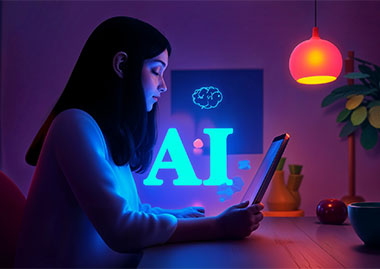 AI tools are now part of everyday academic and professional life. Students can use them for research, brainstorming, writing support, coding and many other tasks.But relying on AI for everything can create another problem.Students may finish assignments quickly without taking the time to build real skills such as research, data analysis, critical thinking and problem-solving. These are the abilities that help students understand a subject rather than simply complete a task.A graduate may be able to produce a polished report with AI but struggle to explain the ideas behind it during an interview. The problem is not using AI.The problem is failing to understand the work. Employers still need people who can evaluate information, make decisions, solve unfamiliar problems and take responsibility for their work.Developing these real skills alongside AI knowledge can give students a stronger foundation for their careers.What to do instead: Use AI as a tool, not as a replacement for learning. Understand the output, verify information and develop the underlying skill yourself.
Career Mistake Better Approach Relying only on a degree Build practical experience Waiting until graduation Start internships early Ignoring communication Practise presenting and writing Depending completely on AI Use AI while developing your own skills Applying everywhere Target suitable roles Avoiding networking Build genuine professional connections Chasing every trend Develop adaptable skills The table highlights an important point : Career preparation is not about doing everything at once. It is about gradually building skills, experience and professional confidence. Mistake 6: Not Building Professional ConnectionsNetworking can sound intimidating to students, particularly when they believe they need to know senior executives or industry leaders.In reality, professional connections can begin with classmates, professors, alumni, internship supervisors and people students meet at conferences or career events.A useful conversation can lead to an internship opportunity, career recommendation or industry connection later.Students should not approach networking as simply collecting contacts. Building genuine professional relationships can help them learn about industries and discover opportunities that may not appear on traditional job boards.What to do instead : Create a professional LinkedIn profile, connect with people in areas of interest and participate in relevant events.
Mistake 7: Applying for Every Job Without a Direction
 When graduation approaches, it can be tempting to apply for dozens of jobs simply because they are available.But sending applications without understanding the role can lead to weak resumes, generic cover letters and poor interviews.Students do not need to have one perfect career path. They do need to understand the type of work they are interested in exploring.For example, a business graduate interested in consulting could research consulting roles, develop analytical skills and look for relevant internships instead of applying randomly to every available position.What to do instead: Identify two or three career areas that match your skills and interests. Research the roles, understand the required skills and tailor applications accordingly.
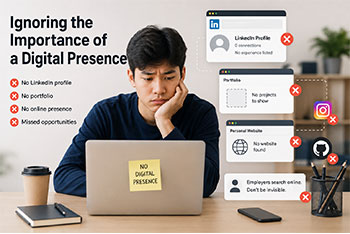 Mistake 8: Ignoring the Importance of a Digital PresenceA resume is no longer the only place where students can showcase their abilities.For many fields, employers may also look at LinkedIn profiles, portfolios, GitHub accounts, personal websites or examples of previous work.A student with no professional online presence may miss an opportunity to demonstrate what they can do.This does not mean students need to post every day or become social-media influencers. A simple, professional profile can be enough to show projects, internships, certifications and achievements.What to do instead: Build a professional digital presence that reflects your interests, skills and work.
Mistake 9: Chasing Every New In-Demand Career
 Every year brings a new list of in - demand careers. In 2026, AI-related roles are receiving significant attention, but that does not mean every student should suddenly abandon their original interests and pursue AI.Technology changes quickly. Skills such as critical thinking, communication, leadership, creativity and problem-solving remain useful across careers.Students should therefore look beyond individual job titles and focus on developing skills that can remain useful as industries evolve.What to do instead: Develop a combination of industry knowledge + technology skills + human skills rather than chasing every new career trend.
 Mistake 10: Treating the First Job as the Final DestinationStudents sometimes feel pressure to choose the perfect first job. But careers rarely follow a completely straight path.A graduate might begin in marketing and move into consulting, start in finance and transition into technology, or enter a small company before moving to a larger organisation.The first job is often a starting point rather than a permanent decision.Adaptability becomes important here. Datuk Chong Sin Woon, Secretary-General of the Malaysian Chinese Association (MCA), has stressed the importance of being prepared for change:“Every generation of young adults faces its own crisis, but adaptability and the willingness to take on challenges will determine how well they navigate an increasingly uncertain future.” — Datuk Chong Sin Woon, Secretary-General, Malaysian Chinese Association (MCA)For students, this means being open to learning new skills, changing direction when necessary and treating early career experiences as opportunities to discover their strengths.What to do instead: Focus on learning, gaining useful experience and understanding your strengths. A first role can help shape the next stage of a career.
What Students Can Do Differently in 2026
Avoiding career mistakes does not mean having a perfect five-year plan.A better approach is to build career readiness gradually:Learn → Try → Build → Connect → Review → ImproveStudents can start by learning a skill, testing it through a project, building evidence of their work, connecting with professionals and reviewing what they have learned.This approach is particularly useful in a job market where technology and employer expectations continue to change.Preparing for a Successful Career in 2026
For Asian students, preparing for a career does not require having a perfect career plan from the beginning. What matters is taking consistent steps during college to develop relevant skills, gain practical experience, build professional connections and understand changing workplace expectations.A degree remains an important foundation, but graduates who combine their qualifications with practical experience, communication skills, digital capabilities and adaptability can enter the workforce with greater confidence and stronger career readiness.The career landscape will continue to change, particularly as AI and new technologies reshape jobs and industries. Students who remain willing to learn, develop new capabilities and adapt to these changes can be better prepared for opportunities throughout their careers.The key to career success in 2026 is not simply choosing the right profession. It is building the skills, experience and adaptability needed to grow within an evolving workplace.
🍪 Do you like Cookies?
We use cookies to ensure you get the best experience on our website. Read more...