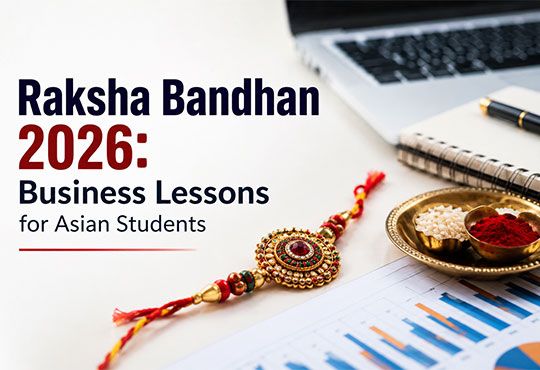
Raksha Bandhan 2026: Business Lessons for Asian Students

-
Raksha Bandhan is traditionally associated with the bond between siblings, family gatherings and the exchange of gifts. But beyond the celebrations, the festival also offers an interesting real-world lesson in business.
Every year, businesses prepare for changing customer preferences around Raksha Bandhan. From local sweet shops and small gift stores to e-commerce platforms and quick-commerce companies, businesses adjust their products, marketing and delivery strategies to meet seasonal demand.
While Raksha Bandhan is primarily celebrated in India and among Indian communities abroad, the business activity surrounding the festival offers students a practical case study in consumer behavior, entrepreneurship, marketing and seasonal demand—concepts that are relevant to markets across Asia.
For students interested in business, management or entrepreneurship, Raksha Bandhan can therefore become more than a cultural celebration. It can become a practical business-learning exercise that connects classroom concepts with real consumer activity.
Understanding Consumer Behavior Through Raksha Bandhan
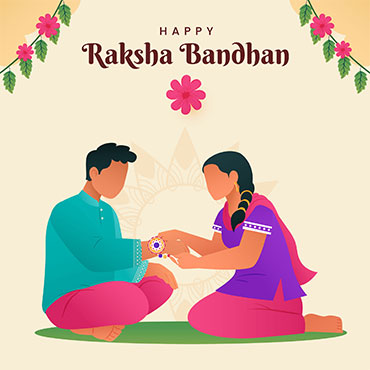
One of the first business lessons students can learn from Raksha Bandhan is the importance of understanding consumer behaviour and what customers want. Festive purchasing is not always driven by necessity. Emotional connections, traditions, and personal preferences can strongly influence buying decisions.
This creates opportunities for businesses to offer products that feel more personal and meaningful. The 2026 Raksha Bandhan season demonstrates this changing demand. India's Rakhi trade is projected to approach ₹25,000 crore, while wider festive trade, including gifts, sweets, apparel, and electronics, could cross ₹30,000 crore, according to estimates from the Confederation of All India Traders.
For students, this provides a simple business lesson: successful businesses pay attention to changing customer preferences rather than assuming that customers will always want the same product.
Students studying business can examine questions such as the following:
What makes customers choose a premium product?
Does personalization increase perceived value?
How does culture influence purchasing decisions?
Why might customers spend differently during a festival?
These questions are not limited to India. Students across Asia can apply the same thinking to the festivals and consumer markets they see in their own communities.
Festive Marketing Turns Emotion Into Business Value
Raksha Bandhan also demonstrates the importance of emotional marketing. The festival is built around relationships, memories and family. Businesses can connect their marketing messages with these emotions instead of focusing only on price or product features. A gift company can position a product around creating a memorable moment between siblings. A food brand can connect its products with family gatherings. An e-commerce platform can make purchasing easier for people who live away from their families, creating business value through meaningful customer experiences. Students can learn that effective marketing is not simply about telling customers that a product exists. It is about understanding what matters to the customer and communicating that value clearly. This lesson can be applied across Asia. Lunar New Year campaigns, Diwali promotions, Hari Raya shopping and other regional celebrations demonstrate similar connections between culture, emotions, and consumer decisions. For students pursuing marketing or business studies, comparing these different markets can provide a useful understanding of cultural marketing.
Raksha Bandhan and the Rise of Digital Commerce

The festival also demonstrates the growing role of digital commerce in seasonal business. Consumers increasingly use online platforms to purchase gifts, sweets, fashion products, and other festive items. Businesses respond with dedicated festive collections, discounts, targeted campaigns and faster delivery options. For students, this provides a useful introduction to omnichannel business models.
A business may have a physical store, website, mobile application, and delivery partners, all serving the same customer. During a festival, these channels can work together to make purchasing faster and more convenient.
Students can study this as a practical example of:
Customer demand → Digital platform → Product selection → Payment → Delivery → Customer experience
The same model can be examined in other Asian markets, where e-commerce plays an increasingly important role during major cultural and religious celebrations.
This gives students an opportunity to compare how businesses respond to seasonal demand in different markets rather than studying digital commerce only through theoretical examples.
Small Businesses Can Find Opportunities in Festivals
 Raksha Bandhan is also a useful example of entrepreneurship at a local level.
 Small businesses can create opportunities around seasonal demand without having the resources of large corporations.
Handmade rakhis, customized gifts, traditional sweets, eco-friendly products, personalized hampers, and local food products can all serve specific customer segments.
One interesting example is Shikha Shah, Founder of ScrapShala, a social enterprise focused on upcycled and sustainable products.
ScrapShala has developed plantable rakhis as an alternative to conventional products while working with local artisans. Shah has described the idea behind the initiative in a Raksha Bandhan post:
“Raksha Bandhan is not just about tying a sacred thread. It’s about making a promise to protect each other, the planet, and the hands that made it.”— Shikha Shah, Founder, ScrapShala
Her example offers an important lesson for students. Entrepreneurship does not always begin with a completely new market. Entrepreneurs can identify an existing product, recognize a customer or environmental problem, and develop a different solution. ScrapShala's approach connects product innovation, sustainability, artisan livelihoods, and consumer awareness.
For students across Asia, this is particularly relevant because many regional markets have strong traditions of handicrafts and locally produced goods. Students can explore similar opportunities within their own communities by examining local products, cultural traditions, and emerging consumer preferences.
Pricing Teaches Students About Demand
 Festivals also provide an accessible way to understand pricing. Demand can change significantly during special occasions. A product that normally has limited demand may become highly sought after during a festival. Businesses, therefore, need to consider inventory, costs, customer willingness to pay, and competition when setting prices. The Rakhi market offers a simple example. Different products can occupy different price segments depending on design, materials, craftsmanship, packaging, and personalization.
For business students, this introduces concepts such as:
- Market demand
- Product differentiation
- Pricing
- Customer segmentation
- Profit margins
- Competition
Students in other Asian markets can apply the same concepts to seasonal products associated with their own festivals.
A classroom exercise could compare the pricing of festive products across two or three Asian markets and examine what influences the final price.
This turns a familiar cultural event into a practical lesson in economics and business management.
Also Read: Minister Vows to Enhance University Act for Students' Benefit
What Asian Students Can Learn From Festive Markets
 The biggest opportunity for Asia Education Review is to move beyond Raksha Bandhan itself and examine the wider educational value of festive markets. Asia has a diverse range of cultural celebrations, and many of them create significant seasonal business activity. These markets can provide students with accessible examples of concepts that might otherwise appear abstract in textbooks.
For example, Raksha Bandhan in India can demonstrate gifting, personalization, and seasonal demand.
Diwali in India and among Indian communities across Asia can provide examples of retail, advertising, e-commerce, and premium gifting.
Lunar New Year in East and Southeast Asia can demonstrate consumer spending, travel, food, gifting, and promotional campaigns.
Hari Raya in Malaysia, Indonesia, and other markets can provide examples of seasonal retail, fashion, food, and tourism.
Mid-Autumn Festival markets can demonstrate gifting, packaging, branding, and changing consumer preferences.
The point is not that all these festivals are celebrated in the same way. They are not. Their value for education comes from allowing students to observe how culture can influence markets.
This can help students develop skills in research, market analysis, communication, and business thinking.
Festivals Can Become Real-World Business Classrooms

Business education does not have to remain inside a classroom.
Students can observe businesses around them and identify the strategies being used during a festival. They can compare prices, study advertisements, examine social-media campaigns, observe product packaging and analyze customer preferences.
Schools and universities can turn these observations into practical business-learning projects.
Students could be asked to:
- Develop a festive marketing campaign.
- Create a simple business plan for a seasonal product.
- Compare online and offline pricing.
- Conduct a customer-preference survey.
- Design an eco-friendly festive product.
- Calculate production costs and potential profit.
- Compare festive consumer trends in two Asian markets.
Such activities can develop practical skills in research, communication, financial literacy, marketing, teamwork and problem-solving.
They also encourage students to look at the world around them as a source of business knowledge.
Culture and Business Are Closely Connected
 Another lesson students should not overlook is the relationship between culture and business.
Companies entering new Asian markets need to understand local traditions, celebrations, consumer expectations and purchasing behavior. A campaign that performs well in one country may not produce the same response elsewhere.
Raksha Bandhan therefore provides an introduction to cultural intelligence in business.
Students can learn that successful businesses need more than good products. They also need to understand the people and communities they serve.
For future entrepreneurs, marketers and business leaders, this understanding can become an important professional skill.
From Festival to Future Business Skills
Raksha Bandhan 2026 offers students a simple but valuable business case study.
Behind the celebration is a network of businesses responding to customer demand, creating products, setting prices, developing marketing campaigns and delivering goods through physical and digital channels.
For students in India, these activities can be observed directly. For students elsewhere in Asia, the same approach can be applied to their own local festivals and markets.
That is what makes the topic relevant beyond one celebration.
The broader lesson is that education becomes more meaningful when students can connect concepts from textbooks with the world around them. A festival can become a case study in marketing. A local shop can become an example of entrepreneurship. A festive discount can introduce students to pricing strategy. A handmade product can demonstrate innovation and sustainability.
As Asian economies become increasingly digital, interconnected, and entrepreneurial, students need opportunities to understand business in real-world settings.
Raksha Bandhan may begin with a thread, but from an education and business perspective, it opens a much wider conversation about customers, markets, innovation, entrepreneurship, and the practical skills needed by the next generation of Asian business professionals.
🍪 Do you like Cookies?
We use cookies to ensure you get the best experience on our website. Read more...