- Cambodia is strengthening its labour market and skills development, focusing on reintegration of returning migrant workers from Thailand.
- The Ministry of Labour and Vocational Training has enhanced the National Employment Agency, organized job fairs, and expanded technical and vocational education and training (TVET) programs.
- Initiatives include Recognition of Prior Learning (RPL) certification and partnerships with international organizations like the IMF to ensure workforce readiness and sustainable economic growth.
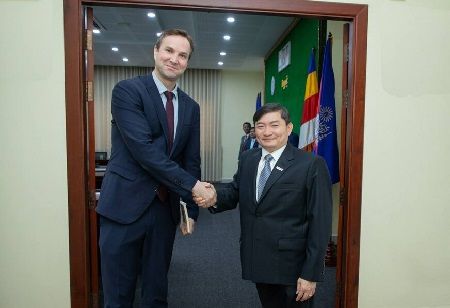
Cambodia is taking significant steps to strengthen its labour market and expand skills development opportunities, with particular attention to the needs of returning migrant workers, as highlighted in a recent meeting between Heng Sour, Minister of Labour and Vocational Training, and Jochen M. Schmittmann, Regional Resident Representative of the International Monetary Fund (IMF) for Cambodia, Laos, and Vietnam.
The discussions focused on labour market absorption, workforce skills development, and reintegration strategies for Cambodian workers returning from Thailand, reflecting the country’s commitment to both economic growth and social support. During the meeting, Minister Heng Sour emphasized the importance of ongoing dialogue with international partners such as the IMF to share perspectives on workforce demand, employment trends, and skills gaps.
He noted that these discussions are particularly timely as Cambodia seeks to enhance the resilience of its labour market while improving the efficiency of skills development systems and job-matching mechanisms. By aligning government initiatives with broader economic trends, the ministry aims to ensure that workers are equipped to meet evolving industry demands and contribute meaningfully to the country’s development.
The Ministry of Labour and Vocational Training has implemented a range of initiatives to support both youth and returning migrant workers. The National Employment Agency (NEA) has been strengthened to serve as a central hub for employment information, collecting job vacancy data from employers and disseminating opportunities through the 1297 hotline and various social media platforms.
Additionally, local-level job forums and job fairs, particularly in provinces bordering Thailand, have been organised to provide returning workers with information on employment opportunities, social security schemes, and available skills training programmes. These initiatives help bridge the gap between job seekers and employers, while also supporting the broader reintegration of workers into the domestic economy.
A key focus of the ministry’s work has been technical and vocational education and training (TVET), designed to equip returning migrant workers and youth from vulnerable households with practical skills. These programmes allow participants to quickly gain competencies that translate into immediate income-generating opportunities, supporting both personal livelihoods and broader economic stability.
Also Read: Qatar University hosts discussion on economic education
To further encourage skill recognition, the ministry has also offered free Recognition of Prior Learning (RPL) assessments, enabling workers especially in sectors such as construction to obtain formal certification for skills they have already acquired, enhancing their employability in the formal labour market.
Jochen M. Schmittmann praised the Cambodian government for its detailed updates on intervention mechanisms and reintegration efforts, highlighting the value of clear, comprehensive data for the IMF. Such information helps international organisations understand the effectiveness of policies and identify areas for further support. Minister Heng Sour expressed optimism that the partnership with the IMF would continue to grow, reinforcing Cambodia’s socio-economic development goals and ensuring that its workforce is equipped with the skills necessary for a competitive and sustainable labour market.
By combining targeted training, certification initiatives, and accessible employment resources, Cambodia is not only addressing immediate labour market challenges but also laying the groundwork for a more skilled, resilient workforce capable of meeting the demands of the future. These efforts underscore the country’s broader commitment to education, vocational training, and workforce development as essential pillars of economic growth.