
-
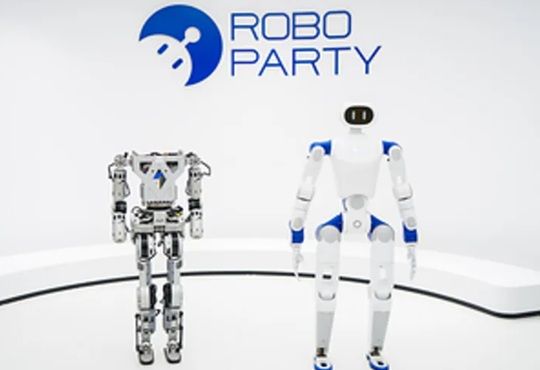
Robotics company RoboParty has officially launched its high-performance open-source humanoid platform RP1, also known as ROBOTO 01, across Southeast Asian markets. The rollout, which began on October 15, positions the company as a provider of complementary open platforms that span hands-on education through advanced embodied AI research.
Alongside its earlier fully open-source kit RPO, RP1 gives universities, research labs, and independent developers greater freedom to adapt hardware and software to their specific goals rather than forcing workarounds around closed systems.
RP1 is engineered for demanding research environments. Its full-stack open architecture covers mechanical design, proprietary ROMOMO actuator modules developed in-house, low-level control systems, simulation environments, software development kits, and training tools. Researchers can inspect, modify, and validate every layer of the robot.
This transparency allows teams to trace issues from high-level model policies through control algorithms down to physical execution, enabling true system-level optimization. In practical terms, developers no longer need to treat the robot as a black box; they can open the entire stack and adjust it to fit experimental needs.
The platform ships with proven motion capabilities that reduce the time spent reinventing basic locomotion. These include continuous walking, recovery from external disturbances, and the ability to stand up after a fall. By providing reliable foundational behaviors out of the box, RP1 lets research groups concentrate on higher-value work such as policy training, advanced locomotion studies, and complex task validation. The result is faster iteration cycles and more efficient use of limited lab resources.
Central to the RP1 ecosystem is PartyOS, RoboParty’s open development foundation for humanoid robotics. PartyOS links motion retargeting, policy training, simulation validation, and real-robot deployment into a coherent pipeline. Teams can move fluidly from digital experiments to physical testing without rebuilding infrastructure at each stage. This integrated approach lowers the barrier between simulation and hardware, a common friction point in embodied AI projects.
RP1 builds on the foundation established by RPO, RoboParty’s first fully open-source humanoid robot. RPO is sold as a cost-effective do-it-yourself kit aimed at education and early-stage development. Its mechanical designs, electrical schematics, training resources, and deployment guides are publicly available, allowing users to assemble the robot themselves, understand every subsystem, and extend its capabilities. The project has attracted more than 2,600 stars on GitHub and has been successfully replicated by over 100 independent users and groups. RPO serves as an accessible entry point for students and makers who want practical experience with embodied systems before moving to more advanced platforms.
Together the two platforms address different stages of the research and education pipeline. RPO supports hands-on learning, system-level understanding, and early customization at relatively low cost. RP1 targets more demanding applications in humanoid locomotion, control theory, and embodied intelligence. Universities and research institutions in Southeast Asia now have a clearer progression path: begin with RPO for foundational skills and migrate to RP1 when projects require higher performance, tighter integration, or more sophisticated sensing and actuation.
Openness remains the core design principle. RoboParty argues that closed platforms force researchers to adapt their ideas to the robot’s constraints. By contrast, full-stack openness returns control to the developer. Teams can change mechanical components, rewrite low-level controllers, retrain policies, and validate results on the same hardware without waiting for vendor updates or proprietary interfaces. This flexibility is especially valuable in academic settings where budgets are limited and experimental needs evolve quickly.
The Southeast Asian launch comes at a time of growing regional interest in robotics and artificial intelligence. Universities across the region are expanding programs in autonomous systems, human-robot interaction, and embodied AI. Access to open, capable, and relatively affordable humanoid platforms can accelerate curriculum development, student projects, and faculty research. Institutions that previously relied on expensive commercial robots or incomplete open-source alternatives now have options that combine transparency with practical performance.
RoboParty positions the dual offering as a response to a simple observation, different research goals require different tools. A classroom focused on teaching mechanical assembly and basic control does not need the same platform as a lab studying robust locomotion under uncertainty or multi-task policy learning. By providing both RPO and RP1 under an open model, the company aims to serve that spectrum without forcing users into a single rigid product.
Also Read: Nurturing Tomorrow's Innovators: STEM Education in Myanmar
Technical details released with the launch emphasize the actuator modules and control stack. The ROMOMO actuators are presented as a key differentiator, designed and manufactured by the company to deliver the torque, precision, and reliability required for dynamic humanoid motion. Combined with the open low-level control layer, these components allow researchers to experiment with novel control strategies while retaining a stable baseline. Simulation tools and SDKs further support rapid prototyping before any hardware is risked.
For developers already familiar with open-source robotics communities, the GitHub traction of RPO offers a useful signal. More than 2,600 stars and over a hundred independent builds suggest a level of community engagement that can translate into shared improvements, documentation, and derivative projects. RP1 is expected to benefit from the same open ethos, with the company inviting researchers to contribute improvements back to the broader ecosystem.
The timing of the Southeast Asia rollout coincides with increasing investment in STEM education and research infrastructure across the region. Governments and private institutions are seeking ways to build local talent in robotics and AI rather than remaining dependent on imported closed systems. Open platforms such as RPO and RP1 can lower the cost of entry while raising the ceiling of what students and researchers can achieve.
Looking ahead, RoboParty’s dual-platform strategy illustrates a broader shift in the robotics industry toward modularity and transparency. As embodied AI moves from laboratory curiosities toward practical applications in logistics, healthcare, and education, the ability to understand, modify, and validate every layer of a robot becomes a competitive advantage for research groups. RP1 and RPO together offer one path toward that capability.
In summary, the introduction of RP1 into Southeast Asian markets expands the set of open humanoid tools available to educators and researchers. From classroom assembly kits to research-grade full-stack platforms, RoboParty is betting that openness, combined with practical motion performance and integrated development tools, will help accelerate progress in humanoid robotics across the region. Universities and labs interested in exploring the platforms can now evaluate both RPO for foundational work and RP1 for advanced projects within a consistent open-source framework.
🍪 Do you like Cookies?
We use cookies to ensure you get the best experience on our website. Read more...