Synopsis
Tajikistan and China are strengthening educational cooperation with a focus on digital learning, smart classrooms, and technology-driven teaching. The partnership aims to expand access to quality education, enhance digital skills, promote academic exchanges, and support modernization of Tajikistan’s education system through innovation and shared expertise.
Tajikistan and China are strengthening their long-standing cooperation in the education sector, with both countries committing to expand Chinese language education, promote digital learning initiatives, and increase opportunities for academic exchanges and professional training. The latest developments underscore the growing importance of educational collaboration in the broader strategic relationship between the two nations.
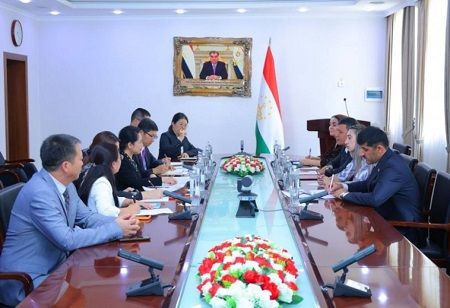
The commitment was reaffirmed during a meeting between First Deputy Minister of Education and Science of Tajikistan Homid Khoshimzoda and a delegation from China’s Ministry of Education. During the discussions, officials reviewed ongoing cooperation projects and explored new initiatives aimed at deepening educational ties. One of the key outcomes of the talks was an agreement to work toward developing an interagency framework focused on expanding and improving Chinese language studies in Tajikistan.
The meeting covered a wide range of topics related to modernizing education and improving access to international learning opportunities. Both sides discussed the introduction of new digital education programs, the creation of advanced learning resources, and expanded opportunities for professional development and internships in China for university faculty members and education specialists. Officials also emphasized the importance of preparing and training local teachers to meet the growing demand for Chinese language instruction across the country.
The expansion of digital education was another major focus of the discussions. As educational institutions worldwide increasingly adopt technology-driven teaching methods, both countries highlighted the need to develop modern digital platforms, online learning tools, and innovative educational resources that can support students and educators in an evolving academic environment. These efforts are expected to help improve learning outcomes while providing greater access to quality education.
Also Read: Digital Education Week 2025 Launched in Hong Kong to Champion EdTech
Educational cooperation between Tajikistan and China has grown significantly in recent years, reflecting the broader strengthening of economic, cultural, and diplomatic relations between the two countries. According to officials, ten higher vocational education institutions in Tajikistan are currently members of the Shanghai Cooperation Organization (SCO) University network, an international academic platform that promotes collaboration among universities across member states. Participation in the network provides students and educators with access to research partnerships, academic mobility programs, and international educational opportunities.
Chinese language education has also seen substantial growth across Tajikistan. Thousands of students are currently studying Chinese language courses at nine universities throughout the country, highlighting increasing interest in language skills that can support academic advancement, international business opportunities, and cross-cultural communication. The growing popularity of Chinese language programs reflects China's expanding role in regional trade, investment, and technological development.
The Ministry of Education and Science of Tajikistan reported that 16 higher education institutions in the country have established formal partnerships with 23 universities in China. These agreements have opened new pathways for student exchange programs, joint academic research, faculty cooperation, and collaborative educational projects. Such partnerships are expected to play an important role in enhancing the quality of higher education while strengthening international academic connections.
Officials also highlighted several successful institutions that have become symbols of the expanding educational partnership between the two countries. These include the Confucius Institutes at Tajik National University and the Tajik Mining and Metallurgical Institute, the Luban Center at Tajik Technical University, and the Chinese Language Studies Center at Sadriddin Aini Tajik State Pedagogical University. These centers have helped promote language learning, technical education, cultural exchange, and academic cooperation while serving as important platforms for strengthening people-to-people ties.
The latest discussions signal a continued commitment by both governments to expand cooperation in higher education, digital learning, teacher training, and Chinese language education, further reinforcing the growing educational partnership between Tajikistan and China.