
-
UNESCO and Thailand’s EEF have launched a two-year regional partnership to address out-of-school children across ASEAN, emphasizing flexible learning, innovative financing and shared policy tools.
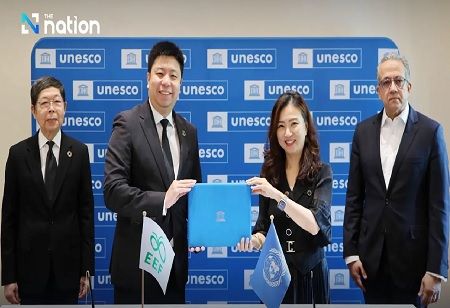
In a compact but consequential move for education across Southeast Asia, UNESCO and Thailand’s Equitable Education Fund (EEF) signed a two-year memorandum of understanding on May 16 aimed at pulling millions of children and young people back into learning. The pact, framed around flexible learning, financial innovation and regional policy exchange, sets a practical agenda for tackling one of the region’s most persistent and politically sensitive problems: out-of-school children.
The partnership arrives amid stark data and growing alarm. UNESCO and regional education experts point to poverty, displacement, and deepening inequality as primary drivers that keep children from classrooms. For the ASEAN+ region, where cross-border migration, climate shocks and uneven public financing complicate access, the new MoU signals a shift from individual country initiatives to coordinated regional action.
“This is not merely a technical agreement”, said Soohyun Kim, Regional Director of UNESCO Bangkok, at the signing. “It is a political and moral commitment: strong regional mechanisms must back national efforts if we are to reach every child.” Behind that statement lies the hard arithmetic: millions of learners who have slipped out of formal systems are harder and costlier to reach the longer they remain disconnected.
EEF’s ‘Zero Dropout Plus’ model, championed by Thailand, is at the heart of the pact. The initiative pairs data-driven tracking with community-based interventions, flexible learning pathways and incentives designed to keep vulnerable children in learning or help them re-enter it. EEF managing director Kraiyos Patrawart emphasized that the model’s success required cross-sector cooperation from local governments and schools to civil society and private partners and consistent investment.
Thailand’s experience provides practical tools, but the MoU is deliberately regional: signatories aim to adapt, not transplant, proven approaches across diverse contexts in ASEAN and partner countries. Key commitments under the two-year framework include hosting the 4th International Conference on Equitable Education in Bangkok (October 2026), convening the ASEAN+4 Regional Conference on Learning Cities in Ho Chi Minh City (November 2026), and producing a Flexible Learning Guide tailored to the ASEAN+ region.
Experts say these activities can catalyze policy change if they go beyond rhetoric. Conferences must translate to financing commitments, policy harmonization and capacity building at national and subnational levels. The development of a flexible learning guide if done collaboratively and with attention to marginalized groups such as migrant children, stateless learners and those in displaced communities could provide a practical blueprint for ministries struggling to reconcile formal schooling with children’s lived realities.
Financial innovation is an explicit pillar of the MoU and possibly the most consequential if realized. Many Southeast Asian education systems face tight budgets and competing priorities. Innovative financing blending government funds, development finance, philanthropic contributions and results-based mechanisms can unlock resources for targeted interventions that keep learners in school or offer credible second-chance options. Pilots under the agreement could test such mechanisms and provide replicable evidence for scaling.
Civil society voices welcome the regional push but urge strong accountability. “Any regional plan must center learners’ rights and community participation”, said a regional NGO representative who asked not to be named. “Flexible learning should not become a lowering of standards but a route to inclusion and quality”.
The MoU builds on an existing relationship
UNESCO and EEF have collaborated since 2018 and contributed to the Equitable Education Alliance (EEA), a community of practice that now includes 34 organizations and has engaged over 650,000 education stakeholders in Asia and the Pacific. That network could help move innovations quickly from pilot to practice, particularly if partners share data, tools, and lessons in real time.
Still, practical challenges remain. Political volatility and competing national priorities can stall reforms. Integration of out-of-school children often requires legal and administrative changes—such as recognition of non-formal credentials, cross-border student records, and new teacher training streams that are slow to enact. Reaching displaced learners and those in remote or conflict-affected areas will require tailored approaches and durable funding commitments.
Also Read: AVIXA Opens Applications for Michael Vergauwen Scholarship
For ASEAN members, the timing is strategic. Regional institutions increasingly recognize that education contributes to economic resilience, social stability and equitable growth. A regional playbook for flexible learning and financing could also help countries meet global education goals while addressing local realities such as child labour, migration and digital divides.
What success will look like is measurable but ambitious: fewer children outside school, accessible second-chance pathways, sustainable financing streams, and policies that institutionalize flexibility rather than treating it as a temporary fix. Early indicators concrete policy adoption by member states, funded pilot programs, and demonstrable re-enrolment rates from targeted interventions will show whether the MoU moves from promise to practice.
If the UNESCO-EEF pact achieves even a fraction of its aims, it would represent a pragmatic model for regional cooperation in education: one that links policy, finance and on-the-ground practice while centering vulnerable learners. For a region where opportunity gaps are widening even as knowledge economies expand, that kind of focused, pragmatic solidarity may be the single most important investment in the next decade.
🍪 Do you like Cookies?
We use cookies to ensure you get the best experience on our website. Read more...