
-
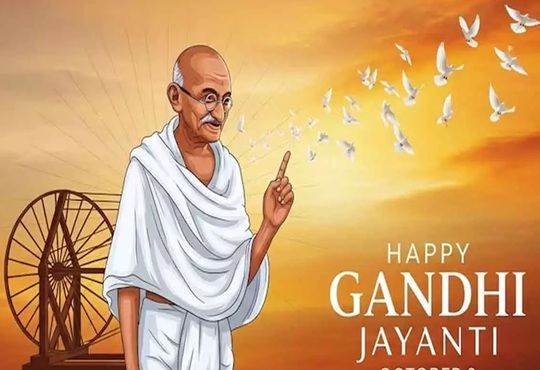
As India marks the 157th birth anniversary of Mahatma Gandhi on Gandhi Jayanti, educators, students and policymakers are being urged to move beyond ceremonial tributes and apply his core principles of truth, non-violence, simplicity and self-discipline in classrooms and daily life. An opinion analysis published by Awaz – The Voice highlights why Gandhi’s ideas continue to hold practical value for a young, digitally connected and ambitious nation facing modern challenges of inequality, misinformation and consumerism.
India has transformed dramatically since Gandhi’s era. The country is now linked globally through technology, trade and social media, with significant advances in science, education, infrastructure and the economy. Yet persistent issues that concerned Gandhi poverty, inequality, communal tensions, bitter public discourse and environmental strain from rising consumerism remain relevant in new forms. Experts note that Gandhi Jayanti should serve as more than a day of remembrance; it should prompt reflection on how his philosophy can guide contemporary Indian society, especially the education sector.
Central to Gandhi’s philosophy was the pursuit of truth, or satya. He viewed truth not merely as the opposite of falsehood but as a continuous process of self-examination and correction, as detailed in his autobiography The Story of My Experiments with Truth. In today’s social media environment, where thousands of messages, images and opinions flood users daily, this principle is particularly urgent. False information spreads rapidly, often fuelling fear, anger and division. Education specialists suggest that schools and colleges can incorporate media literacy modules that encourage students to pause, verify sources and question information before sharing a modern application of Gandhi’s insistence on personal integrity.
Closely linked is his commitment to non-violence, or ahimsa. Gandhi demonstrated that resistance to injustice need not involve hatred. He led mass movements against colonial rule while rejecting violence. In a diverse democracy like India, where political, religious, economic and cultural disagreements are inevitable, this approach offers a model for constructive dialogue. Social media frequently amplifies aggressive language that people would rarely use face-to-face. Educators can use Gandhi’s example to teach students that strong disagreement with an idea does not require personal insult. Classroom debates, student parliaments and conflict-resolution workshops grounded in non-violent communication can help build this skill from an early age.
Gandhi’s vision of national unity without uniformity remains equally important. He recognised India’s pluralism of religions, languages and cultures and worked consistently for Hindu-Muslim harmony. National cohesion, he argued, does not demand that citizens abandon their distinct identities. Schools celebrating cultural diversity through inclusive curricula, interfaith dialogues and joint community service projects can reinforce this message. Students learn that loyalty to one’s own tradition can coexist with respect for others, strengthening the idea of shared citizenship.
Also Read: Asian Leaders Who Turned their Careers Into Success
The dignity of labour formed another cornerstone of Gandhi’s thought. He rejected hierarchical notions that certain honest occupations were inferior and placed special emphasis on sanitation work. While India celebrates technological and economic progress, millions of sanitation workers, domestic helpers, agricultural labourers, construction workers and drivers perform essential tasks that often go unrecognised. Educational institutions can address this by integrating lessons on the value of all forms of honest work, organising interaction sessions with frontline workers, and promoting campus cleanliness drives in which students and staff participate equally. Gandhi believed cleanliness was every citizen’s responsibility, not solely that of municipal authorities. Simple habits such as proper waste disposal and respect for shared public spaces begin with individual accountability — a lesson that schools can model daily.
In an age of aggressive consumerism, Gandhi’s advocacy of simple living acquires fresh relevance. He did not romanticise poverty; rather, he urged a clear distinction between needs and wants. Constant exposure to advertisements and social media can create a sense of incompleteness unless one acquires the latest gadgets, fashion or lifestyle markers. Environmental pressures from pollution, climate change and waste make this distinction urgent. Value-education programmes can help students reflect on sustainable consumption, encourage repair and reuse practices, and discuss how personal choices affect the larger ecological balance.
Gandhi’s concept of Swadeshi can be reinterpreted for the present. India need not reject globalisation, yet it can support local farmers, artisans, small enterprises and entrepreneurs while remaining globally connected. Economic progress gains meaning when its benefits reach ordinary citizens. Career counselling and entrepreneurship modules in schools and colleges can highlight opportunities in local and sustainable businesses alongside global careers.
Perhaps the most demanding of Gandhi’s lessons is self-discipline. He insisted that social reform begins with the individual. Criticising corruption while remaining open to bribes, demanding clean streets while littering, or seeking respect while speaking disrespectfully undermines collective progress. Character-building programmes that emphasise personal responsibility, ethical decision-making and consistent small actions can cultivate this mindset among students.
Gandhi also redefined leadership as service rather than power, wealth or visibility. His influence stemmed from living simply, engaging with ordinary people and accepting personal sacrifice. In educational settings, this translates into recognising quiet forms of leadership: a teacher who motivates a struggling student, a peer who helps a classmate, a student who organises community clean-ups, or a young person who speaks truthfully. Leadership development initiatives can broaden the definition beyond positions of authority to include everyday acts of responsibility and care.
While acknowledging that Gandhi was not without flaws and that his ideas have been subject to legitimate debate and criticism, the analysis stresses that engagement with his questions about truth, violence, poverty, dignity, religion, power and responsibility remains valuable. On this Gandhi Jayanti, schools and colleges across India are encouraged to move beyond formal programmes and inspire students to ask practical questions: Can I be more truthful in daily interactions? Can I disagree without hatred? Can I respect workers whose contributions are often overlooked? Can I consume more responsibly and take greater ownership of my surroundings?
As India marks the 157th birth anniversary of Mahatma Gandhi on Gandhi Jayanti, educators, students and policymakers are being urged to move beyond ceremonial tributes and apply his core principles of truth, non-violence, simplicity and self-discipline in classrooms and daily life. An opinion analysis published by Awaz – The Voice highlights why Gandhi’s ideas continue to hold practical value for a young, digitally connected and ambitious nation facing modern challenges of inequality, misinformation and consumerism.
India has transformed dramatically since Gandhi’s era. The country is now linked globally through technology, trade and social media, with significant advances in science, education, infrastructure and the economy. Yet persistent issues that concerned Gandhi poverty, inequality, communal tensions, bitter public discourse and environmental strain from rising consumerism remain relevant in new forms. Experts note that Gandhi Jayanti should serve as more than a day of remembrance; it should prompt reflection on how his philosophy can guide contemporary Indian society, especially the education sector.
Central to Gandhi’s philosophy was the pursuit of truth, or satya. He viewed truth not merely as the opposite of falsehood but as a continuous process of self-examination and correction, as detailed in his autobiography The Story of My Experiments with Truth. In today’s social media environment, where thousands of messages, images and opinions flood users daily, this principle is particularly urgent. False information spreads rapidly, often fuelling fear, anger and division. Education specialists suggest that schools and colleges can incorporate media literacy modules that encourage students to pause, verify sources and question information before sharing a modern application of Gandhi’s insistence on personal integrity.
Closely linked is his commitment to non-violence, or ahimsa. Gandhi demonstrated that resistance to injustice need not involve hatred. He led mass movements against colonial rule while rejecting violence. In a diverse democracy like India, where political, religious, economic and cultural disagreements are inevitable, this approach offers a model for constructive dialogue. Social media frequently amplifies aggressive language that people would rarely use face-to-face. Educators can use Gandhi’s example to teach students that strong disagreement with an idea does not require personal insult. Classroom debates, student parliaments and conflict-resolution workshops grounded in non-violent communication can help build this skill from an early age.
Gandhi’s vision of national unity without uniformity remains equally important. He recognised India’s pluralism of religions, languages and cultures and worked consistently for Hindu-Muslim harmony. National cohesion, he argued, does not demand that citizens abandon their distinct identities. Schools celebrating cultural diversity through inclusive curricula, interfaith dialogues and joint community service projects can reinforce this message. Students learn that loyalty to one’s own tradition can coexist with respect for others, strengthening the idea of shared citizenship.
The dignity of labour formed another cornerstone of Gandhi’s thought. He rejected hierarchical notions that certain honest occupations were inferior and placed special emphasis on sanitation work. While India celebrates technological and economic progress, millions of sanitation workers, domestic helpers, agricultural labourers, construction workers and drivers perform essential tasks that often go unrecognised. Educational institutions can address this by integrating lessons on the value of all forms of honest work, organising interaction sessions with frontline workers, and promoting campus cleanliness drives in which students and staff participate equally. Gandhi believed cleanliness was every citizen’s responsibility, not solely that of municipal authorities. Simple habits such as proper waste disposal and respect for shared public spaces begin with individual accountability a lesson that schools can model daily.
In an age of aggressive consumerism, Gandhi’s advocacy of simple living acquires fresh relevance. He did not romanticise poverty; rather, he urged a clear distinction between needs and wants. Constant exposure to advertisements and social media can create a sense of incompleteness unless one acquires the latest gadgets, fashion or lifestyle markers. Environmental pressures from pollution, climate change and waste make this distinction urgent. Value-education programmes can help students reflect on sustainable consumption, encourage repair and reuse practices, and discuss how personal choices affect the larger ecological balance.
Gandhi’s concept of Swadeshi can be reinterpreted for the present. India need not reject globalisation, yet it can support local farmers, artisans, small enterprises and entrepreneurs while remaining globally connected. Economic progress gains meaning when its benefits reach ordinary citizens. Career counselling and entrepreneurship modules in schools and colleges can highlight opportunities in local and sustainable businesses alongside global careers.
Perhaps the most demanding of Gandhi’s lessons is self-discipline. He insisted that social reform begins with the individual. Criticising corruption while remaining open to bribes, demanding clean streets while littering, or seeking respect while speaking disrespectfully undermines collective progress. Character-building programmes that emphasise personal responsibility, ethical decision-making and consistent small actions can cultivate this mindset among students.
Gandhi also redefined leadership as service rather than power, wealth or visibility. His influence stemmed from living simply, engaging with ordinary people and accepting personal sacrifice. In educational settings, this translates into recognising quiet forms of leadership: a teacher who motivates a struggling student, a peer who helps a classmate, a student who organises community clean-ups, or a young person who speaks truthfully. Leadership development initiatives can broaden the definition beyond positions of authority to include everyday acts of responsibility and care.
While acknowledging that Gandhi was not without flaws and that his ideas have been subject to legitimate debate and criticism, the analysis stresses that engagement with his questions about truth, violence, poverty, dignity, religion, power and responsibility remains valuable. On this Gandhi Jayanti, schools and colleges across India are encouraged to move beyond formal programmes and inspire students to ask practical questions: Can I be more truthful in daily interactions? Can I disagree without hatred? Can I respect workers whose contributions are often overlooked? Can I consume more responsibly and take greater ownership of my surroundings?
Gandhi’s statues and photographs will continue to mark the historical record. His lasting legacy, however, depends on whether his principles become living habits. Great societal change, the analysis concludes, often begins with simple individual acts a message that contemporary India, and especially its education system, may need more than ever.
Gandhi’s statues and photographs will continue to mark the historical record. His lasting legacy, however, depends on whether his principles become living habits. Great societal change, the analysis concludes, often begins with simple individual acts a message that contemporary India, and especially its education system, may need more than ever.
🍪 Do you like Cookies?
We use cookies to ensure you get the best experience on our website. Read more...