
-
- Asia offers affordable, high-impact education with strong career prospects.
- Top universities provide hands-on STEM, AI, and industry-linked learning.
- Student-friendly visas and scholarships make Asia a smart study choice.
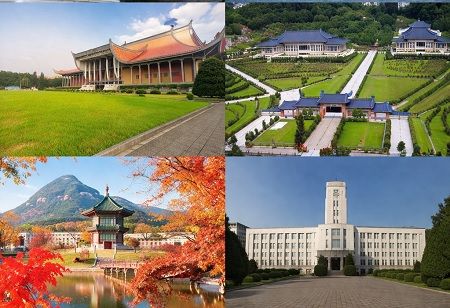
The global education trends show a clear pivot. Ambitious students seeking study abroad in Asia are prioritizing relevance, value, and future-ready careers over traditional prestige. With rising costs, stricter student visa rejection rates US, UK, and policy uncertainties in the West, top talent is turning to Asia’s rising powerhouses for affordable international education Asia, strong STEM courses in Asian universities, and direct job opportunities after studying in Asia.
This isn’t a compromise it’s a strategic choice for maximum return on investment Asian universities in the world’s fastest-growing region. Forbes
Asia now drives over 60% of global economic growth, offering hands-on exposure to booming industries like AI, semiconductors, sustainability, and fintech. English-taught programs have exploded, living costs are often 30-50% lower, and welcoming visa policies for students in Asia make the move smoother.
Asia’s Quiet Takeover of Global Talent Flows
US new international enrollments dropped sharply in 2025, with further pressure expected from policy changes. In contrast, East and Southeast Asia are surging through expanded English programs, government scholarships, and industry ties.
Hong Kong has become the No. 2 destination for Chinese students (the world’s largest outbound group), overtaking the US due to proximity, safety, and cultural fit.
Students now weigh cheapest countries in Asia for higher education alongside quality. Lower tuition, predictable visas, and post-study work options deliver faster ROI. Many report immediate career boosts from understanding Asian markets firsthand key for multinationals expanding in the region.
- Fresh angle: This shift creates a ‘relevance premium’. Graduates gain cross-cultural agility, regulatory know-how, and networks in high-growth economies that traditional Western paths often delay.
Top Asian Universities with High ROI for Students
According to QS Asia University Rankings 2026, these institutions lead with outstanding scores in academic reputation, employer reputation, research impact, and international outlook delivering strong employability and career acceleration:
University of Hong Kong (HKU) - Ranked 1st (perfect score of 100)
A dynamic East-West bridge excelling in fintech, law, biomedical sciences, and business. Its Greater Bay Area location provides unmatched access to innovation hubs.
Peking University - Ranked 2nd (99.9 overall)
Beijing’s innovation powerhouse shines in AI, policy, humanities-tech fusion, and research ideal for STEM courses in Asia universities and global leadership roles.
National University of Singapore (NUS) and Nanyang Technological University (NTU Singapore) - Tied 3rd (both 99).
Singapore’s duo offers comprehensive excellence in engineering, sustainability, business, and smart-nation initiatives, with tight industry links and vibrant startup ecosystems.
Fudan University - Ranked 5th (98.7)
Shanghai-based strength in entrepreneurship, global business, and interdisciplinary programs perfect for cross-border careers.
Other standouts include Hong Kong University of Science and Technology, Tsinghua University (China), and leading institutions in India, South Korea, and Japan.
These top ranked universities in China Singapore India combine world-class facilities with applied learning that translates directly to jobs.
Affordable MBA Programs Asia and STEM Focus
Asia excels in affordable MBA programs Asia and cutting-edge STEM courses in Asian universities. Programs blend theory with live industry projects AI applications for emerging markets, semiconductor design with real fabs, or green tech aligned with national sustainability goals.
Scholarships in Asian universities (government and institutional) further boost accessibility. Many cover tuition, living expenses, and research making quality education reachable without heavy debt.
Students co-author patents, intern at leading firms, and graduate with portfolios that impress regional and global employers.
- Unique benefit: Experiential learning at scale. Study supply-chain resilience while immersed in it or prototype innovations amid Asia’s aggressive net-zero push. This builds resilience, multilingual skills, and market intuition that employers crave in 2026’s dynamic world.
Visa Policies for Students in Asia vs West
Immigration policies for students Asia stand out for clarity and opportunity. Streamlined student visas, post-study work extensions, and pathways to skilled migration (especially in Singapore, Hong Kong, South Korea, and Japan) contrast with higher student visa rejection rates US, UK and uncertainties.
Many governments actively recruit talent to address aging populations and skill gaps offering work rights during studies and job-seeking periods after graduation. This supports strong job opportunities after studying in Asia, with graduates landing roles in tech giants, startups, finance, and manufacturing across the region.
- Business perspective: Employers value Asia-trained talent for immediate contributions. As one industry voice noted, programs emphasize ‘outcome-based curricula and meaningful industry-led experiences’ that prepare graduates for digital transformation and real-world impact.
NTU Singapore President Teck-Hua Ho highlighted the edge during a 2025 summit, there’s a ‘golden opportunity for Asian universities to attract top talents… through generous government funding and industry links’.
Also Read: How Asia Gen Z Explodes in AI Self-Skilling Beyond Formal Systems
Benefits of Studying in Singapore vs UK Universities
Compare benefits of studying in Singapore vs UK universities, Singapore delivers top-ranked education in a safe, multicultural, English-speaking hub with lower living costs, modern campuses, and direct pipelines to Southeast Asia’s growth.
Similar advantages appear across best countries in Asia to study abroad Japan for tech and culture, South Korea for innovation and K-industry, China for scale and research depth, Malaysia and India for affordability and diversity.
Students enjoy balanced lifestyles vibrant cities, warm climates, and supportive communities while building networks in the economies powering global GDP.
Asia education market growth trends 2026 point to continued expansion in transnational programs, hybrid learning, and talent retention schemes.
Closing It Up!
Smartest question for ambitious minds isn’t ‘Why Asia?’ but ‘How soon?’ Choosing top Asian universities with high ROI means world-class quality plus a front-row seat to breakthrough industries, clearer visa policies for students in Asia, generous scholarships, and stronger salary after studying in Asia trajectories.
Whether pursuing STEM courses in Asian universities, affordable MBA programs Asia, or interdisciplinary fields, Asia offers experiential, future-proof education aligned with global university rankings shift and real opportunity.
Campuses like HKU, Peking University, NUS, NTU, and Fudan welcome global talent ready to lead.
Explore study abroad in Asia today the region powering tomorrow’s innovations is open and accelerating.
🍪 Do you like Cookies?
We use cookies to ensure you get the best experience on our website. Read more...