The Real Skills Gap in Healthcare Management Education

-
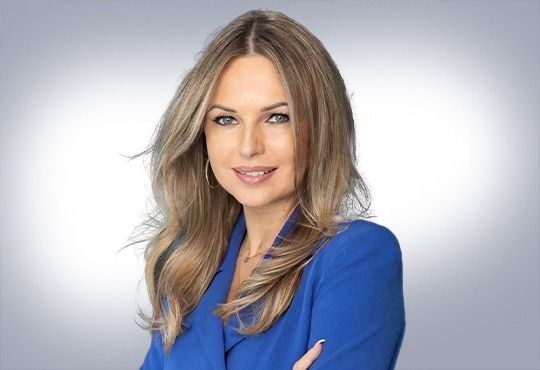
Edyta Skibinska is a distinguished public health educator and preventive medicine expert based in Dubai, UAE. With over 20 years of international academic experience, she spent nearly a decade as Program Coordinator at the American University in the Emirates, designing and leading the Hospital and Healthcare Management specialization. She mentored more than 300 students, driving significant program growth through hands-on, practice-based learning.
As Founder & CEO of Wealth of Health FZE, she offers personalized Longevity Concierge and Preventive Health Advisory services, translating cutting-edge science into practical lifestyle strategies. Trained at Harvard Medical School in Lifestyle Medicine and Yale School of Management in Healthcare Management, her work bridges academic leadership, institutional governance, and real-world prevention. A global speaker and author of 19 peer-reviewed publications, she is passionate about advancing preventive healthcare and innovation.
In an interaction with M R Yuvatha, Senior Correspondent, Asia Education Review, Edyta Skibinska argues that traditional healthcare management education must evolve beyond knowledge delivery to bridge the critical gap between classroom learning and real-world leadership demands.
Healthcare management education stands at a turning point. As hospitals, health systems, and clinical practice grow more complex, layered with AI, preventive medicine, and shifting regulatory demands, the gap between classroom knowledge and real-world leadership readiness has become harder to ignore.
What gaps currently exist between traditional healthcare management education and the practical, real-world skills employers expect from graduates today?
The biggest misconception in healthcare education is that knowledge alone prepares people for leadership. It doesn't. Environment shapes performance, a principle equally true in biology and education. Across medicine, public health, and epigenetics research, one lesson recurs consistently: identical inputs can produce entirely different outcomes depending on the environment in which they are expressed. The same principle applies to education. A curriculum may deliver excellent knowledge, but unless students learn to think, decide, and adapt within authentic healthcare environments, they may graduate understanding healthcare without being fully prepared to lead within it.
Historically, the challenge in healthcare management education was primarily one of exposure. Students mastered theories of finance, operations, and strategy, yet many graduated without experiencing how hospitals actually functioned day to day. Medical education faced the opposite challenge: future physicians spent thousands of hours with patients but had far fewer opportunities to understand the organizational, financial, regulatory, and operational systems shaping every clinical decision.
Today, that gap has evolved. Across both healthcare management and medical education, the real challenge is no longer simply acquiring knowledge, it's learning to translate knowledge into sound judgment under conditions of uncertainty. Healthcare professionals are expected to make decisions with incomplete information, balance clinical priorities against operational realities, navigate ethical dilemmas, and justify choices carrying genuine human and financial consequences.
A second gap involves limited emphasis on systems thinking. Healthcare organizations are not driven by clinicians, managers, policymakers, or technology specialists working independently; every decision influences multiple parts of the system simultaneously. A staffing decision affects patient safety, financial sustainability, employee wellbeing, and ultimately community health. Yet traditional curricula often continue teaching these domains as separate disciplines rather than interconnected components of a complex adaptive system.
Equally important is digital and data literacy. Graduates need far more than familiarity with electronic health records or the mechanics of artificial intelligence. They require the ability to critically interpret data, recognize both the strengths and limitations of AI-assisted decision support, understand ethical implications, and know when human judgment must take precedence. Technology should enhance professional decision-making, never replace it.
Ultimately, healthcare education should not be organized around individual subjects but around the realities graduates will encounter throughout their careers. Closing today's educational gaps requires curricula built around real decisions rather than simply real content. When students repeatedly experience complexity, uncertainty, interdisciplinary collaboration, and accountability during their education, they graduate with the confidence and judgment modern healthcare leadership demands.
Healthcare has never needed graduates who simply know more facts. It needs professionals who can think across disciplines, challenge assumptions, integrate technology responsibly, and prevent tomorrow's problems before they become today's crises. That, ultimately, is the real purpose of healthcare education.
How can academic institutions design experiential learning models, such as capstone projects and industry partnerships, that genuinely prepare students to lead in complex healthcare systems?
Experiential learning begins the moment students realize their work has consequences beyond the classroom. When ideas are evaluated by healthcare executives, policymakers, or clinicians rather than only by a professor, learning becomes fundamentally different. Students stop asking, 'Will this be on the exam?' and begin asking, 'Would this actually work in a real healthcare organization?' That shift, from learning to perform academically to learning to think professionally, is where genuine leadership development begins.
Across higher education institutions committed to this philosophy, universities are increasingly expected not simply to transfer knowledge but to recreate the complexity of the environments graduates will eventually enter. Healthcare leaders rarely make decisions with perfect information, unlimited time, or straightforward answers. For students to succeed in those environments, their education must reflect those realities rather than protect them from them.
At one institution, over nearly a decade, a capstone experience was built around exactly this philosophy. While several courses incorporated collaborative projects to build teamwork and communication skills, the capstone itself deliberately required every student to work independently. Each student developed a comprehensive strategic business plan for a new healthcare facility, integrating healthcare management, finance, operations, quality, regulation, and market analysis into a single project. Their work was then presented not only to faculty but also to internal review committees and invited healthcare professionals capable of challenging every assumption behind their proposals.
Students arriving before those presentations were often visibly nervous, convinced their projects were finished. Then came the first question from an industry expert, often one they had never anticipated. Suddenly, what seemed like a complete solution in the classroom had to withstand the scrutiny of people who make complex healthcare decisions every day. Those moments became the real turning point in students' education. Leadership, in that setting, was revealed not as having immediate answers to every question, but as remaining intellectually curious, thinking critically under pressure, and having the confidence to reconsider assumptions when presented with new evidence.
Such experiences consistently transform students' confidence and professional maturity, teaching them to defend their reasoning, receive constructive criticism professionally, adapt their thinking in real time, and recognize that healthcare leadership is an ongoing process of learning rather than arriving at a single correct answer. No textbook or traditional examination can fully replicate that experience.
Industry partnerships are equally valuable, but only when they move beyond symbolic collaboration and create authentic learning opportunities. Partnerships built with organizations including the Dubai Health Authority, the Ministry of Health and Prevention, Fakeeh University Hospital, Cleveland Clinic Abu Dhabi, IHH Healthcare and Mount Elizabeth Hospital in Singapore, and Sino United Healthcare in Shanghai allowed students to observe firsthand how healthcare systems differ across countries, regulatory environments, organizational cultures, and models of care. More importantly, these collaborations demonstrated that there is rarely one universally correct management solution. Effective healthcare leadership requires understanding context, balancing competing priorities, and adapting evidence-based principles to the realities of each healthcare system.
Working across European and Middle Eastern higher education, while collaborating with healthcare organizations throughout Asia, reinforces one important lesson, although healthcare systems differ significantly, the competencies required of future leaders remain remarkably consistent, critical thinking, systems thinking, ethical judgment, adaptability, interdisciplinary collaboration, and the ability to translate knowledge into responsible action.
Perhaps the most rewarding aspect of this approach is watching students gradually embrace the challenge. Every new cohort initially shows some hesitation; many have spent years succeeding in educational environments built around lectures, memorization, and predictable assessments. Experiential, discussion-based learning requires a different mindset. Yet within a few weeks, students typically begin debating healthcare cases long after class has ended, asking to extend hospital visits, and arriving not with requests for model answers but with thoughtful questions of their own. Learning shifts from obligation to genuine investment in solving real healthcare problems.
That transformation reflects in the continued growth of one Hospital and Healthcare Management specialization, which increased from 17 to 30 students over the years, a growth of approximately 76%. More significant than the numbers themselves, prospective students increasingly chose the program because they had seen graduates develop the confidence, professional judgment, and practical readiness that employers expect from future healthcare leaders.
Experiential learning is not another teaching method, it is a philosophy of education. Universities should not aim to simulate certainty; they should prepare students to navigate uncertainty with confidence, integrity, and sound judgment. When education reflects the complexity of real healthcare systems, graduates leave not only with knowledge, but with the capability to lead meaningful change from their very first day in practice.
Also Read: How Industry-Academia Ties Are Powering UAE STEM Education
As AI and digital health tools become more embedded in hospitals and clinics, what should healthcare management curricula prioritize to keep students industry-ready?
The question isn't whether students should learn artificial intelligence. They absolutely should. The more important question is whether they learn to question it. As AI becomes increasingly integrated into clinical decision-making, healthcare operations, diagnostics, and population health, graduates must develop not only technological competence but also the judgment to understand where AI adds value, where it introduces risk, and where human expertise must remain the final authority.
For many institutions, AI is still treated as an additional topic, a new module, a software demonstration, or a brief discussion about emerging technologies. This approach fundamentally underestimates the transformation taking place in healthcare. Artificial intelligence is not simply another technological innovation; it is changing how healthcare professionals gather information, make decisions, allocate resources, and interact with patients. Preparing students for this future requires much more than teaching them how AI works. It requires teaching them how to think responsibly in environments where AI increasingly influences everyday practice.
Equally important, AI should not be taught in isolation. Across public health, preventive healthcare, and ethical AI governance research, a consistent conviction emerges, artificial intelligence and prevention should be taught as complementary disciplines rather than separate subjects. Prevention provides exactly the perspective AI itself does not possess. While algorithms identify patterns, probabilities, and predictions, healthcare professionals must still ask the broader questions, Does this recommendation improve long-term health? Is it equitable? Is it clinically meaningful? What are the unintended consequences?
This distinction becomes particularly important as healthcare shifts from treating disease to predicting and preventing it. Predictive algorithms often succeed or fail quietly, influencing thousands of individuals over many years before their strengths or weaknesses become fully apparent. Preventive healthcare, by its very nature, encourages professionals to think across populations, across time, and across interconnected determinants of health. Students trained to evaluate decisions through a preventive lens are therefore far better equipped to recognize the limitations of AI than those who simply learn how to operate the technology.
This philosophy has guided curriculum design and research work culminating in a systematic review and implementation framework for the ethical governance of artificial intelligence in clinical decision-making, published in the Journal of Health Policy & Outcomes Research in 2026, building upon an earlier systematic review of AI-driven diagnostic, robotic, and organizational applications with a focus on implementation within the UAE healthcare system. Rather than viewing AI as a replacement for professional judgment, this research argues that its greatest value lies in supporting transparent, evidence-based, patient-centred decision-making within appropriate ethical and governance frameworks.
Health systems worldwide are gradually moving beyond reactive models of care toward prediction, personalization, precision medicine, and healthy longevity. Artificial intelligence is undoubtedly one of the technologies enabling that transformation, but technology alone will never achieve it. The greatest advances will come from professionals who understand how to combine AI with public health principles, preventive medicine, systems thinking, and compassionate, patient-centred care.
Healthcare education itself increasingly functions as prevention infrastructure. Every graduate who understands prevention, systems thinking, responsible AI, and ethical decision-making has the potential to improve the health of thousands of future patients long before disease develops. The future of healthcare education is not about producing graduates who simply know how to use artificial intelligence. It is about developing professionals who know when to trust it, when to question it, and above all, how to ensure that technology always remains in service of better human health.
What role does research and mentorship play in shaping students who can move confidently from the classroom into healthcare leadership roles?
Research develops something far more valuable than publications, it develops intellectual humility. At its best, research teaches students that progress in healthcare comes not from proving oneself right, but from having the courage to change one's mind when the evidence leads somewhere unexpected. That willingness to question assumptions is one of the defining qualities of effective healthcare leaders.
Every student eventually reaches the point where the evidence challenges their original hypothesis. That moment, more than any publication or conference presentation, shapes the kind of professional they will become. Students can defend an idea because it is familiar, or they can follow the evidence wherever it leads. In healthcare, where decisions affect lives, organizations, and communities, intellectual honesty is one of the most valuable leadership qualities that can be cultivated.
Across an academic career supervising research-based projects for more than 300 undergraduate students, several of which progressed to conference presentations and peer-reviewed publications, what stays most memorable are the moments when students realized that being a good researcher, or a good leader, is not about always having the right answer. It is about asking better questions, thinking critically, and remaining open to learning.
Mentorship extends far beyond research. Whether supervising students, advising student organizations, or working with healthcare executives through professional education, the goal remains consistent, helping people develop independent judgment rather than dependence on expertise. Encouraging professionals to look beyond immediate problems and ask what underlying causes are driving them is where meaningful and lasting solutions begin.
Ultimately, the greatest success of any educator is not measured by the number of publications or projects completed, but by seeing former students become thoughtful, ethical, and confident professionals. When graduates leave university with intellectual curiosity, resilience, and the confidence to challenge assumptions respectfully, they are prepared not only to lead today's healthcare organizations but to shape the future of healthcare itself.
Looking ahead, what will differentiate healthcare education programs that successfully produce future-ready leaders from those that fall behind?
One experience illustrates this clearly. In 2023, following completion of a certification in Lifestyle Medicine at Harvard Medical School, colleagues suggested it wasn't particularly relevant to healthcare management education. Today, prevention, lifestyle medicine, precision health, and healthy longevity have become central themes in discussions about the future of healthcare worldwide. This is worth noting not to suggest foresight, but because it illustrates something important about educational leadership, meaningful innovation often appears unnecessary until the future catches up with it.
The institutions that will lead the next generation of healthcare education will not be those that simply add new subjects to an already crowded curriculum. They will be the ones willing to rethink the purpose of healthcare education itself. Artificial intelligence, digital health, precision medicine, and longevity should not exist as isolated modules or electives. They should be integrated into a coherent educational philosophy built around prevention, systems thinking, ethical leadership, and patient-centred care.
Universities must also become more agile. Healthcare is evolving faster than traditional curricula were ever designed to accommodate. Educational programs should no longer be updated only in response to change, they should anticipate it. That requires stronger collaboration with healthcare providers, policymakers, researchers, industry, and communities, ensuring graduates are prepared not only for today's healthcare systems but for those still emerging.
Increasingly, the future of healthcare education lies in breaking down the traditional boundaries between disciplines. Tomorrow's healthcare leaders will need to understand public health as well as clinical care, management as well as medicine, technology as well as ethics, and prevention as well as treatment. The greatest healthcare challenges, ageing populations, chronic disease, health inequities, climate-related health risks, and responsible implementation of artificial intelligence, cannot be solved within professional or disciplinary silos.
Ultimately, the programs that fall behind will be those that continue to mistake accumulation for integration, adding an AI module here, a longevity elective there, or announcing another industry partnership without fundamentally changing how students learn to think. The programs that lead will have a clear educational philosophy and build every aspect of the curriculum around it.
🍪 Do you like Cookies?
We use cookies to ensure you get the best experience on our website. Read more...