
-
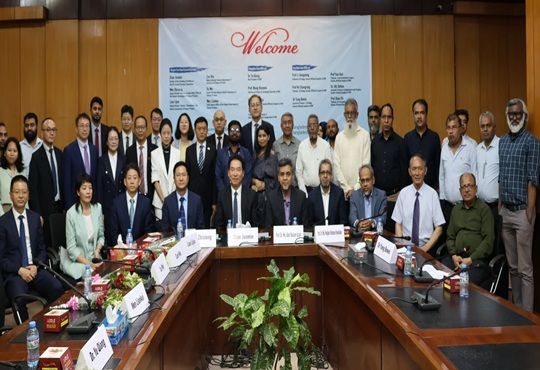
Bangladesh Medical University (BMU) has underscored the need to strengthen cooperation with China in medical education, research, training, modern medical technology and specialised healthcare. The emphasis includes the introduction of advanced procedures such as robotic surgery at the university. These priorities were discussed during a bilateral meeting held on 27 September 2026 at Shaheed Dr Milton Hall of BMU with a high-level delegation from the Yunnan Provincial Government and Kunming Medical University.
Zhao Junmin, a member of the Standing Committee of the Communist Party of Yunnan Province, highlighted the longstanding friendly ties between China and Bangladesh. He expressed hope for expanded collaboration in healthcare, medical education, research, doctor training and the adoption of modern medical technology. His remarks reflected China’s interest in deepening practical partnerships that can benefit both countries’ healthcare systems and professional communities.
Kunming Medical University Vice-President Dr Yu Qiang referred to the existing memorandum of understanding signed with BMU. He noted that the MoU already provides a solid foundation for academic and institutional cooperation, including teacher and student exchanges. The agreement is expected to facilitate structured programmes that allow faculty and learners from both institutions to share knowledge, experience and best practices.
BMU Acting Vice-Chancellor Prof Dr Md Abul Kalam Azad welcomed the discussions and pointed to the significant opportunities available to advance medical education and healthcare services through closer exchanges with Chinese institutions. He stressed that partnership with leading Chinese medical universities and provincial authorities can help BMU incorporate cutting-edge technologies, strengthen research capacity and improve the quality of specialised care available to patients in Bangladesh.
The meeting focused on several concrete areas of cooperation. Participants discussed the introduction of robotic surgery at BMU, an advanced technique that can enhance precision in complex procedures and reduce recovery times for patients. Cooperation in kidney transplantation was also explored, given the growing demand for specialised transplant services and the need for continuous training of medical teams. Physician training programmes, joint research initiatives and broader specialised healthcare collaboration featured prominently in the talks.
Beyond technology and clinical skills, the dialogue emphasised the importance of sustained academic exchange. Teacher and student mobility under the existing MoU can expose Bangladeshi medical professionals to different clinical environments, research methodologies and teaching approaches. Reciprocal visits by Chinese faculty and students would similarly enrich mutual understanding and create networks that support long-term collaboration.
The Chinese delegation later visited BMU’s outpatient department, gaining firsthand insight into the university’s clinical operations and patient care systems. Such site visits help both sides identify practical points of synergy and ensure that proposed cooperation aligns with real institutional needs and capacities.
The discussions occur against the backdrop of steadily growing China-Bangladesh relations in multiple sectors, including health and education. Medical cooperation offers tangible benefits: improved clinical outcomes for patients, enhanced skills for doctors and researchers, and stronger institutional capacity at BMU. Introduction of robotic surgery, for example, would place the university among a select group of institutions in the region equipped with this technology, potentially attracting referrals and supporting advanced training programmes.
Joint research collaboration can address shared health challenges, generate publishable knowledge and open pathways for external funding or multi-institutional projects. Training programmes for physicians and other healthcare professionals can help transfer specialised expertise in areas such as transplantation, minimally invasive surgery and emerging medical technologies. Structured exchanges also contribute to professional development and help retain talent by offering international exposure within a formal partnership framework.
Also Read: Terumo Vietnam, Bach Mai Hospital Sign MOU for Medical Training
For Bangladesh, strengthening medical ties with China supports national goals of modernising healthcare infrastructure and raising the standard of medical education. BMU, as a leading institution, is well positioned to serve as a hub for such collaboration. The presence of a high-level Yunnan Provincial Government representative alongside Kunming Medical University leadership signals the seriousness with which both sides view the partnership.
Successful implementation will require clear follow-up mechanisms, dedicated coordination teams and realistic timelines for pilot programmes. Possible next steps include detailed work plans for robotic surgery capacity building, short-term and medium-term physician training modules, joint research proposals and expanded student-faculty exchange schedules under the existing MoU.
The bilateral meeting and subsequent outpatient visit demonstrate a practical, results-oriented approach. By focusing on medical education, research, training, modern technology and specialised services, BMU and its Chinese counterparts are laying the groundwork for meaningful and lasting cooperation. The emphasis on robotic surgery, kidney transplantation and physician training points to priority areas where progress can deliver visible benefits for patients and professionals alike.
As both countries continue to expand their strategic partnership, health and medical education remain promising domains for mutually beneficial engagement. The discussions at BMU mark an important step in translating goodwill into concrete programmes that can elevate medical standards, foster knowledge exchange and strengthen institutional links between Bangladesh and China.
🍪 Do you like Cookies?
We use cookies to ensure you get the best experience on our website. Read more...