
-
Smartee Denti-Technology is advancing clinical education for pediatric orthodontics across the Asia-Pacific region through targeted workshops that bring dental professionals together to discuss real-world treatment decisions for growing patients.
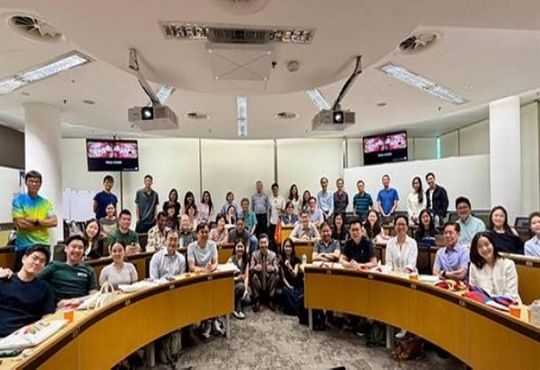
The company recently organized the Smartee Kinder & Teen Workshop under the theme 'Children’s Early Orthodontic Treatment: From Screening to Clinical Application'. The program focused on practical aspects of assessing and managing young patients, covering patient evaluation, treatment timing, case selection, and the appropriate use of different orthodontic approaches.
Held as part of Smartee’s ongoing clinical education activities, the workshop created a forum for clinicians to exchange experiences and examine challenges commonly encountered in daily practice. Participants engaged in interactive discussions that moved beyond theoretical concepts to address specific clinical scenarios.
One of the central topics was the use of myofunctional trainers in growing patients. Clinicians examined how these devices should be evaluated according to each patient’s orofacial myofunctional condition, developmental stage, and overall treatment objectives. The conversation emphasized individualized assessment rather than applying a standard protocol to every case.
Participants also reviewed Smartee’s broader approach to managing growing patients. Discussions considered dental alignment in the context of dentofacial growth, occlusal development, and oral function. Treatment strategies were presented as choices guided by the specific clinical needs of each patient rather than fixed sequences.
Also Read: The Real Skills Gap in Healthcare Management Education
Maxillary expansion in pediatric Class II cases formed another key area of discussion. Clinicians explored the importance of case-specific evaluation, including transverse development, arch form, and occlusal relationships, when deciding whether expansion should be incorporated into a treatment plan. The session highlighted the need for careful diagnostic judgment rather than routine application of expansion techniques.
Treatment timing received significant attention. Speakers and participants discussed how orthodontic evaluation during periods of active growth allows clinicians to observe evolving dentofacial relationships. This information supports evidence-informed decisions, whether the appropriate next step is continued monitoring, early intervention, or referral to a specialist.
The workshop forms part of Smartee’s wider commitment to professional education alongside the development of orthodontic solutions designed for growing patients. Through conferences, structured courses, and clinical exchange programs, the company offers dental professionals regular opportunities to examine topics such as patient selection, treatment timing, clinical decision-making, and the practical application of different orthodontic approaches in pediatric cases.
As Smartee continues to expand its pediatric orthodontic education initiatives across Asia Pacific, clinical exchange remains a core element of its engagement with the dental community. The company plans to maintain this focus, providing platforms where clinicians can share experiences, refine diagnostic skills, and discuss the nuances of treating patients during critical stages of growth.
Early orthodontic assessment and intervention have become increasingly relevant as more families seek guidance on developing dentition and facial growth. Workshops of this type help bridge the gap between emerging clinical evidence and everyday practice, enabling practitioners to refine their judgment when determining the most suitable course of action for each child.
By concentrating on screening, timing, and individualized application of treatment methods, the Smartee Kinder & Teen Workshop reinforced the importance of careful clinical reasoning in pediatric orthodontics. Participants left with practical frameworks for evaluating myofunctional conditions, considering expansion in Class II cases, and deciding when intervention is warranted during active growth.
Smartee’s educational activities reflect a dual emphasis on product development and professional support. While the company continues to refine orthodontic solutions for younger patients, it simultaneously invests in opportunities for clinicians to discuss how those solutions fit within broader diagnostic and treatment planning processes.
The recent workshop in the Asia-Pacific region demonstrates this approach in action. Rather than presenting a single preferred method, the program encouraged open examination of different clinical pathways, always returning to the individual patient’s developmental status and functional needs.
As demand for early orthodontic care grows across the region, structured clinical exchanges of this kind play an important role in raising the consistency and quality of care. They allow practitioners to compare approaches, question assumptions, and strengthen the evidence base that guides decisions about monitoring versus intervention.
Looking ahead, Smartee intends to sustain its series of educational programs for dental professionals throughout Asia Pacific. Future events are expected to continue emphasizing interactive discussion, case-based learning, and the practical application of principles related to growing patients.
The Kinder & Teen Workshop illustrates how focused clinical education can support better decision-making in pediatric orthodontics. By addressing screening, timing, myofunctional considerations, maxillary expansion, and individualized treatment selection, the program contributed to the ongoing development of expertise among clinicians serving young patients in the region.
Through sustained investment in professional education and clinical exchange, Smartee aims to strengthen the capacity of dental teams across Asia Pacific to deliver thoughtful, patient-specific care during the critical years of dental and facial development.
🍪 Do you like Cookies?
We use cookies to ensure you get the best experience on our website. Read more...