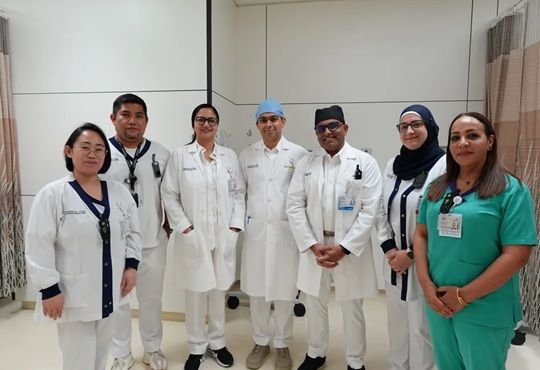
Cleveland Clinic Abu Dhabi has performed the UAE’s first cryoneurolysis procedure, offering a new treatment option for patients experiencing severe focal spasticity associated with neurological conditions. The minimally invasive procedure helped a 36-year-old patient with Multiple Sclerosis (MS) experience reduced muscle stiffness and improved mobility, marking a milestone in the country's advanced neurological care.
Spasticity is a neurological condition characterized by muscle stiffness, involuntary tightness, and spasms. It affects approximately 30 to 50 percent of individuals living with Multiple Sclerosis and can also occur among people recovering from strokes or brain and spinal cord injuries. The condition can cause significant discomfort, restrict movement, and interfere with everyday activities. In certain cases, patients require additional treatment options alongside conventional approaches such as physiotherapy and botulinum toxin injections.
The procedure was introduced for Ali Al Zaabi, a 36-year-old patient with MS who experienced considerable stiffness in his hands and legs. His condition had affected his ability to walk and carry out daily activities. Following a clinical evaluation, physicians at Cleveland Clinic Abu Dhabi's Neurological Institute selected cryoneurolysis as an alternative approach to managing his severe focal spasticity.
Led by Dr. Prince Thakkar, Associate Staff Physician at the hospital's Neurological Institute, the procedure uses extreme cold to temporarily interrupt peripheral nerve function. Guided by medical imaging, the technique targets specific nerves to reduce muscle spasticity and pain without requiring extensive surgery.
According to Dr. Thakkar, the patient had persistent stiffness in the affected limbs and responded poorly to other treatment approaches, making an alternative intervention necessary. He explained that cryoneurolysis can provide immediate and extended relief lasting between six and 12 months, potentially offering longer-lasting benefits than conventional therapies. The technique can be particularly useful for moderate to severe spasticity associated with brain and spinal cord disorders, including Multiple Sclerosis.
Following the intervention, Ali experienced immediate relief, with a noticeable reduction in muscle stiffness and tightness. The improvement supported his rehabilitation journey and helped restore greater comfort and confidence in his daily activities.
Reflecting on the outcome, Ali said that his MS symptoms had affected nearly every aspect of his life over the previous 12 years, particularly his ability to walk. Worsening lower-limb spasticity, pain, coordination difficulties, and balance issues had created significant challenges. However, through the hospital's spasticity management programme and the new treatment, he experienced reduced tightness in his legs and improved mobility, with benefits continuing over time.
Also Read: The Real Skills Gap in Healthcare Management Education
The development also supports the objectives of the Guideline for Management of Multiple Sclerosis, developed by the Department of Health – Abu Dhabi in collaboration with the National Multiple Sclerosis Society. The guideline provides a framework for early diagnosis, informed treatment decisions, and improved access to patient-centred care and advanced therapies.
The achievement further strengthens Cleveland Clinic Abu Dhabi's position in complex neurological care. The hospital was ranked the number one hospital in the UAE for Neurology in Newsweek's World's Best Specialized Hospitals 2027 and designated a Center of Excellence for stroke by the Department of Health – Abu Dhabi.
Through the introduction of cryoneurolysis, the hospital is expanding its treatment options for patients experiencing complex neurological conditions. The procedure highlights the potential of targeted, minimally invasive interventions to improve mobility, support rehabilitation, and enhance patients' quality of life.
About Cleveland Clinic Abu Dhabi
Located on Al Maryah Island, Cleveland Clinic Abu Dhabi is a multispecialty hospital and an extension of Cleveland Clinic in the United States. It operates eight specialized institutes covering areas including neurology, cardiology, cancer, digestive diseases, surgery, and diagnostic services. With 406 licensed beds, including 90 critical care beds, and 26 operating rooms, the hospital provides specialized and complex medical care. It also serves as an accredited research and teaching institution, with residency, fellowship, and continuing medical education programmes.