
-
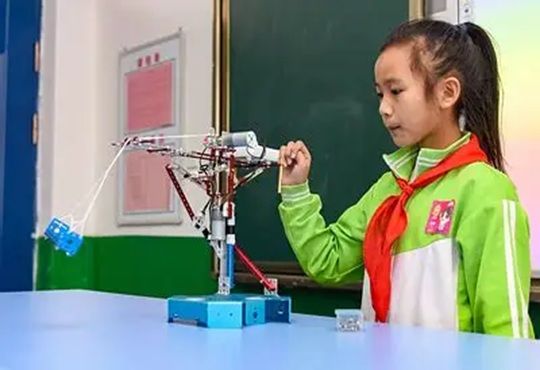
Access to quality science, technology, engineering and mathematics (STEM) education is gaining attention as RYTHM Foundation partners with Plan International Hong Kong to expand inclusive learning opportunities for children in rural China. The two organisations have launched a two-year community development initiative focused on primary schools in Yunnan Province, with particular attention to girls and children from ethnic minority communities.
The initiative marks RYTHM Foundation's first community development project in mainland China. Launched in October 2026, the programme is being implemented by Plan International China across Yingjiang County and Ruili City in the Dehong Dai and Jingpo Autonomous Prefecture. More than 60% of students in these areas belong to ethnic minority communities, including the Dai, Jingpo and Achang.
The project will directly support 1,000 students aged between 10 and 12 across five rural primary schools. It will also provide gender-responsive STEM teaching training to 30 local teachers. Through school-based activities and an annual STEM Tech Festival, the programme is expected to reach another 11,750 students across 95 additional schools, taking the anticipated total reach to 12,750 students.
Guided by its philosophy, "Raise Yourself To Help Mankind" (RYTHM), the Foundation aims to strengthen educational opportunities for children who face geographical and social barriers to accessing STEM learning. The initiative places particular emphasis on developing digital skills and building confidence among girls and ethnic minority students, helping them explore further learning opportunities and potential careers in science and technology.
Umayal Eswaran, Chairperson of RYTHM Foundation, highlighted the importance of ensuring that children's access to education is not determined by their gender, ethnicity or geographical location. She stated that the partnership is focused on investing in both students and the teachers who support their learning. The Foundation also aims to ensure that inclusive STEM learning continues in participating schools beyond the project's duration.
Dr. Kanie Siu, Chief Executive Officer of Plan International Hong Kong, noted that girls and minority children in remote communities face distinct socioeconomic barriers that can discourage their participation in scientific subjects. Through the collaboration, the organisations intend to address stereotypes, equip teachers with inclusive teaching tools and create supportive learning environments where children can develop their abilities in STEM.
The programme combines practical learning resources, teacher training and engagement with local education authorities. One of its central components involves establishing after-school STEM clubs in the five participating schools. These clubs will provide interactive learning opportunities supported by technology-enabled educational materials, allowing students to engage with STEM subjects beyond regular classroom instruction.
Teacher development is another important element of the initiative. The programme will train 30 local educators in gender-responsive teaching approaches and digital safety. Their training will be guided by a STEM Club Guidance Manual, which is intended to support the delivery of structured and inclusive learning activities.
Building teachers' capabilities is particularly important to the programme's long-term objectives. Educators play a central role in shaping students' classroom experiences, encouraging participation and helping children develop confidence in subjects that may traditionally be affected by gender stereotypes. By equipping teachers with relevant resources and teaching approaches, the initiative seeks to strengthen the learning environment within participating schools.
The collaboration will also involve local education authorities in Yingjiang County and Ruili City. The organisations plan to share the project's model, teaching practices and technical resources with these authorities to encourage wider adoption of inclusive STEM education across the region.
Through this approach, the initiative seeks to extend the benefits of the programme beyond the five schools receiving direct support. The annual STEM Tech Festival and school-based activities are expected to provide additional exposure to STEM learning for students across 95 other schools, creating opportunities for a broader group of children to participate in educational activities.
Also Read: Nurturing Tomorrow's Innovators: STEM Education in Myanmar
A key consideration throughout the two-year programme is ensuring that the learning opportunities established through the project remain available after the funding period concludes. To support this objective, trained educators will take on master trainer responsibilities within a network of teachers across participating schools. They will share educational resources and teaching practices, helping other educators continue delivering gender-responsive STEM learning.
The teacher network is intended to create a foundation for sustained knowledge-sharing and professional development. Rather than relying exclusively on external programme delivery, the initiative aims to build local teaching capacity so that schools can continue organising STEM activities and supporting students after the two-year grant ends.
The partnership also reflects RYTHM Foundation's wider commitment to education, empowerment and environmental sustainability. As the social impact arm of the QI Group, the Foundation works to support communities through initiatives aligned with the United Nations Sustainable Development Goals. Since 2005, it has reached more than one million individuals across over 30 countries, working with more than 145 partners and supporting over 115 projects.
Plan International, founded in 1937 and headquartered in the United Kingdom, works with children and girls in more than 80 countries. Its programmes focus on addressing the underlying causes of inequality and supporting children through different stages of their development.
By combining student-focused activities, teacher training and engagement with local education authorities, the partnership seeks to establish a more inclusive approach to STEM education in rural Yunnan. Its emphasis on girls and ethnic minority children places equitable access at the centre of the initiative, while its teacher development and knowledge-sharing components aim to support continuity beyond the initial funding period.
As the project progresses, its reach across the participating schools and wider education community is expected to provide more children with opportunities to explore science and technology. The initiative represents a collaborative effort to strengthen digital learning, encourage participation and expand access to STEM education among underserved rural communities in China.
🍪 Do you like Cookies?
We use cookies to ensure you get the best experience on our website. Read more...