AIA Healthiest Schools 2025–26: Redefining What It Means to Build Healthy Schools

-
For most of its history, education has been only about curriculum based learning besides some defined extracurricular activities. Yet, in today's rapidly changing world, academic achievement alone is no longer sufficient to prepare young people for the future. Rising concerns around childhood obesity, mental health, climate change, sedentary lifestyles, and unhealthy dietary habits have transformed schools into critical environments where lifelong values and behaviours are cultivated. Increasingly, educators, policymakers, healthcare leaders, and communities recognize that a truly successful education system must develop not only intellectually capable students but also physically healthy, emotionally resilient, and socially responsible citizens.
Against this backdrop, the AIA Healthiest Schools (AHS) Initiative has emerged as one of Asia-Pacific's most meaningful school-based health and wellness programs. Being in the picture since 2022, AHS is more than a competition, it is a movement that empowers schools to become catalysts for healthier communities by embedding well-being, sustainability, and responsible citizenship into everyday learning.
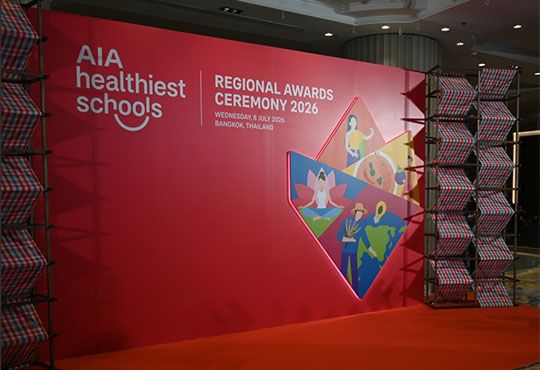
The 2025–26 AIA Healthiest Schools Regional Awards that took place on the 8th of July this 2026, reaffirmed the program's growing impact, demonstrating how young students, supported by passionate educators and engaged communities, can create practical solutions to some of society's most pressing health and environmental challenges.
Though reverent judges had a hard time finalizing the winners, given the impactful projects submitted by the list of schools from across the 18 global markets, it was momentous for SMP IL Kapten Fatubaa from Indonesia to be named the Regional Winner of the fourth annual AIA Healthiest Schools Competition. The school won for its ‘Huka Upcycling Project’, where students transformed banana peel waste into products like ice cream, compost, and liquid fertilizer.
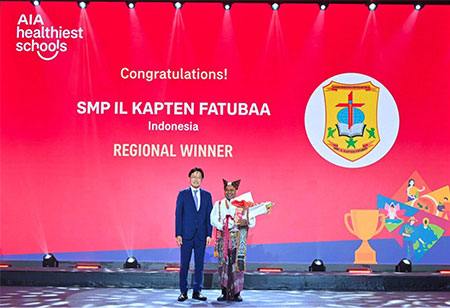 In a conversation with Asia Education Review magazine team, Mr. Antonius Kapitan expressing his gratitude says, “Winning this award is beyond anything we imagined. This award is not the end of our journey—it is the beginning of a greater responsibility. We never developed this project simply to win a competition; we created it for our students, their future, and the well-being of our community. Our next step is to work closely with government agencies and other stakeholders to establish a dedicated facility where we can further develop innovative products from banana peels, including ice cream, liquid fertilizer, and compost.
As we expand production, our goal is to share these products with students in our surrounding communities and eventually with schools in Timor-Leste. More than an environmental initiative, we hope this project becomes a bridge that fosters friendship and collaboration between students in Indonesia and Timor-Leste. Perhaps one day, what began as an upcycling project will evolve into what we proudly call 'banana peel diplomacy'- a symbol of how sustainability, innovation, and education can bring communities together.
Well, it would be a proud moment to recognize what these schools across Asia have been endeavoring for is not minuscule; the purpose is targeted at community’s growth at large.
AIA Redefining What It Means to Build Healthy Schools
Traditional education has largely focused on academic excellence. While this remains important, modern education increasingly embraces a broader definition of success, one that includes physical health, mental wellness, environmental stewardship, and social responsibility.
The AIA Healthiest Schools Initiative reflects this evolving philosophy by encouraging schools to create sustainable projects aligned with four key pillars:
- Healthy Eating
- Active Lifestyles
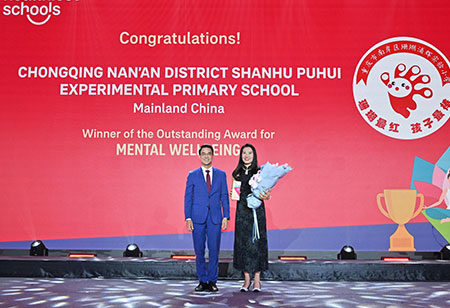
- Mental Wellbeing
- Health & Sustainability
Rather than treating these as isolated activities, the initiative integrates them into everyday school life through curriculum resources, teacher engagement, and student-led innovation. Schools are encouraged to identify challenges within their own communities, develop locally relevant solutions, implement measurable interventions, and evaluate long-term outcomes. This project-based approach ensures that learning extends far beyond the classroom, inspiring meaningful behavioural change among students, families, and communities alike.
A Platform That Encourages Innovation with Purpose
What makes the AHS Initiative particularly distinctive is its emphasis on action rather than awareness alone.
Instead of simply teaching students about healthy lifestyles or sustainability, the program encourages them to become active problem-solvers. Participants investigate local issues, collaborate with peers and teachers, design innovative interventions, and measure the real-world impact of their efforts.
The initiative transforms classrooms into innovation hubs where learning is driven by creativity, collaboration, and community engagement.
The projects presented during the 2025–26 Regional Awards reflected an impressive diversity of ideas. Schools tackled issues ranging from nutrition and waste management to emotional well-being and environmental conservation. Importantly, these initiatives were not theoretical exercises, they were practical, measurable, and deeply rooted in local realities. This ability to combine education with meaningful social impact is what continues to distinguish AHS from conventional school competitions.
Chu Van An Primary School, Vietnam on winning the Healthy Eating Award category said, “Our first priority is to celebrate this achievement with our students, because this award belongs to them as much as it does to the school”.
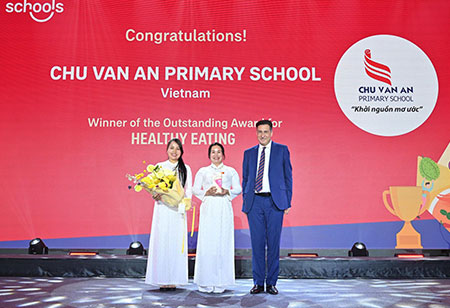
Their ‘Happy Meal’ project promotes healthy eating through nutrition education, organic gardening, and hands-on cooking. It significantly improved student diets and increased the proportion of students at a healthy weight, while rebuilding trust in school meals.
They add, “Winning this award has strengthened our commitment to promoting healthy eating, and we see it as the beginning of a much larger journey. Beyond the celebrations, going forward, we plan to deepen and expand this initiative by bringing it to more schools in the coming years. We believe healthy eating is not just about changing students' habits, it is about creating a culture of wellness that benefits the entire school community”.
Growing Momentum Across Asia-Pacific
The fourth annual Regional Awards, hosted in Bangkok, brought together outstanding schools from across Asia-Pacific, highlighting the initiative's expanding reach and influence.
Participating schools represented countries including Indonesia, Cambodia, China, Malaysia, and Vietnam, each demonstrating how local innovation can contribute to global health and sustainability goals. Their projects showcased diverse cultural perspectives while reinforcing universal values of collaboration, empathy, and responsible citizenship.
Stuart A. Spencer, AIA Group Chief Marketing Officer and Head of the AHS Competition Judging Panel avers, “The AIA Healthiest Schools Competition is one of the leading programmes of its kind in Asia and is helping young people take ownership of their health by turning knowledge into action. The initiative has witnessed remarkable growth in both participation and project quality over recent years. Schools are submitting increasingly sophisticated ideas, and educators are embracing health and well-being as integral components of education rather than supplementary activities”.
He also noted that themes such as mental health and environmental sustainability have gained particular prominence, reflecting the changing priorities of today's younger generation.
 Addressing Mental Well-being Through Education
One of the most significant developments within this year's competition was the growing emphasis on mental health.
Across the world, educational institutions are grappling with increasing levels of stress, anxiety, social isolation, and emotional challenges among students. Recognizing these realities, participating schools designed initiatives that encouraged emotional awareness, peer support, resilience building, and inclusive learning environments.
Rather than treating mental health as a separate topic, many schools integrated emotional well-being into everyday classroom experiences, helping students develop confidence, empathy, communication skills, and healthy coping mechanisms.
By creating safe spaces where students can openly discuss emotional challenges, schools are fostering healthier learning environments while reducing stigma surrounding mental health.
These initiatives reflect a broader understanding that academic achievement and emotional well-being are deeply interconnected.
Sustainability Begins in the Classroom
Another defining feature of the 2025–26 awards was the innovative approach schools adopted toward environmental sustainability. Students demonstrated that climate action does not necessarily require large-scale infrastructure or significant financial investment. Instead, meaningful change often begins through simple, practical initiatives that encourage responsible resource management and environmental awareness.
Projects focused on recycling, waste reduction, sustainable agriculture, sanitation, water conservation, and environmental education.
Among the most memorable examples was a project that creatively transformed discarded banana peels into ice cream, organic compost, and liquid fertilizer, illustrating how waste can become a valuable resource through innovation and entrepreneurship. Such projects teach students critical lessons about circular economy principles while encouraging creativity, scientific thinking, and sustainable problem-solving. Perhaps more importantly, they inspire families and local communities to adopt environmentally responsible behaviours beyond school boundaries.
Learning Beyond the Classroom
The success of the AIA Healthiest Schools Initiative lies in its recognition that education does not happen in isolation. The strongest projects consistently involved collaboration between students, teachers, parents, healthcare professionals, local governments, and community organizations. This collaborative model amplifies the impact of every initiative.
Healthy eating programs encourage parents to reinforce nutritional habits at home. Environmental campaigns inspire neighbourhood participation. Mental wellness initiatives create stronger support systems that extend beyond school campuses. As a result, schools evolve into community centres that influence broader behavioural change rather than serving only enrolled students. Several award-winning schools expressed their intention to expand successful initiatives, invest in improved educational infrastructure, and share best practices with neighbouring institutions, multiplying the long-term impact of their work.
Students as Changemakers
Perhaps the most inspiring aspect of the initiative is its unwavering belief in the potential of young people. Rather than viewing students simply as beneficiaries, AHS positions them as innovators, leaders, and changemakers capable of designing solutions for real-world challenges.
Throughout the competition, students demonstrated remarkable creativity and leadership. They developed wellness applications, promoted healthier eating habits, designed sustainability campaigns, encouraged physical activity, and created inclusive environments that strengthened emotional well-being. These experiences equip young people with valuable skills that extend well beyond academic learning, including leadership, teamwork, critical thinking, communication, project management, and community engagement. Such capabilities are increasingly essential for success in the twenty-first century.
Building Future-Ready Citizens
Today's employers consistently emphasize the importance of adaptability, collaboration, problem-solving, and resilience. Interestingly, many of these competencies are naturally cultivated through initiatives like AHS. Students learn to identify complex problems, collaborate across diverse teams, collect and analyse information, develop practical solutions, communicate ideas effectively, and evaluate outcomes.
In doing so, they become better prepared not only for higher education but also for future careers and responsible citizenship. The initiative therefore contributes simultaneously to educational excellence, public health, environmental sustainability, and workforce readiness.
A Blueprint for the Future of Education
As education systems worldwide continue to evolve, the AIA Healthiest Schools Initiative offers a compelling blueprint for holistic learning. It demonstrates that schools can successfully integrate health, sustainability, innovation, and community engagement without compromising academic standards.
Instead, these elements complement one another by creating richer, more engaging learning experiences that prepare students for increasingly complex global challenges.
The initiative also illustrates how public-private collaboration can create meaningful social impact.
By providing curriculum resources, encouraging innovation, recognizing excellence, and facilitating regional knowledge sharing, AIA has established a platform capable of generating lasting behavioural change across multiple countries and communities.
Its continued expansion reflects growing recognition that investment in children's health is ultimately an investment in society's long-term prosperity.
More Than an Award- A Movement for Healthier Communities
The 2025–26 AIA Healthiest Schools Regional Awards celebrated far more than exceptional school projects. They celebrated a new vision of education, one where classrooms become centres of innovation, students become community leaders, teachers become facilitators of lifelong well-being, and schools become drivers of healthier, more sustainable societies. The remarkable diversity of projects presented this year demonstrated that there is no single formula for improving health and well-being. Every community faces unique challenges, and every school possesses the creativity to develop locally relevant solutions. By encouraging this diversity while providing a common framework for action, the initiative has created a powerful ecosystem of shared learning and continuous improvement.
As schools across Asia-Pacific continue to embrace healthier lifestyles, stronger mental well-being, active living, and environmental responsibility, the influence of the AIA Healthiest Schools Initiative will extend far beyond annual awards. Its greatest achievement lies not in recognizing excellence, but in inspiring thousands of young people to believe that meaningful change begins with small actiFons, and that every classroom has the power to build a healthier future.
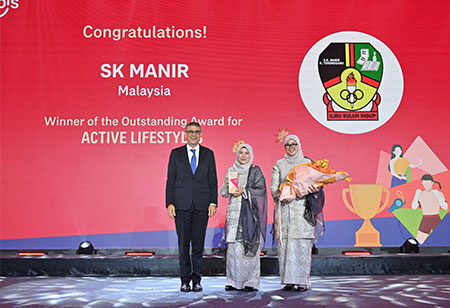
 The ‘Active Lifestyles Award’ category winner ‘Sekolah Kebangsaan Manir, Malaysia’ avered, “We are truly honoured and delighted to receive the Most Outstanding Award for Active Lifestyles. This recognition is a testament to the dedication and collective efforts of our teachers, students, and the entire school community. I am especially excited for our students, whose commitment and enthusiasm made this achievement possible. Seeing their hard work acknowledged at the regional level will inspire them to continue embracing healthy, active lifestyles and striving for even greater accomplishments in the future”.
Their ‘Sihat Aktif Manirian’ programme uses digital tracking and goal-setting to encourage healthier daily habits. It has improved hydration, fitness awareness, and student ownership of wellbeing.
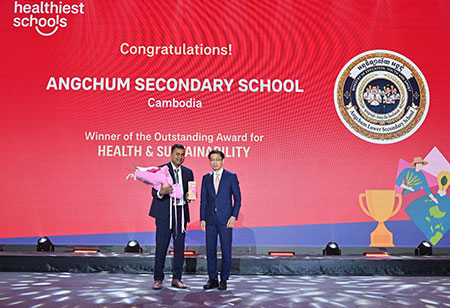
Moreover, the Health & Sustainability Award category winner - Angchum Secondary School, Cambodia just made it up the notch as their Student-led campaigns and community partnerships promoted plastic reduction, hygiene, and environmental care. The initiative strengthened sustainable habits and improved health practices across both the school and surrounding community.
The success of the 2025–26 edition stands as a testament to what is possible when education, health, innovation, and community come together with a shared purpose. In nurturing healthier students today, the AIA Healthiest Schools Initiative is helping shape more resilient communities and a brighter future for generations to come.
🍪 Do you like Cookies?
We use cookies to ensure you get the best experience on our website. Read more...