- Discovers a rare 1908 textbook recognized as China’s first modern oral education resource for the deaf
- Highlights early collaboration and knowledge exchange between Korean, Chinese, and U.S. special education pioneers
- Reinforces the foundations of skills-based learning by shaping communication, education, and future employment pathways for deaf students
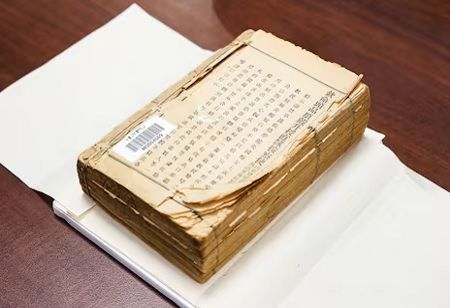
Daegu University has uncovered a rare and historically important textbook that sheds new light on the early development of deaf education in Asia. The university announced that it discovered Qiaochuojie, published in 1908, at its campus library, calling it the first modern oral education textbook in Chinese history.
The book focuses on oral education, a method that trains deaf students to speak by observing mouth movements and strengthening vocal organs. This approach played a key role in building communication skills and improving education and job readiness for deaf learners in the early 20th century.
Written by Annetta Thompson Mills, an American missionary and founder of China’s first modern deaf school, Qiaochuojie marked the starting point of systematic deaf education in China. Daegu University confirmed that the discovered copy is a complete first edition set of six volumes, including original copyright pages and official government notices. Experts say complete versions are extremely rare, even in China.
The textbook reached Daegu University through a unique historical journey. In 1966, the late Lee Ki-soo donated around 1,200 special education books to the university library through the Korean Red Cross. Lee had studied special education in the United States and was supported by a foundation linked to Helen Keller. Qiaochuojie was part of this collection.
Also Read: Liwa University Launches SHE LEADS to Build Women Leaders
Scholars say the discovery highlights strong early ties between Korea, China, and the U.S. in special education. Professor Kwon Soon-woo of Daegu University noted that the book reflects the spread of modern education models across borders and their lasting influence on skill development for deaf students in Korea and beyond.
The university plans further research to better understand its impact on education, training, and inclusion in East Asia.