Synopsis
Schools in Thailand are reporting increased student and teacher engagement after adopting Microsoft Copilot. The AI-powered tool is helping streamline lesson planning, research, and classroom activities, enabling more interactive learning experiences. The trend highlights growing adoption of generative AI in education to support teaching efficiency and student participation.
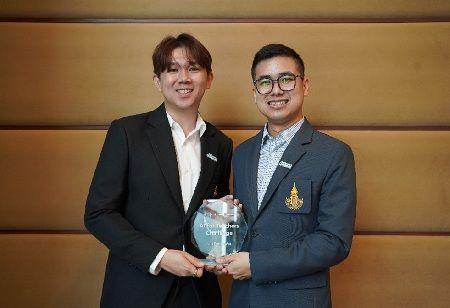
Two educators from Princess Chulabhorn Science High School Phitsanulok in Thailand have demonstrated how artificial intelligence in education can improve classroom learning and teaching efficiency after successfully integrating Microsoft Copilot and other AI-powered tools into their science curriculum.
Mr. Potisak Potisen, known as Teacher Ball, a chemistry teacher, and Mr. Pisit Saita, known as Teacher Ton, a biology teacher, developed an AI-assisted co-creation model that helps simplify complex scientific concepts while significantly reducing the time required to create educational materials. Their initiative emerged from a growing challenge faced by educators worldwide teaching increasingly advanced subject matter within limited classroom hours while also producing engaging learning resources.
The educators participated in the AI for Teachers initiative, part of Microsoft Elevate, a program designed to help teachers adopt AI technologies in the classroom. Their innovative approach earned them top honors at the program’s hackathon, where they were named champions among 41 participating educator teams.
According to the teachers, Microsoft Copilot became a collaborative tool that enabled them to brainstorm ideas, refine lesson plans, and create engaging content more efficiently. Teacher Ball focused on story development, concept creation, and AI-generated visuals, while Teacher Ton ensured scientific accuracy by reviewing and validating all educational materials before classroom use.
One of the most notable outcomes of their collaboration was the development of an interactive lesson on Reflex Action, a complex biology topic. Using AI-powered educational tools, the teachers transformed the subject into a visually rich learning experience supported by customized royalty-free music tailored to student preferences. The project was designed to make scientific concepts easier to understand and more engaging for students.
Also Read: How Asian Colleges are Co-Creating Courses with Tech Giants
The results were significant. Students achieved scores above 80 percent on assessments related to the topic, indicating strong comprehension and retention of the material. The success mirrors broader findings from the AI for Teachers program, where 76.3% of participating educators reported notable improvements in student engagement and creativity after incorporating AI into teaching and learning activities.
Beyond enhancing student outcomes, the initiative delivered substantial productivity gains for educators. Tasks that previously required weeks of media production and content development were completed within hours, resulting in a 70% to 80% reduction in production time. The time savings enabled teachers to dedicate more attention to lesson improvement, classroom interaction, and individualized student support.
Teacher Ton said AI helped reduce the workload associated with document preparation and creative design, allowing him to focus more closely on students' learning needs. Teacher Ball emphasized that the greatest benefit was the additional time available to engage directly with students, answer questions, and provide personalized guidance.
The initiative also contributed to a shift in how students perceive and use artificial intelligence tools. Rather than relying on AI-generated answers without understanding the content, students were encouraged to use AI responsibly for brainstorming, research, idea generation, and concept clarification. Teachers demonstrated the importance of reviewing, verifying, revising, and validating AI-generated outputs before using them in academic work.
This approach aligns with wider program outcomes, with 94.8% of participating educators reporting that students were using AI more responsibly and safely. The experience highlights the growing importance of AI literacy, digital learning, and responsible technology adoption in modern education.
The project also supports Thailand’s broader education strategy. Mr. Pitak Sotthayakhom, Acting Advisor on Special Education and the Disadvantaged at the Office of the Basic Education Commission and representative of the Minister of Education, said the ministry recognizes the critical role of AI in transforming education and developing future-ready skills. He noted that initiatives such as AI for Teachers help strengthen educators’ AI capabilities while ensuring students have equitable opportunities to develop the knowledge and competencies needed in an increasingly technology-driven world.