
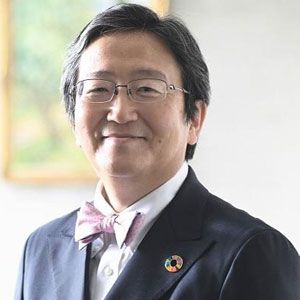
NASU Yasutomo, President, Okayama University
In an era where global challenges demand innovative solutions, STEM education for a sustainable future stands as a powerful catalyst, blending science, technology, engineering, and mathematics to equip students with the tools to drive environmental, social, and economic change.
In the heart of Japan's Chugoku region, where ancient traditions meet cutting-edge innovation, Okayama University stands as a beacon of STEM education, transforming challenges like environmental sustainability and technological disruption into opportunities for global impact.
Founded in 1949 as a national university, Okayama University has deep historical roots that trace back to its origins as the Medical Training Place in 1870. The institution was initially established by the Ikeda family of the Okayama Domain and became a focal point for public health and scientific education during Japan’s transition into the modern era.
Over the years, Okayama University has built on this foundation, evolving into a world-class university that emphasizes STEM education as the cornerstone of sustainable development.
Today, under the leadership of President Yasutomo Nasu, a renowned urologist and advocate for interdisciplinary research, the university stands at the forefront of global innovation, preparing students to tackle pressing issues such as climate change, biodiversity loss, and technological disruption.
Inspired by Tradition and Innovation
Okayama University’s origin is deeply tied to Japan's educational history. It draws inspiration from the Shizutani School, which, established in 1670, was Japan's first school open to commoners. This legacy of public education for the common good laid the groundwork for the university’s mission, to solve societal problems through knowledge and education.
The Medical Training Place, created amid the Meiji Restoration, sought to address public health crises and foster scientific inquiry in a rapidly industrializing nation.
By the end of World War II, the university expanded into a comprehensive institution, merging multiple colleges to create a STEM-focused hub for the region.
The university’s commitment to Education for Sustainable Development (ESD) continues today, with initiatives that bridge the gap between theoretical knowledge and real-world applications, such as biodiversity conservation and sustainable agriculture.
Distinctive STEM Pathways
What sets Okayama University apart from other technical institutions in Japan is its unique, interdisciplinary approach to STEM education. One of its flagship programs is the Discovery Program for Global Learners, a four-year undergraduate program that is taught entirely in English.
This innovative course emphasizes critical thinking in STEM fields such as environmental science, data analytics, and sustainable development.
Unlike traditional curricula, it incorporates project-based learning, simulations, and international collaborations, which ensure that students are not only exposed to theoretical concepts but also equipped with the skills to apply them in real-world settings.
NASU Yasutomo, says, “Advanced technology integration plays a vital role in the Okayama University’s approach. For example, the Android Programming Learning Assistance System allows students to develop their skills in app development through a blend of online learning and hands-on practice”.
Okayama University stands at the forefront of innovation, bridging tradition with technology to empower students to tackle the world’s most pressing challenges.‘‘‚‚
Okayama University also stands out for its commitment to affordability and accessibility. The university charges annual tuition fees of around $3,500 USD, with options for tuition exemptions and scholarships to ensure that financial barriers do not hinder the academic pursuits of talented students.
These efforts are complemented by the university's ranking as first in research funding among regional private universities, which reflects its investment in both faculty development and cutting-edge research.
Achievements
Despite facing challenges such as Japan’s aging population and declining enrollment, Okayama University has continued to thrive by embracing digital education tools and fostering youth leadership programs to engage the next generation of innovators.
A shining example of the university's success is Mairen Thompson, a recipient of the Critical Language Scholarship, who credited her participation in Okayama's STEM-environmental projects for her growth in sustainable technology.
Okayama University has received numerous accolades for its impact on education. It was honored with the UNESCO-Japan ESD Prize in 2016 for its whole-city approach to Education for Sustainable Development, and was named a Top Global University by MEXT (Ministry of Education, Culture, Sports, Science and Technology) in 2014.
Forging Ahead!
Okayama University is poised for even greater impact. The J-PEAKS project aims to advance research in artificial intelligence (AI) and planetary sciences, enhancing the university’s role in global innovation. Additionally, the establishment of new laboratories in glycobiology and phytochemistry, in collaboration with industry leaders, promises significant breakthroughs in biotechnology.
With a renewed focus on expanding ASEAN collaborations and developing sustainability-focused study abroad programs, Okayama University is paving the way for future generations of STEM leaders who will continue to drive progress toward a sustainable, technologically advanced world.
Current Magazine
Editor's Column

How Asia Built the...
M R Yuvatha, Editor, Asia Education Review

10 Career Fairs:...
M R Yuvatha, Senior Correspondent, Asia...

Top 10 Colleges In...
Mandvi Singh, Managing Editor, Asia...

How can Online Course...
Gaurav Raina, Assistant Professor, IIT...
Editor's Guest Post

The Real Skills Gap in...
Dr Edyta Skibinska, Public Health Educator, Researcher & Founder,...
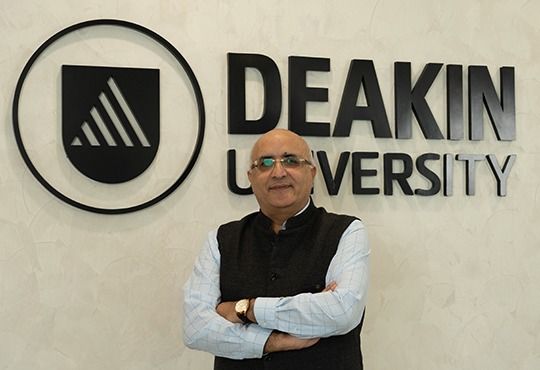
Preparing Students for Business...
Dr Deepak Bajaj, Academic & Campus Director, Deakin University GIFT...

The Evolution of Studying Abroad
Monica Kapadia Mehta, VP of Strategic Initiatives, Leap Scholar
🍪 Do you like Cookies?
We use cookies to ensure you get the best experience on our website. Read more...